Plant Overview
Known affectionately as the Swamp Everlasting, this golden beauty is the resilient "wet-weather cousin" of the common strawflower. While most strawflowers thrive in dry, rocky soils, Xerochrysum palustre is a specialist of the marshes and wetlands of southeastern Australia. Its bright, sun-like blooms have a unique, papery texture that makes them look perpetually fresh, even after they’ve been picked.
🔍 How to Identify
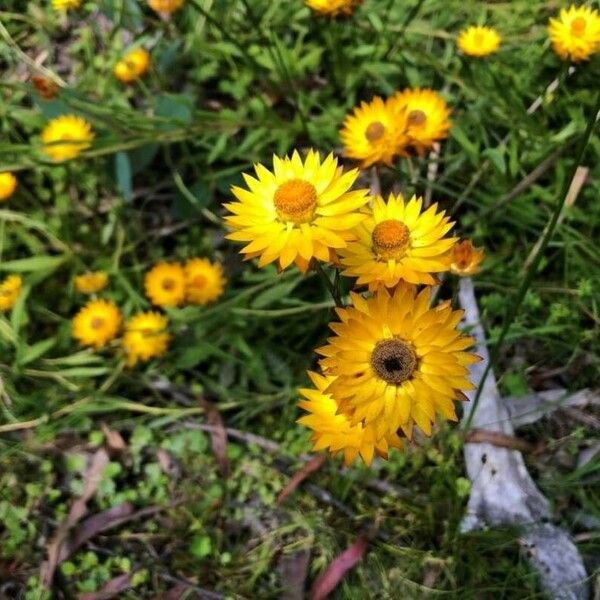
- 🌼 The Bloom: Large, daisy-like flower heads featuring vibrant yellow centers surrounded by stiff, golden-yellow bracts that feel like dried parchment or stiff paper.
- 🍃 The Foliage: Long, narrow, lance-shaped leaves that are a deep green. Unlike some of its relatives, the leaves are often slightly hairless or only lightly fuzzy on the underside.
- 🌱 The Stems: Erect, semi-woolly stems that can grow up to 1 meter tall, usually ending in a single, solitary flower head rather than a cluster.
🏡 In Your Garden
- 💧 Wet Feet Welcome: Unlike most garden plants that fear root rot, the Swamp Everlasting thrives in soggy, poorly drained soil. It is the perfect candidate for a bog garden or the edges of a backyard pond.
- ☀️ Sun Seeker: To get those "everlasting" bracts to open wide, it needs plenty of direct sunlight. In the wild, it often grows in open areas where it doesn't have to compete with tall trees for light.
- ✂️ Perennial Cycle: This plant is a perennial herb that may die back to its rootstock during cold winters or dry spells, only to re-emerge with vigor when the moisture returns in spring.
⚠️ Safety & Toxicity
- ✅ Pet & Human Safe: There are no known toxic properties associated with the Swamp Everlasting, making it a safe choice for households with curious cats, dogs, or toddlers.
- 🧤 Skin Sensitivity: While not poisonous, some individuals may find the tiny, fine hairs on the stems slightly irritating to sensitive skin. Wearing gloves during heavy pruning is a good habit to keep.
✨ Fun Fact
The "petals" of the Swamp Everlasting aren't actually petals at all—they are specialized leaves called bracts. Because these bracts contain very little moisture, they don't wilt like normal flowers, allowing them to retain their bright color and shape for years in dried arrangements!

Detailed Care Instructions








