Plant Overview
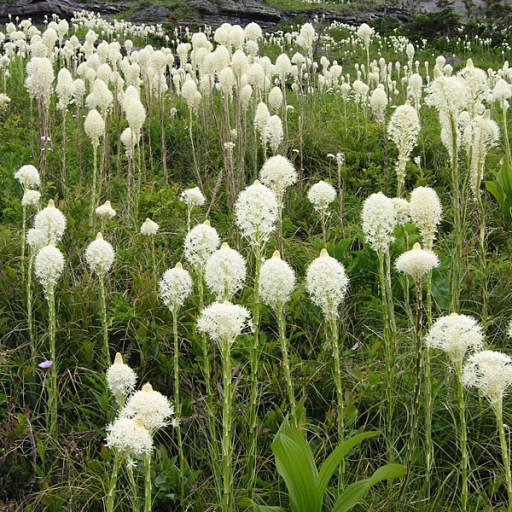
Commonly known as Beargrass, Indian Basket Grass, or Quailgrass, Xerophyllum tenax is a striking evergreen perennial that looks like a grass but actually belongs to the Melanthiaceae family. Native to the mountainous regions of western North America, it is famous for its towering "torches" of white flowers that light up subalpine meadows. Despite its name, bears don't actually eat the plant, though they are known to use the soft leaf bases as nesting material.
🔍 How to Identify
- 🌾 The Foliage: It forms a dense, fountain-like clump of wiry, olive-green leaves. These leaves are long, narrow, and remarkably tough, often feeling more like leather than grass.
- 🕯️ The "Torch" Bloom: When it matures, it sends up a thick, sturdy stalk that can reach 5 feet in height. This stalk is topped by a massive, club-shaped cluster of hundreds of tiny, creamy-white, star-shaped flowers.
- 🪚 The Texture: If you run your finger along the edge of a leaf, you’ll feel a distinct "toothed" or serrated texture. Be careful—these edges are sharp enough to cause a paper-cut-like sting!
🏡 In Your Garden
- ⛰️ The Drainage Demand: Because its natural home is on rocky mountain slopes, Beargrass is incredibly sensitive to "wet feet." In a garden setting, it requires exceptionally well-draining soil—think gravelly or sandy mixes—and will struggle in heavy, sitting clay.
- ⏳ A Lesson in Patience: This is not a plant for the impatient gardener. It can take several years for a young plant to establish itself and produce its first spectacular bloom. Additionally, it possesses a deep, sensitive root system and strongly dislikes being moved or transplanted once it has claimed a spot.
⚠️ Safety & Toxicity
- ✅ Safe for All: Beargrass is generally considered non-toxic to humans, cats, and dogs. It is a popular choice for wildlife-friendly gardens as it provides cover for small birds and mammals.
- ✂️ Physical Sharpness: While not chemically toxic, the leaves are the primary safety concern. The serrated edges can be very abrasive to the skin. It is highly recommended to wear gloves when pruning or cleaning up the base of the plant to avoid minor cuts.
✨ Fun Fact
Beargrass is a "fire-follower." While the leaves may burn away during a forest fire, the underground rhizomes are fire-resistant. In the wild, a wildfire often triggers a massive, synchronous blooming event the following year, turning scorched landscapes into fields of white flowers.

Detailed Care Instructions
| Lighting | Full Sun |
| Hardiness Zones | Max 5B |
To successfully grow Xerophyllum Tenax (commonly known as beargrass or Indian basket grass), you can follow these steps:
- Seed collection: Collect seeds from a mature plant during late summer or early fall. Look for seeds that are brown and dry.
- Seed stratification: Place the seeds in a sealed container with a bit of moist sand or vermiculite. Store the container in a refrigerator for a period of 30-60 days. This cold stratification process helps break seed dormancy.
- Soil preparation: Prepare a well-draining soil mixture consisting of sandy loam or peat moss with some organic matter mixed in. Beargrass prefers acidic to slightly acidic soil with a pH between 4.5 and 6.5.
- Potting: Plant the stratified seeds in small pots or trays filled with the prepared soil mixture. Sow the seeds on the soil surface without covering them, as they require light to germinate.
- Germination: Place the pots or trays in a warm and well-lit area, such as a greenhouse or near a sunny window. Keep the soil consistently moist but not waterlogged. Germination may take around 3-4 weeks.
- Transplanting: Once the seedlings have grown two or three sets of leaves, they can be transplanted into individual containers or directly into the ground. Choose a location with partial shade to full sun exposure.
- Care and maintenance: Water the plants regularly during the growing season, ensuring the soil remains evenly moist. However, avoid overwatering as it can lead to fungal diseases. Apply a balanced fertilizer every four to six weeks to promote healthy growth.
- Dividing and propagation: Mature beargrass plants can be divided by carefully digging up the clumps and separating them into smaller sections. Replant the divisions in well-prepared soil, making sure to water them thoroughly after transplantation.
- Pruning: Remove dead or faded foliage from the plant to maintain its appearance and improve airflow. However, bear in mind that too much pruning can stress the plant.
- Winter protection: If you live in a colder climate, consider protecting young beargrass plants during the winter by mulching around their base with a thick layer of organic material.
By following these guidelines and providing the correct environmental conditions, you can successfully grow Xerophyllum Tenax plants.

Place in a bright room that is sun drenched almost all day. Or directly in a south-facing window.

To properly water this plant, first assess the soil moisture level by inserting your finger about 1-2 inches into the soil. If the soil feels dry, it is time to water.
When watering, use a gentle stream of water and saturate the soil thoroughly, allowing the water to soak in and drain out completely. Be sure not to let the plant sit in standing water, as this could cause root rot.
It is important to note that this plant is drought-tolerant and can tolerate periods of dryness between waterings. However, consistent watering during the growing season will promote healthy growth. During winter months, reduce watering frequency as the plant enters a dormant period.
To fertilize this plant, it is important to use a low-nitrogen fertilizer. One option is to use a balanced fertilizer with a ratio of 10-10-10, but dilute it to half strength. Apply the fertilizer in the early spring, just before new growth emerges. Repeat this process every 4-6 weeks until mid-summer. Avoid over-fertilizing, as this can damage the plant's roots and foliage. Always follow the instructions on the fertilizer label and water the plant well after fertilizing.
Xerophyllum Tenax plant prefers well-draining sandy or gravelly soil that is low in nutrients. A soil mixture that is comprised of peat moss, sand or perlite, and gravel or vermiculite is ideal for this plant. The soil should be kept moist but not waterlogged to avoid root rot. Additionally, it is recommended to add a layer of organic mulch to conserve moisture and suppress weed growth.
There are different methods for propagating the Xerophyllum Tenax plant. One way to do it is through root division. This involves carefully digging up the plant and separating the roots into smaller portions. Each portion should have at least one healthy shoot or crown. These can then be replanted in well-draining soil and watered regularly until they establish.
Another method is through seed propagation. Seeds can be collected when they are ripe and planted in a seed starting mix. The soil should be kept moist but not waterlogged. Germination can take several weeks to months, and the seedlings should be transplanted into individual pots once they have developed several true leaves.
Finally, Xerophyllum Tenax can also be propagated through stem cuttings. Select a healthy stem and cut a section that is around 3-6 inches long. Remove the lower leaves and dip the cut end into rooting hormone. Plant the cutting in a pot filled with well-draining soil and keep the soil moist. The cutting should develop roots within a few weeks and can then be transplanted into a larger pot or outdoors.








