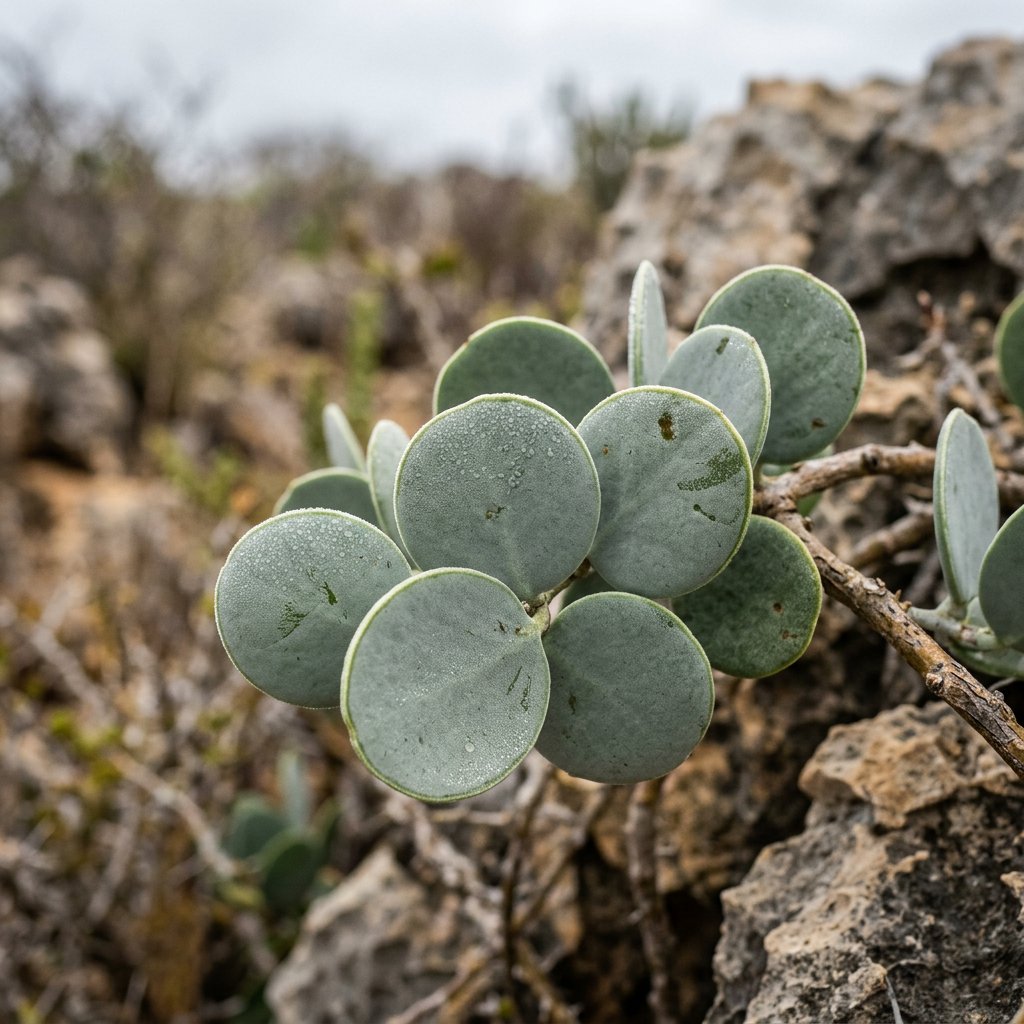
Plant Overview
Often called the Silver Dollar Vine, this whimsical succulent from the dry thickets of Madagascar looks like a collection of floating frosted coins. Its perfectly circular, leathery leaves make it a top choice for minimalist decor and "living art" displays. In its native habitat, it is a persistent climber, using delicate, wire-like tendrils to scramble over other desert vegetation to reach the sun.
🔍 How to Identify
- 🍃 The Leaves: Distinctly round, flat, and thick (succulent). They are usually a silvery-green or sage color with a matte, waxy texture.
- 🔗 Climbing Tendrils: Look for thin, thread-like structures that emerge opposite the leaves; these act like tiny hands to grab onto trellises or nearby plants.
- 🪵 Woody Stems: While young vines are green and flexible, the main base of the plant will eventually turn grey and woody as it matures.
🏡 In Your Garden
- ☀️ Light Logic: This plant is a sun-worshiper. If it doesn't receive enough bright, direct light, the stems will become "leggy," and the beautiful circular leaves will grow further and further apart.
- 💧 Drought Strategy: Because those coin-shaped leaves are essentially water storage tanks, the Silver Dollar Vine hates "wet feet." It is far more likely to suffer from over-care than neglect; always wait for the soil to feel like dry dust before watering.
- 🧗 Vertical Ambition: While it can trail downward from a hanging basket, it is naturally a climber. Providing a thin trellis or a wire hoop allows it to express its natural habit, leading to larger leaves and faster growth.
⚠️ Safety & Toxicity
- 🐾 Pet Safety: Great news for pet parents! Xerosicyos danguyi is generally considered non-toxic to cats, dogs, and horses.
- 🧤 Skin Awareness: While not poisonous, the sap can be slightly sticky or irritating to those with very sensitive skin. It’s always a good idea to wash your hands after pruning or taking cuttings.
✨ Fun Fact
Despite its thick, succulent leaves and desert lifestyle, the Silver Dollar Vine is actually a distant cousin of the Cucumber and Watermelon! It belongs to the Cucurbitaceae family, proving that even "veggies" can adapt to the harshest droughts.

Detailed Care Instructions
| Color | Flowers Can Be Yellow Or Greenish |
| Soil Ph | 6 |
| Humidity | Dry |
| Lighting | Full Sun |
| Toxicity | Poisonous |
| Soil Type | Well-Draining Soil |
| Bloom Time | Spring |
| Difficulty | Easy |
| Plant Type | Climbing Succulent Vine |
| Mature Size | 10 – 12 Inches Tall |
| Native Area | Southwestern Madagascar |
| Temperature | 20°C - 35°C |
| Sun Exposure | Partial Shade To Full Sun |
| Hardiness Zones | 9-11 |
To grow a Xerosicyos Danguyi plant, also known as a silver dollar vine or string of coins plant, follow these steps:
- Propagation: Xerosicyos Danguyi can be propagated from seeds or stem cuttings. If using seeds, sow them in well-draining soil and cover them lightly. Keep the soil consistently moist until the seeds germinate. For stem cuttings, take a cutting from a healthy, established plant and allow it to dry for a few days. Once dried, place the cutting in well-draining soil, burying it about half an inch deep.
- Soil and potting: Choose a well-draining soil mix suitable for succulents or cacti. A mixture of sand, perlite, and peat moss can work well. Ensure the pot has drainage holes to prevent waterlogging.
- Sunlight: Xerosicyos Danguyi plants prefer bright light but avoid direct, intense sunlight, especially during peak midday hours. Place the plant near a window where it receives indirect light for several hours a day.
- Watering: Allow the top inch of soil to dry out between waterings. Overwatering can lead to root rot, so it's essential to ensure the soil is dry enough before watering again. During winter, reduce watering frequency as the plant enters a dormant period.
- Temperature and humidity: Xerosicyos Danguyi thrives in average room temperatures between 65-85°F (18-29°C). It can tolerate slightly cooler temperatures during winter but should be protected from frost. This plant prefers moderate humidity levels, so it can adapt well to average household conditions.
- Fertilizing: Feed the plant with a balanced, water-soluble fertilizer for succulents or cacti during the growing season (spring and summer) approximately once a month. Follow the instructions on the fertilizer packaging for proper dosage.
- Pruning and training: Xerosicyos Danguyi plants can trail or climb, making them suitable for hanging baskets or training on a trellis. Pruning can help control the shape and size of the plant, remove leggy growth, and promote bushier growth. Trim back any excessive growth or take cuttings to propagate new plants.
Remember to monitor the plant regularly for signs of pests or diseases and take appropriate action if necessary. With proper care and attention, your Xerosicyos Danguyi plant will grow and thrive.

Place in a bright room that is sun drenched almost all day. Or directly in a south-facing window.

Xerosicyos Danguyi is a unique plant that requires specialized care when it comes to watering. To ensure that this plant thrives in your home or garden, it's important to follow a few simple steps.
Firstly, you should always examine the soil by sticking your finger into it to determine whether it's dry or not. This plant prefers to be watered only when the soil is completely dry, so be sure to check it regularly.
Once you've determined that the soil is dry, it's time to water your Xerosicyos Danguyi. You should always use room temperature water, as cold water can shock the roots of the plant. Additionally, you should avoid getting water on the foliage or trunk of the plant to prevent the growth of fungi and bacteria.
To water the plant, pour water around the base of the plant until it starts to drain out of the drainage holes at the bottom of the pot. You should never let the plant sit in water for an extended period of time, as this can lead to root rot.
Finally, it's important to note that Xerosicyos Danguyi is a succulent plant that stores water in its leaves and stems. Because of this, it can go for long periods of time without water and prefers to be underwatered rather than overwatered.
To fertilize the Xerosicyos Danguyi plant, use a balanced liquid fertilizer or organic fertlizer with a ratio of 10-10-10 or 20-20-20. Dilute the fertilizer to half the recommended strength and apply to the soil every two to four weeks during the growing season, which is typically spring through summer. Avoid fertilizing during fall and winter when the plant is dormant. Additionally, make sure to water the plant thoroughly before and after fertilizing to prevent root burn.
The ideal soil for Xerosicyos Danguyi plant should be a well-draining mixture that is composed of sand, perlite, and organic matter. The mixture should be porous to allow for aeration, but not too porous that it dries out too quickly. The pH level of the soil should be between 6.0-7.5. It is important to avoid using heavy clay soils as it may retain too much water which can lead to root rot. Additionally, make sure that the soil is free of pests and diseases before planting, to prevent any infection of the plant.
To propagate this particular plant, you will need to take stem cuttings from a healthy parent plant. Select a young and healthy stem, preferably one that has not yet produced any leaves, and cut it off at a 45-degree angle. You should aim to have a cutting that is around 4-6 inches long.
Next, remove any leaves from the bottom half of the stem cutting. This will be the part of the cutting that goes into the soil. If there are any flowers or buds on the cutting, remove them as well. You want all the energy of the cutting to go towards developing roots, not supporting flowers or buds.
Once your cutting is prepped, plant it in a well-draining soil mix. Water the cutting lightly, but be careful not to overwater it. It should be kept moist but not waterlogged.
The cutting will need to be kept in a warm and humid environment for a few weeks until it starts to develop roots. You can cover it with a plastic bag or place it in a propagator to help maintain humidity levels.
After a few weeks, you should start to see new growth on the cutting. Once the roots have developed sufficiently, and the plant is growing well, you can transplant it into a larger pot or into the ground. Be sure to place it in a bright, sunny spot, and continue to water it regularly.
Common pests of the silver dollar vine include Scale insect, mealybugs, spider mites, thrips. Make a habit of checking your silver dollar vine frequently for pests so that any infestations can be caught and managed early.








