Plant Overview
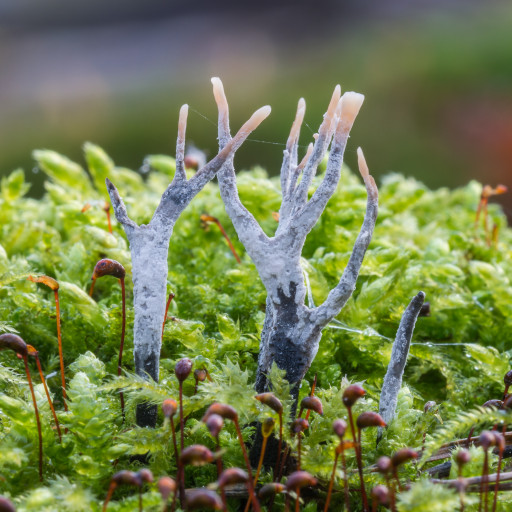
Often called the Candlesnuff Fungus or Stag’s Horn, Xylaria hypoxylon looks like tiny, ghostly fingers or charred antlers reaching out from decaying logs. In European folklore, these eerie shapes were sometimes whispered to be the remains of "fairy torches" left behind after a midnight celebration. It is a resilient, carbon-rich fungus that adds a touch of gothic mystery to the forest floor.
🔍 How to Identify
- 🦌 The Antler Shape: The fruiting bodies are usually 2–6 cm tall and often branch at the tips, closely resembling the antlers of a miniature deer.
- 🕯️ Two-Tone Color: The base of the fungus is charcoal black and velvety, while the upper tips are coated in a powdery, stark-white dust that looks like a candle that has just been snuffed out.
- 🪵 Tough Texture: Unlike fleshy mushrooms that turn to mush, this fungus is "carbonous." It feels tough, leathery, and almost woody to the touch, and it does not easily decompose.
🌲 Habitat & Ecology
- 🍂 The Wood Recycler: This fungus is a "white rot" specialist. It is almost always found growing in clusters on decaying hardwood stumps or buried branches, particularly Beech or Oak, where it works to break down tough wood fibers.
- ❄️ Winter Survivor: While most mushrooms disappear when the temperature drops, the Candlesnuff is remarkably hardy. It can be found throughout the autumn and well into the winter, often standing out sharply against a backdrop of snow or dead leaves.
⚠️ Safety & Toxicity
- 🚨 WARNING: Not edible. While not known to be aggressively deadly, Xylaria hypoxylon is not a food source and should never be consumed.
- 🦷 Inedible Texture: Even if it were non-toxic, its texture is similar to chewing on a piece of charcoal or a dry twig, making it completely unpalatable for humans and pets.
- 🐾 Pet Safety: While pets rarely find woody fungi attractive, it is best to keep curious dogs away from decaying wood where various (and potentially more toxic) fungi might be growing alongside it.
✨ Fun Fact
The white powder on the tips isn't just for decoration—it consists of asexual spores called "conidia." As the fungus matures and the season progresses, the white tips disappear, and the entire structure turns jet black to produce its sexual spores in tiny, pimple-like bumps called perithecia!

Detailed Care Instructions







