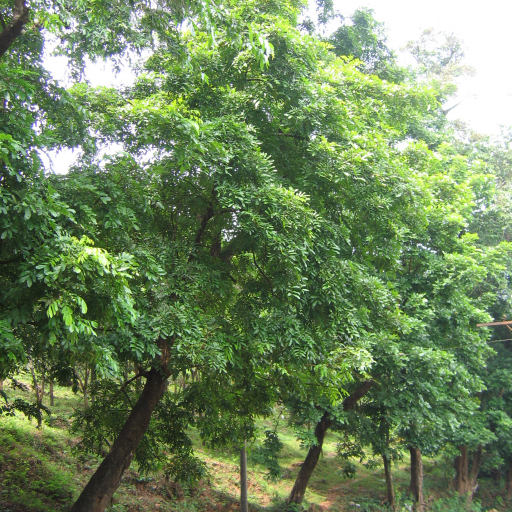
Plant Overview
Known as the Burma Ironwood or Pyinkado, Xylia xylocarpa is a majestic deciduous tree that reigns over the monsoon forests of Southeast Asia and India. It is legendary for its incredibly dense, "iron-like" timber and its beautiful, feathery canopy that provides deep shade during the heat of the day. In many cultures, it is viewed as a symbol of strength and endurance because of its ability to thrive in harsh, rocky terrains.
🔍 How to Identify
- 🌿 Leaf Structure: Features large, bipinnate (fern-like) leaves that grow in pairs, giving the tree a soft, elegant texture despite its rugged nature.
- 🌼 Spherical Blooms: Produces small, creamy-yellow flowers gathered into fluffy, round "pom-pom" heads that emit a delicate, sweet fragrance.
- 🫛 Woody Pods: Easily recognized by its massive, sickle-shaped seed pods which are thick and woody; when ripe, they burst open with a distinct "crack" to scatter seeds.
🏡 In Your Garden
- 🌳 The Taproot Rule: This tree develops a very deep and aggressive taproot early in its life. Because of this, it is notoriously difficult to transplant, so you must choose its "forever home" in your garden carefully from day one.
- ☀️ Sun & Drainage: While it is exceptionally drought-tolerant once established, it requires full sun and sharp soil drainage. It will struggle in heavy, waterlogged clay where its roots cannot breathe during the rainy season.
⚠️ Safety & Toxicity
- ✅ Safe Status: Xylia xylocarpa is generally considered non-toxic to humans and common garden visitors.
- 🐾 Pet Note: While not poisonous, the fallen seed pods are extremely hard and woody. If you have a dog that likes to chew, keep an eye out as these pods can pose a choking hazard or cause tooth damage due to their "iron-like" density.
✨ Fun Fact
The wood of the Burma Ironwood is so dense and heavy that it actually sinks in water. Because it is naturally resistant to rot and termites, it was historically the primary material used to build railway sleepers and bridges throughout the British colonial era in Asia.

Detailed Care Instructions








