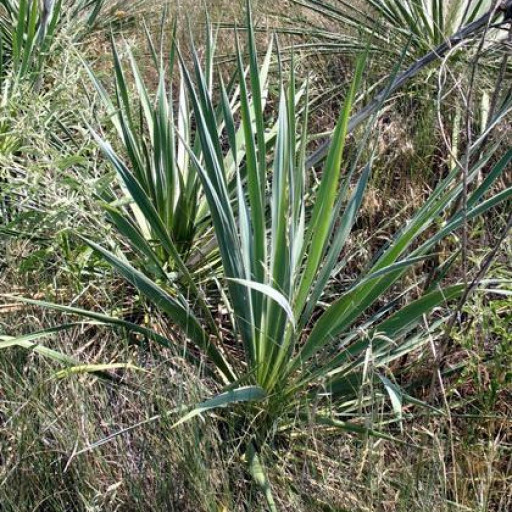
Plant Overview
Often known as the Arkansas Yucca or Dwarf Yucca, this hardy succulent is an understated star of the Southern Great Plains and the Ozarks. Unlike its towering desert cousins, it keeps a low profile, forming elegant, grass-like clumps that surprise onlookers with towering flower spikes in late spring. It is a favorite for "xeric" (water-wise) gardens because it thrives in harsh, rocky conditions where other plants might wither.
🔍 How to Identify
- 🍃 The Leaves: Long, narrow, and surprisingly flexible compared to other Yucca species. They are typically a pale, grayish-green and grow in a dense, fountain-like rosette close to the ground.
- 🧶 Curly Threads: Look closely at the edges of the leaves; you’ll see delicate, white curly "filaments" or threads peeling away from the margins, giving the plant a slightly shaggy, artistic appearance.
- 🔔 The Blooms: In late spring, it sends up a tall, sturdy stalk (reaching 2–3 feet) covered in large, nodding, greenish-white bell-shaped flowers that often have a waxy texture.
🏡 In Your Garden
- 🏜️ Drainage is King: This Yucca is naturally adapted to thin, limestone-rich soils. It is highly susceptible to root rot in "wet feet" conditions, so if your garden has heavy clay, it is best to plant it in a raised bed or a gravel-heavy mix.
- ⚓ The Deep Taproot: Once established, this plant is incredibly drought-resistant, but it is also very difficult to move. Its long taproot anchors it deep into the earth to find moisture, so choose its "forever home" carefully to avoid the trauma of transplanting.
⚠️ Safety & Toxicity
- 🩹 Physical Hazard: While its leaves are softer than the "Spanish Dagger" variety, the tips are still pointed and can poke unsuspecting gardeners. It is best to plant it away from narrow walkways or areas where children play.
- 🐾 Pet Safety: Like most members of the Yucca genus, it contains saponins. These compounds are very bitter and usually deter animals, but if ingested in large amounts by cats or dogs, they can cause drooling, vomiting, or coordination issues.
✨ Fun Fact
- 🦋 The Moth Connection: The Arkansas Yucca has a "soulmate" in the Yucca Moth. The plant cannot produce seeds without the moth to pollinate it, and the moth’s larvae only eat Yucca seeds. They have co-evolved so closely that neither species can survive without the other!

Detailed Care Instructions
To grow Yucca arkansana plants, you can follow these steps:
- Location: Yucca arkansana prefers full sun to partial shade. Choose a location with well-draining soil.
- Soil Preparation: Amend the soil with organic matter such as compost or well-rotted manure to improve drainage and fertility.
- Planting: Dig a hole twice as wide and deep as the root ball of the plant. Place the Yucca arkansana in the hole, ensuring that the top is level with the ground. Backfill the hole with soil and gently firm it around the plant.
- Watering: Water the plant deeply after planting and then regularly until it becomes established. Yucca arkansana is drought-tolerant but will benefit from regular watering during dry spells.
- Mulching: Apply a layer of organic mulch around the base of the plant to help retain moisture and suppress weeds. Make sure to keep the mulch away from the stem to prevent rotting.
- Pruning: Yucca arkansana typically does not require much pruning. Remove any dead or damaged leaves as needed. Be cautious of the sharp spines on the leaves while pruning.
- Fertilizing: Yucca arkansana does not require heavy fertilization. However, you can apply a balanced fertilizer once or twice a year in spring and summer to promote growth.
- Propagation: Yucca arkansana can be propagated from seeds or by dividing the plant. Seeds can be sown in the spring, and division can be done in early spring or fall by separating the offsets from the main plant.
- Pests and Diseases: Yucca arkansana is generally not susceptible to major pests or diseases. However, it can occasionally be affected by scale insects or fungal diseases. Monitor for any signs of infestation or disease and treat accordingly.
By following these steps, you can successfully grow Yucca arkansana plants in your garden or landscape.

Place in a window with dappled sun or a spot in the middle of a room. Or directly in a window facing west or east.

To water this plant, it is recommended to wait until the top inch of soil in the pot has dried out before giving it a thorough watering. This plant prefers well-draining soil and does not like to be sitting in standing water, so be sure to allow excess water to drain out of the pot. Additionally, it is important to avoid getting water on the leaves of the plant, as this can lead to fungal and bacterial diseases. To prevent this, water at the base of the plant and avoid overhead watering. In the winter months, reduce watering frequency as the plant will go into dormancy.
To fertilize this plant, you should use a balanced fertilizer with equal amounts of nitrogen, phosphorus, and potassium. Apply the fertilizer once a month during the growing season, from spring to fall. Mix the fertilizer with water according to the package instructions and pour it around the base of the plant. Avoid getting the fertilizer on the leaves or stem. If the plant is young, use half the recommended amount of fertilizer until it is established. Do not fertilize during the dormant season in winter.
When potting a Yucca Arkansana plant, it is important to choose a well-draining soil mix that is not too heavy or nutrient-dense. A soil mix with a high sand or perlite content is ideal for ensuring adequate drainage and preventing root rot, which can be a common issue with these plants. Additionally, adding some coarse bark or peat moss to the soil mix can help to improve aeration and water retention. It is also important to avoid using soil mixes that are too alkaline, as this can cause nutrient deficiencies over time. Instead, choose a slightly acidic soil mix that has a pH between 5.5 and 6.5. Finally, be sure to use a pot with drainage holes in the bottom to allow excess water to escape, and water the plant only as needed, allowing the soil to dry out between watering sessions.
To propagate this plant, you will need to gather some stem cuttings from a mature plant. Make sure to choose healthy stems with no signs of disease or damage. Using a clean pair of pruning shears, cut a section of stem that is around 3-4 inches in length. Remove any leaves from the bottom half of the stem.
Once you have your cuttings, prepare a pot with well-draining soil. You can use a commercial cactus or succulent potting mix, or make your own by mixing sand, perlite, and peat moss. Make a hole in the soil with your finger or a pencil, and insert the stem cutting so that the bottom half is buried in the soil. Firmly press the soil around the stem to secure it in place.
Water the cutting lightly, making sure not to saturate the soil. It is important to keep the soil moist but not wet, as too much water can cause the cutting to rot. You can cover the pot with plastic wrap or a plastic bag to create a mini greenhouse that will help keep the cutting moist.
Place the pot in a bright, warm location, but out of direct sunlight. Yucca Arkansana prefers temperatures between 60-80 degrees Fahrenheit. Check the cutting regularly and mist it with water if the soil begins to dry out. After a few weeks, you should start to see new growth emerging from the top of the stem. Once this new growth is well-established, you can transplant the new plant into its permanent location.








