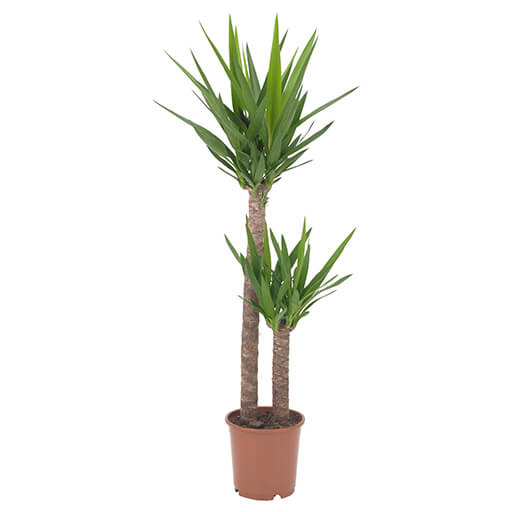
Plant Overview
Often called the Spineless Yucca or the Giant Yucca, this Central American native is a champion of the "tough love" gardening style. Its name, elephantipes, comes from its thick, greyish-brown trunk, which matures to look remarkably like a sturdy elephant’s foot. Unlike its desert-dwelling cousins, this variety won't poke you with sharp needles, making it a favorite for stylish indoor spaces.
🔍 How to Identify
- 🐘 The Trunk: Features a thick, woody base that widens significantly at the ground level, resembling the skin and shape of an elephant’s limb.
- 🗡️ The Foliage: Long, sword-shaped leaves grow in dense rosettes from the top of the stems. They are a deep evergreen color and lack the sharp, needle-like tips found on other Yuccas.
- 🔔 The Blooms: When mature and grown outdoors, it produces towering stalks of creamy-white, bell-shaped flowers that dangle in heavy clusters.
🏡 In Your Garden & Home
- ☀️ Light & Resilience: While it thrives in bright, indirect light, it is incredibly adaptable. It can handle a bit of neglect, making it the perfect "starter plant" for those who travel often or occasionally forget their watering routine.
- 💧 The "Less is More" Rule: Because it stores a significant amount of water in its thick trunk, the most common mistake is overwatering. It prefers to dry out almost completely; if the soil stays soggy, the "elephant foot" can succumb to root rot quite quickly.
- 🪴 Slow & Steady Growth: It is a slow grower that won't outgrow its corner overnight. However, it hates being moved frequently, as its root system is sensitive to disturbance.
⚠️ Safety & Toxicity
- 🐾 Toxic to Pets: The plant contains saponins, which are toxic to cats and dogs. If ingested, it can cause drooling, vomiting, and coordination issues.
- 👶 Kid-Friendly Texture: Unlike the "Spanish Bayonet" Yucca, this species is much safer for households with children because the leaf tips are flexible and the edges are smooth rather than serrated.
✨ Fun Fact
In its native regions of El Salvador and Guatemala, the waxy white flowers of the Yucca are actually considered a delicacy! Known as Flor de Izote, they are often cooked with eggs or used in traditional soups, though the plant remains toxic to our furry four-legged friends.

Detailed Care Instructions
To grow Yucca Elephantipes plant, also known as a Giant Yucca or Spineless Yucca, follow these steps:
- Choose a suitable location: Yucca Elephantipes prefers bright indirect light, although it can tolerate some direct sunlight. Find a location near a window that provides several hours of indirect sunlight each day.
- Acquire a healthy plant: Purchase a Yucca Elephantipes plant from a reputable nursery or garden center. Look for a plant with vibrant green leaves and no signs of pests or diseases.
- Choose a well-draining pot: Yucca Elephantipes grows best in well-draining soil. Select a pot with drainage holes at the bottom to prevent waterlogging. A pot slightly larger than the plant's root ball is suitable.
- Prepare the potting mix: Use a well-draining potting mix that consists of a combination of regular potting soil, perlite, and sand. This mixture provides good aeration and prevents the soil from becoming waterlogged.
- Plant the Yucca Elephantipes: Gently remove the plant from its nursery pot, being careful not to damage the roots. Place the plant in the prepared pot and fill the remaining space with the potting mix. Ensure that the top of the root ball is level with or slightly above the soil line.
- Watering and humidity: Yucca Elephantipes requires moderate watering. Allow the top inch of soil to dry out between waterings, and avoid overwatering, as it can lead to root rot. Ensure the pot has good drainage and avoid letting the plant sit in standing water. Yucca plants are also tolerant of low humidity levels.
- Fertilizing: Fertilize the plant once a month during the growing season (spring and summer) using a balanced liquid fertilizer diluted to half the recommended strength. Avoid fertilizing during the winter months when growth slows down.
- Pruning: Trim off any yellow or brown leaves regularly to maintain the plant's appearance. Additionally, if the plant becomes too tall or leggy, it can be cut back to encourage new growth.
- Repotting: As the Yucca Elephantipes grows, it may outgrow its pot. Repot the plant into a slightly larger container every 2-3 years in spring or early summer.
- Pests and diseases: Yucca Elephantipes is relatively resistant to pests and diseases. However, occasionally, it may be affected by spider mites, scale insects, or mealybugs. Regularly inspect the plant for any signs of pests and treat them accordingly using appropriate insecticidal sprays or wipes.
By following these guidelines, you can successfully grow a Yucca Elephantipes plant and enjoy its striking appearance in your home or garden.

Place in a bright room that is sun drenched almost all day. Or directly in a south-facing window.

Yucca Elephantipes plant requires regular watering during its growing season, which is typically from spring through fall. The soil should be well-draining, to prevent waterlogging and root rot. When watering, it is important to saturate the soil thoroughly, ensuring that water reaches the plant's roots. However, it is also vital not to overwater the plant, as excess moisture can lead to diseases and pest infestations. It is recommended to let the soil dry out between watering sessions and avoid watering during the winter months when the plant is dormant. One way to ensure the plant is getting enough water is to check the moisture level of the soil using a moisture meter or inserting your finger into the soil up to your knuckle. If the soil feels dry, it is time to water the plant.
To fertilize this plant, use a well-balanced fertilizer with equal parts nitrogen, phosphorus, and potassium. Apply the fertilizer during the growing season, which is usually in the spring and summer, once every two months. Be sure to dilute the fertilizer with water according to the manufacturer's instructions before applying it to the soil. Avoid fertilizing during the winter when the plant is dormant. Additionally, it's important to avoid over-fertilizing, as this can harm the plant.
The ideal soil for the plant should be well-draining and slightly acidic with a pH level of 6.0 to 7.0. It should be rich in organic matter and nutrients, but not too heavy or compact. A mixture of coarse sand, perlite, and peat moss can be used to create a well-draining soil. The plant should not be overwatered, as this can lead to root rot. It is important to allow the soil to dry out completely between watering sessions. Additionally, the plant may benefit from occasional fertilization with a balanced fertilizer to promote healthy growth.
One way to propagate this plant is through stem cuttings. Choose a healthy stem and use a sterilized knife to cut it into sections about 6 inches long. Remove the lower leaves from the cutting and let it dry for a day or two. Then, dip the cut end into rooting hormone powder and plant it in a pot with well-draining soil. Keep the soil moist and provide indirect sunlight. After a few weeks, the cutting should start to develop roots. Once the plant has established roots, it can be transferred to its permanent pot or location.
Common pests of the spineless yucca include Scale insect, mealybugs. Make a habit of checking your spineless yucca frequently for pests so that any infestations can be caught and managed early.








