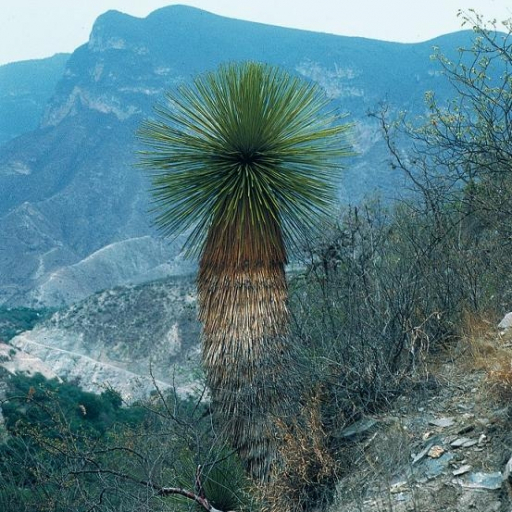
Plant Overview
Known as the "Shaggy Yucca" or simply the Queretaro Yucca, this stunning species is widely considered the crown jewel of the Yucca genus. Native to the steep, rocky canyons of the Sierra Gorda in Mexico, it creates a dramatic silhouette with thousands of needle-thin leaves that shimmer in the desert sun. It is a slow-growing masterpiece that brings an architectural, prehistoric vibe to any arid landscape.
🔍 How to Identify
- 🌿 The Leaves: Unlike common yuccas, these leaves are incredibly narrow (only 2-3mm wide) and have a unique square or diamond-shaped cross-section.
- 👗 The Skirt: As the plant grows, older leaves die and hang downward, forming a thick, tan-colored "shaggy skirt" that protects the trunk from extreme temperatures.
- 🍦 The Bloom: When mature, it produces a massive, upright flowering spike topped with creamy-white, bell-shaped blossoms that can reach several feet above the foliage.
🏡 In Your Garden
- 🏜️ Drainage is King: This plant has evolved to live on limestone cliffs. It absolutely demands "gritty" soil; if its roots sit in stagnant water for even a few days, it may succumb to root rot.
- 🐢 A Test of Patience: Yucca queretaroensis is notoriously slow-growing. While it eventually forms a slender trunk up to 12 feet tall, it may take a decade just to establish a significant presence in your garden.
- ☀️ Light Lover: It craves intense, direct sunlight to maintain its tight, spherical leaf arrangement. In low light, the crown will become sparse and "leggy."
⚠️ Safety & Toxicity
- 🌵 Mechanical Hazard: While not chemically "poisonous" in the traditional sense, the tips of the leaves are very stiff and sharp. It should be planted away from walkways to avoid accidental eye or skin injuries.
- 🐾 Pet Safety: Like most yuccas, it contains saponins. If a dog or cat chews on the leaves, it can cause drooling, vomiting, or lethargy, though the tough texture usually discourages them from eating it.
✨ Fun Fact
Despite its ancient appearance, this species was a "hidden" treasure; it wasn't formally described by scientists until 1989 because it grows in such remote, inaccessible canyons of central Mexico.

Detailed Care Instructions
To grow a Yucca queretaroensis plant, follow these steps:
- Obtain a Yucca queretaroensis plant: Purchase a healthy, well-established Yucca queretaroensis plant from a reputable nursery or garden center. Alternatively, you can propagate a new plant from seed or cuttings.
- Choose a suitable location: Yucca queretaroensis thrives in bright sunlight, so select a spot with full sun exposure. The plant can tolerate a variety of soil types, but it should be well-draining to prevent waterlogging.
- Prepare the soil: If your soil is heavy and poorly draining, improve it by adding organic matter such as compost or well-rotted manure. This will enhance drainage and provide essential nutrients to the plant.
- Planting: Dig a hole that matches the size of the root ball of the Yucca queretaroensis plant. Place the plant in the hole, ensuring that the top of the root ball is level with or slightly above the surrounding soil level. Backfill the hole with soil, gently firming it around the root ball.
- Watering: After planting, thoroughly water the Yucca queretaroensis plant to settle the soil. Subsequently, water the plant every 7-10 days during the growing season. Reduce watering during the dormant winter period to prevent overwatering.
- Fertilization: Yucca queretaroensis does not require frequent fertilization. However, you can apply a balanced, slow-release fertilizer once a year in early spring to provide additional nutrients.
- Pruning: Prune any dead or damaged leaves as needed to maintain the plant's appearance and health. Be cautious while handling the plant as the leaves have sharp tips.
- Protect from extreme cold: Yucca queretaroensis is hardy to USDA zones 9-11. If you live in a colder climate, protect the plant from freezing temperatures by covering it with a blanket or moving it indoors during winter.
- Monitoring pests and diseases: Yucca queretaroensis is relatively resistant to pests and diseases. However, keep an eye out for common issues such as scale insects, mites, or rot. Treat any infestations promptly with appropriate insecticides or fungicides, if necessary.
- Propagation: If you want to propagate new plants, Yucca queretaroensis can be propagated through cuttings or seeds. Take cuttings from the stem of the plant and root them in a well-draining soil mix. Seeds can be sown in a pot filled with a well-draining soil mix and kept in a warm, bright location.
By following these guidelines and providing suitable care, your Yucca queretaroensis plant should grow and thrive.
The best way to water this plant is to make sure that the soil surrounding the roots is slightly moist but not completely waterlogged. You should monitor the moisture level of the soil by touching it with your fingers before adding any water. When watering, ensure that the water is evenly distributed throughout the soil and that it reaches all parts of the root system. It is best to avoid letting the plant sit in excess water, as this can lead to root rot. Watering once a week is usually sufficient, but this can vary depending on the time of year and the plant's individual needs. As with all plants, it is important to adjust watering practices to ensure that the plant remains healthy and thriving.
To fertilize a Yucca queretaroensis plant, follow these instructions:
- Choose a balanced, water-soluble fertilizer that is specifically formulated for cacti and succulents. This type of fertilizer should have a nutrient ratio of approximately 10-10-10 or similar.
- Dilute the fertilizer according to the instructions on the package, usually at a rate of around half strength.
- Apply the diluted fertilizer to the soil around the base of the plant, making sure to reach the root zone.
- Water the plant thoroughly after applying the fertilizer to help distribute the nutrients evenly.
- During the growing season (typically spring and summer), fertilize the plant once every four to six weeks.
- Reduce or stop fertilizing during the dormant period, usually in fall and winter, as the plant's growth slows down.
- Monitor the plant for any signs of over-fertilization, such as wilting, discoloration, or burnt leaf tips. If you notice these signs, flush the soil with water to leach out excess nutrients.
- Always follow the instructions on the fertilizer package and adjust the fertilizer application rate or frequency as needed, based on the plant's response and specific growing conditions.
The recommended soil for this particular plant is a well-draining and slightly acidic soil mix that contains a combination of sand, perlite, and peat moss. The soil should have good aeration and drainage properties to prevent water buildup and root rot. Additionally, it is important to avoid using heavy clay or compacted soil that may inhibit root growth and lead to soil compaction. The optimal pH range for this plant is between 5.0 to 7.0, which can be adjusted using pH balancing products or by adding organic matter to the soil. Overall, the soil should be able to provide adequate nutrients, support healthy root growth, and maintain a proper moisture balance to ensure optimal growth and development of the Yucca Queretaroensis plant.
Yucca queretaroensis is a type of perennial plant that can be propagated through various methods. Here is a detailed outline of how to propagate this plant:
- Choose a healthy parent plant: Select a mature and healthy Yucca queretaroensis plant as the source for propagation. Ensure that the plant is free from diseases, pests, and any visible damage.
- Propagation by Seed:
a. Collect ripe seeds: Wait for the Yucca queretaroensis plant to produce ripe seed pods. Harvest the seed pods carefully to avoid damaging the seeds.
b. Clean the seeds: Remove any dried pods or debris from the seeds. Clean them by gently rinsing in warm water and allowing them to air dry for a few hours.
c. Seed treatment (optional): Some gardeners suggest soaking the seeds in warm water or a weak solution of hydrogen peroxide for a few hours to enhance germination rates.
d. Germination process: Plant the seeds in well-draining potting soil or a seed-starting mix in small containers. Cover the seeds lightly with soil and water gently.
e. Ideal conditions: Place the containers in a warm and well-lit area, preferably with indirect sunlight. Maintain a consistent temperature around 70-80°F (21-27°C) and keep the soil moderately moist.
f. Transplanting: After the seeds have germinated and the seedlings have grown a few inches, carefully move them to individual pots. Continue to provide the appropriate care until they become well-established young plants.
- Propagation by Stem Cuttings:
a. Select a suitable stem: Choose a healthy, non-flowering stem from the parent Yucca queretaroensis plant for taking cuttings. Ensure that the stem is mature and not too succulent.
b. Cut the stem: Use a sterilized, sharp knife or pruning shears to cut a 6-8 inch (15-20 cm) section of the stem. Make a clean cut just below a node or joint.
c. Callous formation: Place the cutting in a warm and dry location away from direct sunlight. Allow the cut end to dry and form a callous for a few days to prevent rotting.
d. Planting: Prepare a well-draining soil mixture or cactus mix in a small pot or container. Insert the calloused end of the cutting into the soil, burying it about 2 inches deep.
e. Rooting process: Place the pot in a warm and bright location with indirect sunlight. Maintain a temperature around 70-80°F (21-27°C) and keep the soil lightly moist, but not waterlogged.
f. Development of roots: Over several weeks or months, the cutting should develop roots. You can gently tug on the cutting after a few weeks to check for root formation. Once roots are established, you can gradually acclimate the plant to outdoor conditions.
g. Transplanting: Once the cutting has produced healthy roots, carefully transplant it to a larger pot or directly into the garden. Provide the necessary care to promote further growth and development.
Remember, propagating plants requires time, patience, and proper care. It is important to establish an appropriate growing environment and to provide consistent care after propagation to ensure successful growth and survival of the newly propagated Yucca queretaroensis plants.








