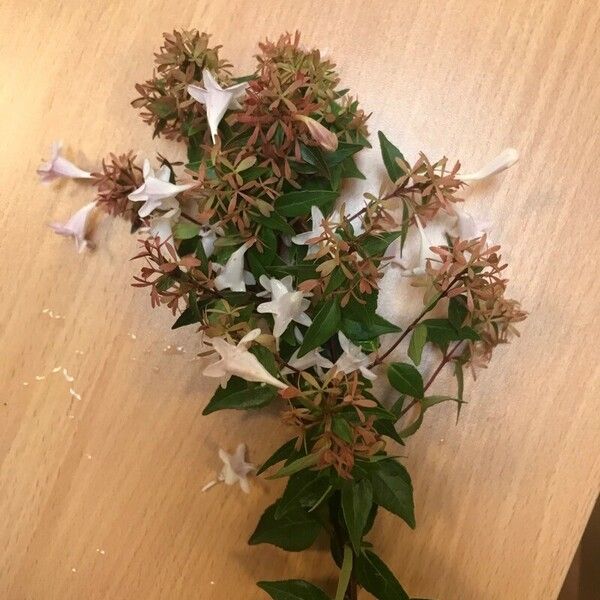
Plant Overview
Often called the Twin-flowered Zabelia, this elegant shrub is a hidden gem of East Asian mountains. It belongs to the Caprifoliaceae family, making it a close relative of the honeysuckle, which explains the intoxicatingly sweet perfume that drifts from its blooms in early summer. Its graceful, arching branches and delicate flowers make it a nostalgic favorite for those who appreciate old-world garden charm and subtle elegance.
🔍 How to Identify
- 🌸 The Twin Blooms: The most defining feature is its small, trumpet-shaped white or pale pink flowers that almost always grow in perfectly symmetrical pairs at the ends of short branches.
- 🍂 Shaggy Bark: As the plant matures, the bark becomes light brown and develops a distinctive "exfoliating" texture, peeling in thin, vertical strips that provide visual interest even in winter.
- 🍃 Pointed Foliage: Its leaves are small, dark green, and lance-shaped with slightly "toothed" edges. In the autumn, the foliage often transitions into a warm bronze or purple hue.
🏡 In Your Garden
- ⛰️ Natural Toughness: Coming from the rocky slopes of China and Korea, this shrub is remarkably hardy. It thrives in well-draining, slightly acidic soil and is much more tolerant of cold winters than many of its hybrid Abelia cousins.
- ✂️ Pruning Patience: This plant produces its fragrant flowers on "old wood" (growth from the previous year). To avoid cutting off next year's display, only prune or shape the shrub immediately after the flowers have faded in mid-summer.
⚠️ Safety & Toxicity
- ✅ Non-Toxic Status: Zabelia biflora is generally considered non-toxic and safe for gardens frequented by curious children, cats, and dogs.
- 🧤 Physical Handling: While the plant contains no known irritants, the mature, peeling bark can be somewhat rough. Wearing garden gloves during heavy pruning is recommended to prevent minor skin abrasions.
✨ Fun Fact
The species name biflora is Latin for "two-flowered." This isn't just a suggestion—the plant is evolutionarily programmed to produce its flowers in nearly identical pairs, a trait that helped early botanists distinguish it from other shrubs in the honeysuckle family.

Detailed Care Instructions
To grow Zabelia biflora, also known as Indian mock orange, follow these steps:
- Climate: Ensure that the plant is suitable for your climate. Zabelia biflora is native to China and requires a temperate climate. It is well-suited for USDA hardiness zones 6 to 9.
- Sunlight: Choose a location that receives full sun to partial shade. Zabelia prefers at least 6 hours of direct sunlight each day.
- Soil: The plant thrives in well-draining soil with a slightly acidic pH. Amend heavy clay or alkaline soil with organic matter or compost to improve drainage.
- Planting: Dig a hole about twice the width of the root ball and the same depth. Place the root ball in the hole, backfill with soil, and gently pat it down. Ensure that the top of the root ball is level with the ground.
- Watering: Water the plant thoroughly after planting and maintain consistent moisture during its first few weeks to help establish a strong root system. Afterward, water the plant deeply once per week or more if experiencing hot and dry conditions.
- Mulching: Apply a layer of organic mulch, such as wood chips or shredded bark, around the base of the plant. This helps retain soil moisture, suppress weeds, and regulate soil temperature.
- Pruning: Prune your Zabelia biflora plant regularly to maintain its shape and remove any dead or diseased branches. Pruning is best done in early spring before new growth starts.
- Fertilizing: Feed the plant once in the spring and again in mid-summer with a balanced slow-release fertilizer. Follow the manufacturer's instructions for the correct application rate.
- Pests and diseases: Monitor for common garden pests like aphids, spider mites, or scale insects, and treat them accordingly. Zabelia is generally resistant to diseases but may occasionally face issues like powdery mildew or root rot in poorly-drained soil.
- Winter protection: In colder regions, provide some form of winter protection. Apply a layer of mulch around the base of the plant, and consider covering it with burlap or a plant cover to shield it from harsh winds and freezing temperatures.
With proper care and attention, your Zabelia biflora plant should grow and flourish, providing beautiful foliage and flowers.

Place in a bright room that is sun drenched almost all day. Or directly in a south-facing window.

Zabelia biflora is a perennial plant that requires proper watering to thrive. Here are some guidelines for watering this plant:
1. Watering frequency: Zabelia biflora prefers a consistent watering schedule. Water the plant when the top inch of soil feels dry to the touch, usually once or twice a week depending on the climate and season.
2. Deep watering: It is essential to ensure that the water reaches the plant's root zone. Water deeply by providing enough water to thoroughly moisten the soil to a depth of at least 6 inches. This promotes root development and helps the plant tolerate dry periods.
3. Watering method: Use a watering can or a garden hose with a gentle spray nozzle to water the plant. Avoid using a high-pressure nozzle, as it may damage the plant or compact the soil.
4. Root zone focus: Direct the water towards the base of the plant, aiming to wet the soil around the roots rather than wetting the foliage. Wet foliage can cause diseases or encourage fungal growth.
5. Mulching: Apply a layer of organic mulch, such as wood chips or compost, around the base of the plant. Mulching helps to retain moisture in the soil, preventing rapid evaporation and reducing watering frequency.
6. Monitoring soil moisture: Regularly check the soil moisture levels by inserting your finger around 2 inches into the soil. If it feels dry, it's time to water the plant. If it feels moist, withhold watering until the soil dries out a bit more.
7. Avoid overwatering: While it is crucial to provide adequate moisture, overwatering can be detrimental to Zabelia biflora. It is better to slightly underwater than to overwater, as excessive moisture can lead to root rot and other problems.
8. Adjusting watering according to weather: It is important to adapt the watering frequency based on the seasons and weather conditions. During hotter and drier months, you may need to water more frequently, while in cooler or rainy periods, you may need to reduce watering.
Remember, the specific watering needs of Zabelia biflora can vary depending on factors such as climate, soil type, and plant size. Always assess the plant's moisture requirements by considering the individual growing conditions and adjust the watering accordingly.
- Choose a well-draining pot or garden bed for your Zabelia Biflora plant.
- Prepare a balanced water-soluble fertilizer according to the instructions on the package.
- Water the plant thoroughly before applying fertilizer to avoid burning the roots.
- Dilute the fertilizer solution to half or quarter strength to prevent over-fertilization.
- Apply the diluted fertilizer solution to the soil around the base of the plant, ensuring that it does not come into contact with the foliage.
- Fertilize the Zabelia Biflora plant once every two weeks during the growing season, which is typically from spring to early fall.
- Monitor the plant's response to fertilizer and adjust the frequency of application if needed. Avoid fertilizing during the plant's dormant period.
- Regularly water the plant to ensure the nutrients are properly absorbed and distributed.
- Avoid excessive fertilizer application as it can lead to nutrient imbalances and damage the plant.
- Conduct a soil test annually to check the levels of nutrients and make necessary adjustments to the fertilizing routine.
Zabelia biflora is a flowering plant that has specific soil requirements for healthy growth. It prefers a well-draining, fertile soil mix that is rich in organic matter. The soil should have a slightly acidic to neutral pH level, ideally ranging between 5.5 and 7.
To create suitable soil conditions for Zabelia biflora, you can start with a base of garden loam or general-purpose potting mix. This provides a stable structure for the roots while allowing adequate drainage. Adding organic matter such as compost, well-rotted manure, or peat moss to the soil mix enhances its fertility, moisture retention, and overall nutrient content.
It is crucial to ensure good drainage since Zabelia biflora does not tolerate waterlogged conditions. To improve drainage, you can add perlite or coarse sand to the soil mix. This helps prevent excess moisture, which can lead to root rot and other fungal diseases.
Furthermore, the soil should retain sufficient moisture without becoming overly soggy. Regular watering is required to keep the soil consistently moist, but not waterlogged. Mulching the soil surface with organic matter like wood chips or straw can help in retaining moisture and preventing weed growth.
In summary, Zabelia biflora thrives in a well-draining, fertile soil mix with a slightly acidic to neutral pH level. Incorporating organic matter and ensuring proper drainage are essential for the plant's optimal growth and development.
To propagate Zabelia biflora plants, you can follow these steps:
- Select a healthy and mature parent plant from which you wish to take cuttings. Ensure that the plant is free from any diseases or pests.
- Prepare a clean and sharp pair of pruning shears or scissors to take cuttings. It is important to use sterile tools to avoid any potential contamination.
- Identify a suitable stem for cuttings. Look for young, green stems that are flexible and about 4-6 inches long. Avoid using old, woody stems as they are less likely to root successfully.
- Make a clean cut about 1-2 inches below a leaf node. A leaf node is a small bump or scar on the stem where the leaves are attached. This is where new roots will develop.
- Remove any leaves on the lower half of the cutting, leaving only the top few leaves intact. This helps reduce moisture loss and helps redirect energy towards root development.
- Dip the cut end of the stem into a rooting hormone powder or gel. This helps stimulate root growth and increases the chances of successful rooting.
- Prepare a well-draining potting mixture using equal parts of sterile potting soil and perlite or vermiculite. Fill a small container or seed tray with this mixture and moisten it slightly.
- Create a hole in the potting mixture using a pencil or your finger, and gently insert the treated cutting into the hole, making sure to bury at least one or two nodes below the surface.
- Firmly press the potting mixture around the stem to ensure good contact and stability. Avoid applying excessive pressure, as it may damage the delicate roots that will form.
- Place the container in a warm and bright location, but avoid direct sunlight, as it can cause the cutting to dry out. Maintain a consistent level of moisture in the potting mixture by misting it regularly or covering the container with a plastic bag.
- Over time, usually within 4-8 weeks, roots will begin to develop. You can gently tug on the cutting to check its root development. Once a good root system has formed, it is ready to be potted up into individual pots with regular potting soil.
- Gradually acclimate the new plants to outdoor conditions by exposing them to increasing periods of sunlight and reducing humidity levels.
By following these steps, you can successfully propagate Zabelia biflora plants and expand your garden with new specimens.







