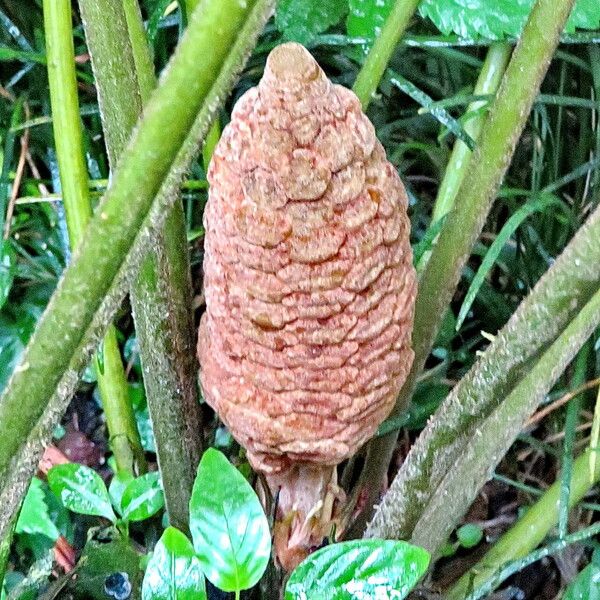
Plant Overview
Often called the Sand Palm or Mexican Cycad, Zamia loddigesii is a rugged "living fossil" that looks like a cross between a prehistoric fern and a miniature palm. Hailing from the coastal dunes and dry forests of Mexico, this plant has survived for millions of years by being incredibly tough and adaptable. It’s a favorite for "set-it-and-forget-it" gardeners who want an ancient, architectural vibe without the high maintenance of tropical ferns.
🔍 How to Identify
- 🌿 The Foliage: It produces stiff, upright fronds that can grow up to 3 feet long. The leaflets are thick, leathery, and arranged in pairs along the stem.
- 🪚 The Edges: If you look closely at the tips of the leaflets, you’ll notice tiny, subtle serrations or "teeth" that distinguish it from the smoother Zamia furfuracea (Cardboard Palm).
- 🪵 The Trunk: Most of its trunk (caudex) stays underground or sits very low to the soil, giving the appearance that the leaves are erupting directly from the earth.
🏡 In Your Garden
- 🏜️ Drainage is King: Because its natural habitat involves sandy Mexican dunes, this plant will quickly rot if its "feet" stay wet. It thrives in gritty, sandy soil and is highly drought-tolerant once established.
- ⚓ Deep Roots: It develops a significant taproot to store water and nutrients. Because of this, it dislikes being transplanted; pick a permanent spot or a very deep pot to keep it happy long-term.
- ☀️ Light Versatility: While it loves bright, indirect light, it is surprisingly tolerant of different exposures, ranging from dappled shade to nearly full sun, though the leaves may scorch in extreme midday heat.
⚠️ Safety & Toxicity
- 🚫 Status: TOXIC. All parts of the plant, especially the seeds (if it produces cones), are poisonous if ingested.
- 🐾 Pet Warning: It contains cycasin, which is highly toxic to dogs, cats, and horses. Ingestion can lead to severe liver failure. Keep this plant out of reach of curious chewers.
- 👶 Human Safety: While the stiff leaves are a natural deterrent, keep it away from children’s play areas to avoid accidental ingestion of any plant material.
✨ Fun Fact
Cycads like Zamia loddigesii have changed very little since the Triassic period. They were a primary food source for herbivorous dinosaurs, meaning the plant in your living room belongs to a lineage that literally watched the T-Rex come and go!

Detailed Care Instructions

Place in a window with dappled sun or a spot in the middle of a room. Or directly in a window facing west or east.

The presence of a dry surface layer of soil does not indicate that the plant requires water. Instead, stick your finger 1-2" (3-5 cm) deep in the soil to feel dampness or moisture content. If the soil seems dry, it's time to water your greens. If the soil is still moist, however, it is better not to water your plant and instead wait a day or two. Overwatering or waterlogging raises the risk of root rot. So if the soil takes longer than a week to dry, check the light conditions because it's likely that the plant isn't getting enough light. It's fine if the upper layer of soil is dry between waterings, but the deeper soil layer should always have some moisture.







