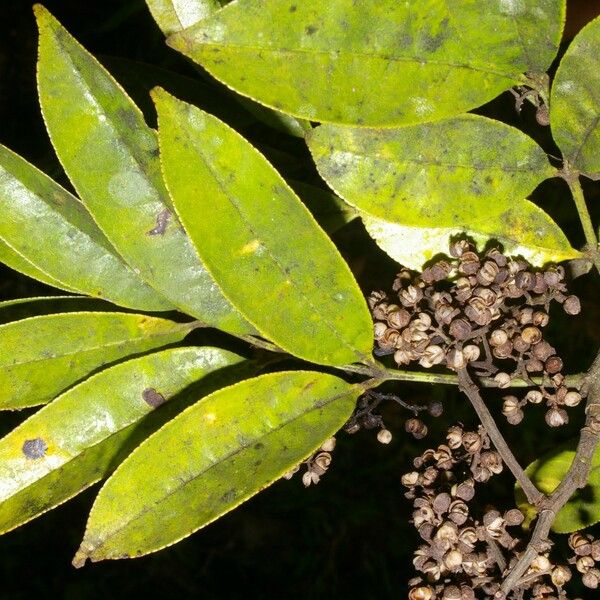
Plant Overview
Known as the "Pointed-leaf Prickly Ash," this plant is a spirited and resilient member of the Citrus family. Hailing from the sun-drenched landscapes of the Caribbean and Central America, it is a rugged shrub that balances delicate, aromatic foliage with a fierce defensive system of thorns. It is a plant that commands respect in the wild, often found clinging to rocky limestone hillsides or adding dense texture to tropical thickets.
🔍 How to Identify
- 🍃 Acuminate Leaves: The glossy leaflets are distinctively shaped, ending in a long, tapering point (an "acuminate" tip) which gives the species its botanical name.
- ⚔️ Prickly Armor: The stems and occasionally the leaf midribs are armed with sharp, flattened prickles that can easily snag skin or clothing.
- 🍋 Scented Foliage: Like its lemon and orange cousins, crushing the leaves releases a bright, peppery, or citrus-like aroma that is both refreshing and sharp.
🏡 In Your Garden
- ☀️ Sun and Drainage: In a garden setting, this plant thrives in limestone-rich or sandy soils and craves bright sunlight; it is exceptionally drought-tolerant once it has found its footing.
- 🌳 The Taproot Factor: It develops a deep, stubborn taproot very early in its life. Because of this, it "hates" being moved—ensure you choose a permanent "forever home" for it to avoid fatal transplant shock.
⚠️ Safety & Toxicity
- 🌵 Physical Hazard: The primary danger is the sharp, hooked thorns. This is not a plant for high-traffic areas or near children's play zones, as the prickles can cause deep scratches.
- 🐾 Pet Safety: While not classified as highly toxic, the essential oils in the leaves can cause digestive upset if ingested by curious pets, and the thorns pose a physical risk to eyes and paws.
✨ Fun Fact
- 🌶️ Spicy Cousins: This plant is a close relative of Zanthoxylum bungeanum, the tree that produces Szechuan peppercorns. While Z. acuminatum isn't the source of the spice, its bark contains similar compounds that can cause a tingling or numbing sensation on the tongue!

Detailed Care Instructions
To water this plant, you should first evaluate the soil moisture by inserting a finger into the soil up to the second knuckle. If the soil feels dry, it is time to water. It is important to water thoroughly, allowing the soil to become thoroughly saturated and ensuring that water reaches the root zone. However, it is equally important not to overwater, as constantly wet soil can lead to root rot and other issues. As such, it is typically best to water deeply but infrequently, allowing the top layer of soil to dry out slightly between watering sessions. Additionally, it can be helpful to ensure adequate drainage by using a well-draining soil mix and ensuring that the pot or planting area has drainage holes. Finally, it is worth noting that while this plant can tolerate some drought, it will not perform well if allowed to become completely dry for extended periods of time.
Zanthoxylum acuminatum prefers a well-draining soil mixture that is slightly acidic. A soil mixture that is high in organic matter is ideal, with a pH level between 5.5 and 7.0. It is recommended to use a mixture of equal parts peat moss, perlite, and pine bark fines. This soil mixture helps to retain moisture while allowing excess water to drain away from the roots.








