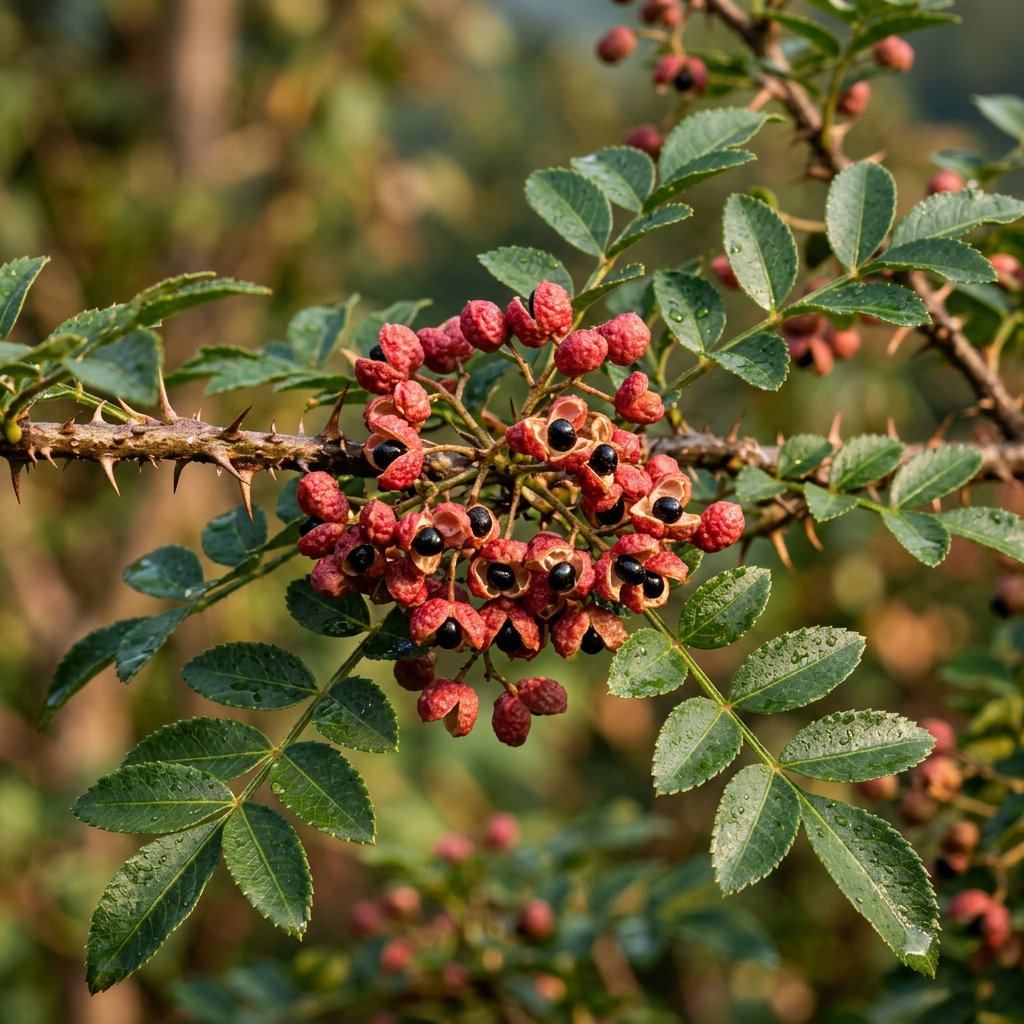
Plant Overview
Known as the Szechuan Pepper or "Prickly Ash," this woody shrub is the source of the famous "Ma" (numbing) flavor in Asian cuisine. Though it shares a name with peppercorns, it is actually a member of the Citrus family, which explains its bright, lemony undertones. In ancient China, it was so highly regarded for its aroma that it was allegedly mixed into the plaster of palace walls to perfume the air.
🔍 How to Identify
- 🌿 The Foliage: Feathery, pinnate leaves usually consisting of 5 to 11 small leaflets that emit a distinct citrus scent when bruised.
- 🗡️ The Armor: The branches and trunk are covered in flat, broad-based prickles that look like sharp, woody triangles.
- 🔴 The "Peppers": Small, round, reddish-brown berries that split open when ripe to reveal a single, shiny black seed.
🏡 In Your Garden
- 🛡️ Natural Security: Because of its aggressive thorns, many gardeners use it as a "living fence" or security hedge to deter intruders or large wildlife.
- 🪴 Soil & Resilience: It is remarkably tough and cold-hardy compared to its citrus cousins, preferring well-drained soil but tolerating a variety of pH levels.
- ✂️ Pruning Caution: It has a sprawling, suckering habit. If you want a neat shrub rather than a thicket, regular pruning is required—but always wear thick, heavy-duty leather gloves.
⚠️ Safety & Toxicity
- 🩹 Physical Hazard: The thorns are the primary safety concern; they are exceptionally sharp and can easily pierce standard gardening gloves.
- 🐕 Pet Safety: While the dried husks are used in human food, the concentrated oils in the fresh plant can cause digestive upset in cats and dogs if chewed.
- 👅 The "Buzz": Ingesting the husks causes a vibrating, numbing sensation on the tongue. This is a natural chemical reaction and not an allergic "sting," though it can be startling to the uninitiated.
✨ Fun Fact
The numbing sensation of Szechuan pepper isn't actually a "flavor"—it's a physical vibration! A compound called hydroxy-alpha-sanshool tricks your touch receptors into feeling a frequency of about 50 Hertz, making your brain believe your mouth is physically vibrating.

Detailed Care Instructions
To grow a Zanthoxylum Bungeanum plant, also known as Sichuan pepper, you can follow these steps:
- Obtain seeds or a young plant: You can purchase Zanthoxylum Bungeanum seeds or young plants online or from a nursery. Make sure to choose a reputable source.
- Choose a suitable location: Zanthoxylum Bungeanum prefers full sun but can tolerate partial shade. It thrives in well-drained soil with good organic content. Ensure the location is protected from strong winds.
- Prepare the soil: Before planting, work the soil by removing weeds, rocks, and debris. Loosen the soil to a depth of 12-18 inches and amend it with compost or well-rotted organic matter to improve drainage and nutrient content.
- Planting seeds: If starting from seeds, soak them in water for 24-48 hours before planting. Sow the seeds directly into the soil, about 1/2 inch deep. Space the seeds 6-8 inches apart to provide room for growth.
- Planting young plants: If using young plants, dig a hole slightly larger than the root ball and place the plant into the hole. Backfill the hole with soil and gently press it down around the base of the plant.
- Watering: Regular watering is essential, especially during the initial growth phase. Keep the soil evenly moist but not waterlogged. Water deeply and allow the top few inches of soil to dry out before watering again.
- Mulching: Apply a layer of mulch around the plant to help retain soil moisture, suppress weeds, and regulate soil temperature. Use organic mulch such as bark chips or straw.
- Pruning: Zanthoxylum Bungeanum plants benefit from light pruning to maintain shape, remove dead or damaged branches, and encourage new growth. Prune during late winter or early spring before new growth starts.
- Fertilization: Apply a balanced slow-release fertilizer in early spring to provide necessary nutrients. Follow the product instructions for dosage and application method.
- Pest and disease control: Monitor the plant for pests such as aphids, scale insects, or caterpillars. Use appropriate organic pest control methods if necessary. Zanthoxylum Bungeanum is generally resistant to diseases.
- Harvesting: Depending on the variety, Zanthoxylum Bungeanum plants can be harvested for their berries (Sichuan pepper) once they turn red. The berries can be dried and used as a spice.
Remember to research specific care requirements for your specific region and consult local resources for any specific tips or recommendations.

Place in a window with dappled sun or a spot in the middle of a room. Or directly in a window facing west or east.

The plant requires watering regularly but avoids over-watering. Check the moisture level of the soil before watering and only water when the soil is dry to the touch. Water deeply until the water drains out from the bottom, and then allow the soil to drain completely. Avoid leaving the plant in standing water. Additionally, the plant prefers well-draining soil and can benefit from mulching to help retain moisture.
To fertilize this plant, use a balanced fertilizer with equal amounts of nitrogen, phosphorus, and potassium. Apply the fertilizer once every two months during the growing season. Use a slow-release granular fertilizer or a liquid fertilizer diluted to half strength. Be careful not to over-fertilize, as this can damage the plant. Water thoroughly after applying fertilizer to help distribute the nutrients throughout the soil.
Zanthoxylum Bungeanum is a plant that prefers a well-draining soil mixture that is slightly acidic in nature. The soil should contain enough organic matter to retain moisture and provide adequate nutrition for the plant. A mixture of peat moss, perlite, and sand is ideal for growing this plant. The soil should be kept moist but not waterlogged, and the plant should be watered regularly. Adding a layer of mulch around the base of the plant will help to keep the soil moist and provide some insulation during cold weather. It is important to avoid using heavy soils or soil that contains a lot of clay as this can cause drainage problems and restrict root growth.
Zanthoxylum Bungeanum plants can be propagated through both seed sowing and stem cuttings.
Seed Sowing:
- Collect seeds from a mature Zanthoxylum Bungeanum plant in the fall (September to October).
- Clean the seeds with water and dry them thoroughly before storing.
- In the spring (March to April), sow the seeds in a well-draining soil mix.
- Cover the seeds lightly with soil and keep the soil moist.
- Place the container in a warm and bright location, but not in direct sunlight.
- The seeds should germinate within 3-4 weeks.
Stem Cuttings: - Take a softwood cutting from a healthy Zanthoxylum Bungeanum plant in the spring (May to June).
- Cut a 4-6 inch section of young stem using a clean and sharp knife.
- Remove the leaves from the lower half of the stem.
- Dip the cut end of the stem in a rooting hormone powder.
- Plant the stem in a well-draining soil mix, making sure that the lower half is covered with soil.
- Water the soil thoroughly and cover the container with a plastic bag to create a humid environment.
- Place the container in a warm and bright location, but not in direct sunlight.
- After 3-4 weeks, the cutting should develop roots and new growth.
Common pests of the sichuan-pepper include Scale insect, mealybugs, spider mites, aphids. Make a habit of checking your sichuan-pepper frequently for pests so that any infestations can be caught and managed early.








