Plant Overview
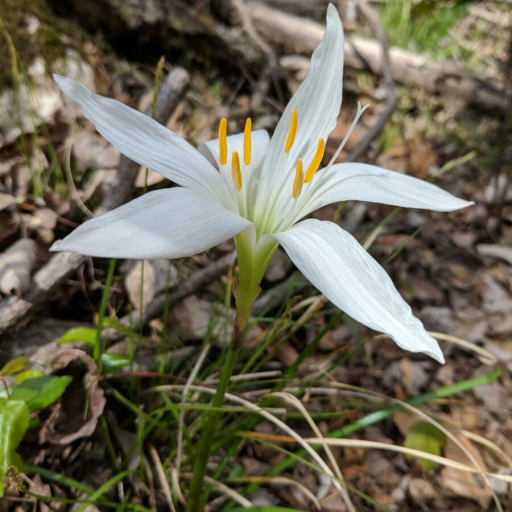
Commonly known as the Atamasco Lily or the "Wild Easter Lily," this enchanting wildflower is a native treasure of the Southeastern United States. It belongs to the Rain Lily family, earning its name because it often bursts into a spectacular bloom immediately following a heavy spring downpour. In the wild, seeing a colony of these stark white trumpets against a dark, muddy forest floor feels like stumbling upon a hidden woodland celebration.
🔍 How to Identify
- ✨ The Blooms: Large, upright, funnel-shaped flowers with six snowy-white petals. As the flower ages, it often takes on a delicate, pale pink blush.
- 🍃 The Foliage: Narrow, deep-green, grass-like leaves that are quite glossy. They often appear before or alongside the flowers, staying low to the ground.
- 📏 Growth Habit: A low-growing perennial that reaches about 8–12 inches in height. It grows from an underground bulb, often forming small, dense clumps over time.
🏡 In Your Garden
- 💧 The "Rain" Connection: Unlike many other bulbs that rot in soggy soil, the Atamasco Lily thrives in wet conditions. It is the perfect candidate for "rain gardens" or those low-lying, boggy spots in your yard where the grass never seems to dry out.
- 🌱 Soil & Sun: This lily prefers acidic, organic-rich soil, mimicking its natural habitat of floodplain forests. While it enjoys bright light to trigger blooming, it appreciates a bit of dappled afternoon shade to keep its delicate petals from scorching.
- ⏳ Patience is Key: It can be sensitive to being moved. Once planted, try to leave the bulbs undisturbed so they can naturalize and create a larger floral display each passing year.
⚠️ Safety & Toxicity
- 🚫 Status: Toxic to humans and pets.
- 🐾 Details: Like many members of the Amaryllis family, the Atamasco Lily contains alkaloids (specifically lycorine) that are poisonous if swallowed. The bulbs are the most concentrated source of toxins. Keep this plant away from curious dogs, cats, or horses, as ingestion can cause severe digestive upset and lethargy.
✨ Fun Fact
The name Zephyranthes is derived from the Greek words Zephyrus (the god of the West Wind) and anthos (flower). It literally translates to "Flower of the West Wind," a poetic nod to the spring breezes that bring the rain showers needed for this lily to wake up and bloom.

Detailed Care Instructions
To grow Zephyranthes Atamasco plants, also known as rain lilies or Atamasco lilies, follow these steps:
- Choose a suitable location: Zephyranthes Atamasco plants prefer a location with full sun to partial shade. Ensure that the soil is well-drained.
- Prepare the soil: Before planting, improve the soil by adding organic matter such as compost or well-rotted manure. This will help to retain moisture and provide nutrients.
- Plant the bulbs: Dig a hole that is around 3-4 inches deep. Place the bulbs in the hole with the pointed end facing upwards. Space them about 6-8 inches apart.
- Water thoroughly: After planting, water the bulbs deeply. Keep the soil moist but not waterlogged during the growing season. Reduce watering during their dormant period.
- Mulch: Apply a layer of organic mulch around the plants to help conserve moisture and suppress weed growth. Avoid covering the base of the bulbs too deeply.
- Fertilize: Apply a slow-release balanced fertilizer to the soil in early spring. Follow the instructions on the packaging for the appropriate dosage.
- Maintain the plants: Zephyranthes Atamasco plants are relatively low-maintenance. Remove any yellow or dead foliage to maintain the plant's appearance.
- Division: Over time, the bulbs may multiply. In early spring or after the plant finishes blooming, you can carefully dig up the bulbs and divide them to propagate more plants.
- Be patient: Zephyranthes Atamasco plants may take a couple of years to establish and bloom. However, they are known for their resilience and ability to naturalize in the landscape.
By following these steps, you should be able to successfully grow Zephyranthes Atamasco plants and enjoy their beautiful blooms.

Place in a bright room that is sun drenched almost all day. Or directly in a south-facing window.

To properly water this particular plant, it is important to consider its specific needs. First, it requires regular watering during the growing season, but should be allowed to dry out between waterings to prevent overwatering and potential root rot. It prefers moist but well-drained soil, so a good watering schedule would be to water deeply once a week or when the top inch of soil becomes dry. It is also important to avoid getting water on the foliage and flowers, as it can promote fungal growth. During the dormant season, watering should be significantly reduced to avoid any moisture buildup in the soil. Overall, consistent and thoughtful watering practices will help this plant thrive.
To fertilize this plant, use a balanced fertilizer with equal parts nitrogen, phosphorus, and potassium. Apply the fertilizer in early spring and again in mid-summer. Avoid over-fertilizing as this can damage the plant. Water the plant thoroughly before and after fertilizing to ensure the nutrients are absorbed effectively.
The best soil for growing this plant is a well-draining soil mix that is rich in nutrients. It should have a neutral to slightly acidic pH level, ideally between 6.0 and 7.0. The soil should be light and airy, with good water retention capabilities to prevent the plant from drying out. It is recommended to add compost or other organic material to improve soil quality. Avoid using heavy clay soil or soil that may become waterlogged as this can lead to root rot and other soil-borne diseases.
To propagate this plant, first select healthy and mature specimens with established rhizomes. Carefully dig them up from the soil using a small trowel or garden fork, being careful not to damage the roots. Remove any dead or damaged leaves and gently separate the rhizomes by hand or with a sharp, clean knife.
Choose a well-draining potting medium, such as a mix of perlite, peat moss, and sand. Place the rhizomes in the potting medium with the roots facing downwards and cover them with soil. Water the newly potted plants thoroughly and place them in a location that receives bright but indirect light.
Keep the soil consistently moist but not waterlogged, and avoid exposing the plants to temperatures below freezing. Within a few weeks, the new plants should begin to grow and produce leaves. Once they have grown to a mature size, they can be transplanted back into the garden.








