Plant Overview
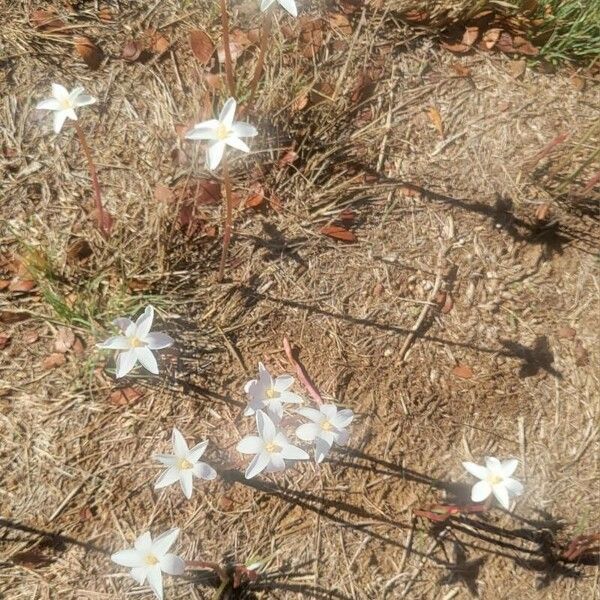
Often called the Brazos Rain Lily, this delicate native of the American South and Mexico is a master of timing. It spends much of its life as a simple cluster of grass-like leaves, waiting patiently for the heavy summer downpours to signal its sudden, spectacular appearance. Because it often waits for the cool of the dusk to unfurl its pearly petals, it is frequently sought after by night-garden enthusiasts.
🔍 How to Identify
- 🌸 The Flower: Elegant, trumpet-shaped white blossoms that often show a faint, refreshing greenish tint at the very base of the floral tube.
- 🍃 The Foliage: Long, narrow, and strap-like leaves that look remarkably like common lawn grass, allowing the plant to "hide" in meadows until it is ready to bloom.
- 📏 The Stature: A single, nodding flower sits atop a slender, hollow stem, usually reaching between 8 to 12 inches in height.
🏡 In Your Garden
- 💧 The Rain Trigger: This plant is famous for its "pulsing" bloom cycle. It responds to the barometric pressure changes and moisture of heavy thunderstorms. In a home garden, a deep, intentional soaking during a dry spell can often "trick" them into a surprise floral display.
- 🌱 Tough as Nails: Unlike many delicate-looking lilies, the Brazos Rain Lily is incredibly resilient. It thrives in rocky, alkaline, or clay-heavy soils where other bulbs might struggle, making it an excellent choice for xeriscaping or "wild" meadow corners.
⚠️ Safety & Toxicity
- 🚫 Toxic Bulbs: While the flowers appear innocent, the entire plant—especially the underground bulb—contains various alkaloids such as lycorine.
- 🐾 Keep Pets Away: It is considered toxic to dogs, cats, and horses. Ingestion can lead to digestive upset, drooling, or more serious lethargy, so it is best planted away from areas where pets frequently dig.
✨ Fun Fact
📜 The scientific name Chlorosolen is derived from the Greek words for "green" and "pipe," specifically referring to the unusually long, greenish floral tube that connects the white petals to the stem.

Detailed Care Instructions

Place in a dark room with little light, like a dark bedroom or a spot far away from a window or directly in a north-facing window.

Some plants require more regular watering than others, which should be done every few days. It's critical to maintain the soil moist all of the time. The water requirements of the same plant placed in pots with varying sizes will differ. Because the water in the smaller pot evaporates faster than the water in the larger pot, it will require more watering. Regardless of pot size, the surface should constantly be maintained moist.







