Plant Overview
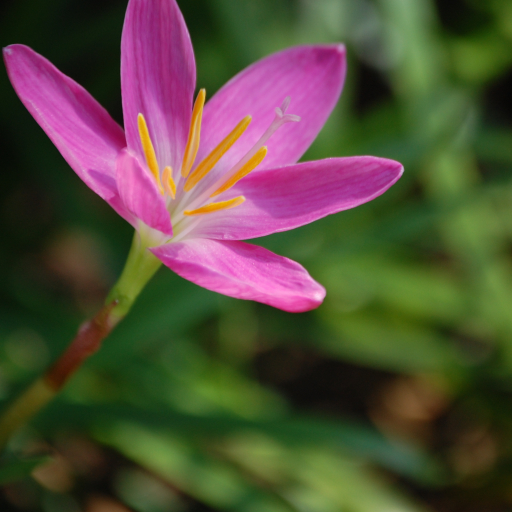
Often called the Pink Rain Lily, Zephyranthes minuta is a master of the element of surprise. These delicate-looking blooms are famous for their sudden appearance, seemingly "waking up" overnight after a heavy summer downpour. Originally from Mexico and Guatemala, they bring a touch of woodland magic to borders and rock gardens.
🔍 How to Identify
- 🌸 The Flower: Vibrant, rose-pink petals that form a funnel or trumpet shape, accented by a bright yellow center of pollen-rich anthers.
- 🌱 The Foliage: Slender, dark-green leaves that look remarkably like thick blades of grass, often blending into the lawn until the flowers emerge.
- 📏 Stature: These are diminutive beauties, usually standing only 6 to 10 inches tall, making them perfect for "secret" garden corners or container edges.
🏡 In Your Garden
- 💧 The Rain Trigger: These plants possess a biological "barometer." While most flowers bloom on a strict seasonal schedule, the Rain Lily waits for the atmospheric pressure change and moisture of a storm to trigger a rapid growth spurt.
- 🏘️ Social Bulbs: They grow from small, hardy bulbs that love to multiply. Over a few seasons, a single planting will form a dense colony, creating a "carpet" of pink every time it rains. They prefer well-draining soil and are surprisingly drought-tolerant when dormant.
⚠️ Safety & Toxicity
- 🚫 Harmful if Ingested: Like many members of the Amaryllis family, the entire plant—especially the bulb—contains toxic alkaloids (primarily lycorine).
- 🐾 Pet & Child Safety: Keep this plant out of reach of curious pets and toddlers. Ingestion can cause stomach upset, vomiting, and lethargy. It is best enjoyed as a visual treat rather than a tactile one.
✨ Fun Fact
The name Zephyranthes is derived from "Zephyrus," the Greek god of the west wind, and "anthos," meaning flower. It literally translates to "Flower of the West Wind," referring to the stormy winds that bring the rain they love so much.

Detailed Care Instructions
To grow Zephyranthes Minuta plant, follow these steps:
- Choose a suitable location: Zephyranthes Minuta prefers well-draining soil and partial to full sunlight. Select a spot in your garden where the plant can receive at least 4-6 hours of direct sunlight daily.
- Prepare the soil: Ensure the soil is loose, well-drained, and rich in organic matter. You can improve the soil by adding compost or well-rotted manure before planting.
- Planting: Dig a hole that is slightly larger than the root ball of the Zephyranthes Minuta plant. Place the plant in the hole, ensuring that the top of the root ball is level with the soil surface. Fill the hole with soil, gently firming it around the roots.
- Watering: After planting, water the plant thoroughly to settle the soil and remove any air pockets around the roots. Regular watering is important for the initial establishment; however, avoid overwatering, as Zephyranthes Minuta prefers slightly drier conditions.
- Mulching: Apply a layer of organic mulch around the plant to help retain moisture, suppress weeds, and regulate soil temperature.
- Fertilization: Zephyranthes Minuta generally does not require much fertilization. However, you can apply a balanced slow-release fertilizer once in the spring to promote healthy growth.
- Pruning: Remove any dead or damaged leaves, flowers, or stalks to maintain the plant's appearance and overall health.
- Pests and diseases: Zephyranthes Minuta is relatively resistant to pests and diseases. However, watch out for snails, slugs, or aphids, and take appropriate measures to control them, if necessary.
- Overwintering: In colder climates, where frost is possible, Zephyranthes Minuta may require protection. Consider covering the plant with a layer of mulch or moving it to a frost-free location during winter.
- Propagation: Zephyranthes Minuta can be propagated by dividing the bulbs. Wait until the plant is dormant in late summer or early fall, dig up the bulbs, separate them, and replant in new locations or containers.
By following these guidelines, you can successfully grow Zephyranthes Minuta plant in your garden or container.

Place in a bright room that is sun drenched almost all day. Or directly in a south-facing window.

Zephyranthes Minuta is a plant that requires regular watering to thrive. To water this plant, you should use clean, room temperature water and gradually pour it around the base of the plant to ensure that the roots are properly hydrated. Allow the soil to absorb the water before watering again to avoid overwatering the plant. It is important to avoid getting water on the leaves and flowers, as this can lead to fungal diseases. Additionally, you should be careful not to water the plant too much, as this can lead to root rot and other problems. It is recommended to water the plant deeply once a week, or more frequently during hot and dry weather.
To promote healthy growth of this plant, it is recommended to fertilize it in the spring with a balanced slow-release fertilizer. Apply the fertilizer evenly at the base of the plant and work it into the soil. Water the plant thoroughly after fertilizing and continue to water regularly, keeping the soil moist but not waterlogged. Avoid fertilizing during the dormant period in the fall and winter.
Zephyranthes Minuta plant requires well-drained, loose, and fertile soil. The ideal soil for this plant is one with a pH range of 6.0 to 7.5 that is rich in organic matter. The soil should be moist, but not waterlogged, as the plant is not tolerant of standing water. The addition of perlite or sand can help improve soil drainage. It is recommended to avoid using heavy clay soils or soil mixes that retain too much moisture.
Zephyranthes Minuta plant can be propagated through seed or division of its bulbs. To propagate through seed, collect the seeds when the capsules have dried on the plant. Sow the seeds in a fertile, well-draining potting mix and keep them moist until they germinate.
To propagate through division, dig up the plant when it is dormant and carefully separate the bulbs. Each bulb should have at least one healthy shoot or a portion of the root system. Replant the bulbs in fresh soil and water them well until they establish themselves.
Propagation through division should be done every 2-3 years to prevent overcrowding and ensure optimal growth.








