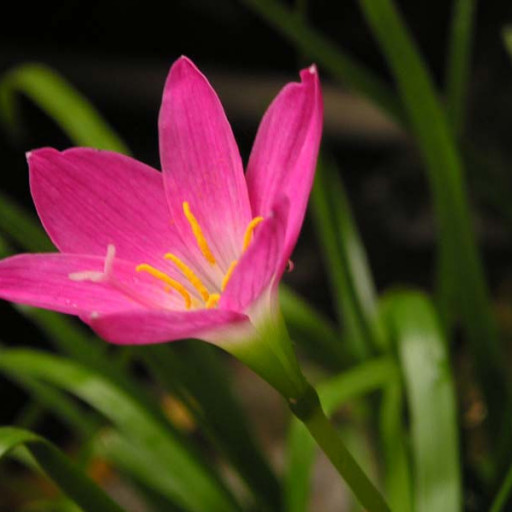
Plant Overview
Often called the Pink Rain Lily, this Caribbean native is like a floral magician. After a heavy summer downpour, these bulbs seem to burst from the ground overnight, blanketing the soil in soft rosy hues. They are the ultimate "surprise" plant for any tropical or subtropical garden, appearing as if by magic when the weather turns wet.
🔍 How to Identify
- 🌸 Bloom Shape: Funnel-shaped flowers with six overlapping petals, usually a vibrant rose-pink with a contrasting white or pale yellow center.
- 🌿 Foliage: Narrow, grass-like leaves that are glossy, dark green, and grow in tufted clumps, often staying low to the ground.
- 🌱 Growth Habit: These are bulbous perennials; the flowers sit atop individual, leafless stems (scapes) that rise just above the foliage.
🏡 In Your Garden
- ⛈️ The Rain Trigger: These plants are biologically programmed to bloom in response to heavy rain and shifts in barometric pressure. If you want a show, give them a deep soaking during a hot dry spell!
- 🪴 Crowding is Key: Unlike many plants that hate being cramped, the Pink Rain Lily actually prefers to be slightly "pot-bound" or crowded in the garden. This stress encourages more frequent and dense blooming cycles.
- 🏝️ Soil & Drainage: While they love water to trigger flowers, the bulbs will rot if left in standing water. They require sandy, well-draining soil to stay healthy during their dormant periods.
⚠️ Safety & Toxicity
- 🚫 Toxic Status: All parts of the Zephyranthes Rosea are considered toxic if ingested, with the highest concentration of toxins found in the bulbs.
- 🐾 Pets and Kids: The plant contains various alkaloids, including lycorine, which can cause vomiting, diarrhea, and lethargy in cats, dogs, and small children. It is best planted in areas where curious nibblers won't reach it.
✨ Fun Fact
The genus name Zephyranthes is derived from the Greek words Zephyrus (the god of the West Wind) and anthos (flower), literally translating to "Flower of the West Wind." They were so named because they often bloom when the rainy winds blow in from the west in their native habitats.

Detailed Care Instructions
| Humidity | High |
| Lighting | Part Sun |
| Toxicity | Poisonous |
| Difficulty | Medium |
| Hibernation | Cold Period |
| Hardiness Zones | 7 - 11 |
To grow Zephyranthes Rosea (also known as the Pink Rain Lily) successfully, follow these steps:
- Choose a suitable location: Select a spot that receives full sun to partial shade. The plant prefers warm temperatures and well-drained soil.
- Prepare the soil: Ensure the soil is loose, well-drained, and rich in organic matter. You can amend heavy clay soils with compost or sand to improve drainage.
- Plant the bulbs: Plant the Zephyranthes Rosea bulbs about 2-4 inches deep in the soil. Space them about 4-6 inches apart to allow room for growth. Plant them in the spring or fall for best results.
- Watering: Keep the soil consistently moist, especially during dry periods or when the plants are actively growing. However, be cautious not to overwater, as the bulbs may rot in soggy conditions.
- Fertilization: Apply a balanced, slow-release fertilizer to the soil in spring or early summer when new growth emerges. Follow the instructions on the fertilizer packaging for proper application.
- Mulching: Apply a layer of organic mulch around the plants to help retain moisture, suppress weed growth, and regulate soil temperature.
- Pests and diseases: Zephyranthes Rosea are generally resistant to pests and diseases. However, keep an eye out for aphids, spider mites, or snails. Treat any infestations promptly using appropriate insecticides or organic remedies.
- Winter care: In colder climates, where Zephyranthes Rosea is not winter hardy, dig up the bulbs before the first frost. Store them in a cool, dry place over winter, and replant them in spring when the danger of frost has passed.
- Propagation: To propagate Zephyranthes Rosea, either divide the bulbs in early spring or collect the seeds once the flower fades. Plant new bulbs or seeds in the prepared soil, following the same instructions as before.
By following these steps, you should be able to successfully grow Zephyranthes Rosea and enjoy its beautiful pink flowers.

Place in a window with dappled sun or a spot in the middle of a room. Or directly in a window facing west or east.

To water this plant, first, choose a well-draining soil mix that allows water to flow through easily. Next, water the plant deeply when the top inch of soil feels dry to the touch. Avoid over-watering, as this can lead to root rot. Instead, water around the base of the plant, making sure to thoroughly soak the soil without creating standing water. Keep the soil consistently moist but not waterlogged. This plant prefers moderate to high humidity levels, so misting the leaves occasionally can also help it thrive.
- Choose a balanced fertilizer with equal amounts of nitrogen, phosphorus, and potassium.
- Apply the fertilizer to the soil around the plant using a granular or water-soluble form.
- Follow the manufacturer's instructions on the application rate and frequency.
- Water the plant after fertilizing to help the nutrients penetrate the soil.
- Fertilize regularly during the growing season, but reduce or stop fertilizing in winter or dormant periods.
- Avoid over-fertilizing, as this can cause root burn and harm the plant.
Zephyranthes Rosea plant prefers a well-draining soil with good fertility. It is recommended to use a soil mix that is rich in organic matter, such as compost or peat moss, and contains sand or perlite to improve drainage. The soil pH should be slightly acidic to neutral, between 6.0 and 7.0.
Avoid using soils that are heavy and compacted, as they can retain too much moisture and lead to root rot. Additionally, using a soil mix that is too alkaline can prevent the plant from absorbing necessary nutrients.
It is also important to ensure that the soil has adequate moisture retention capacity, without being waterlogged or too dry. Regular watering and periodic fertilization can help promote healthy growth and flowering.
To propagate this plant, you will need to first select a healthy parent plant and carefully remove a leaf or stem cutting. It is important to make sure your cutting has at least one node (where the leaf joins the stem) and at least two leaves.
Next, prepare a container with soil that drains well and moisten it slightly. Dip the end of your cutting in rooting hormone if desired, and place it in the soil at a depth of about half an inch.
Cover the container with a clear plastic bag to create a mini greenhouse and promote humidity. Keep the soil moist, but not soaking wet, and place the container in a bright, filtered light area. Avoid direct sun which can cause too much heat and dryness for the new plant.
Propagating the Zephyranthes Rosea plant can take several weeks to a few months to take root and for signs of new growth to appear. Keep the plastic bag on the container until the new plant starts to grow, and then gradually expose it to the air by puncturing small holes in the plastic bag until it's fully removed.
Once your new plant has established sturdy roots, it can be transplanted into a larger container or planted directly into the ground. Congratulations, you have now propagated a new Zephyranthes Rosea plant!
Common pests of the pink rain lily include Mealybugs, thrips. Make a habit of checking your pink rain lily frequently for pests so that any infestations can be caught and managed early.








