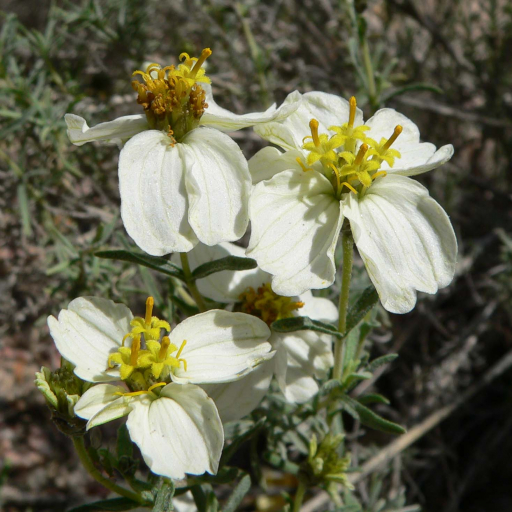
Plant Overview
Often called the Desert Zinnia or Spinyleaf Zinnia, this resilient little shrub is a true survivor of the Chihuahuan and Sonoran deserts. Unlike its flashy, oversized garden cousins, Zinnia acerosa sports delicate, papery white blooms that look like tiny stars scattered across the rocky landscape. It is a staple for xeriscaping, bringing a wild, untamed beauty to the most sun-baked corners of a garden.
🔍 How to Identify
- 🌼 Petal Power: It features small, creamy white flowers with five to seven broad ray petals surrounding a bright, golden-yellow central disc.
- 🌿 Needle-Like Foliage: The leaves are the plant's namesake; they are very narrow, grey-green, and needle-like (acerosa means "needle-shaped"), which helps the plant conserve moisture.
- 🪴 Growth Habit: It forms a low, rounded, and woody-based mound, usually staying under 10 inches tall, giving it a neat, "tufted" appearance even in the wild.
🏡 In Your Garden
- 🏜️ Drainage is King: This zinnia is a "dry-feet" specialist. It thrives in poor, rocky, or limestone-heavy soil and will quickly rot if planted in heavy clay or areas with standing water.
- ☀️ Sun Worshiper: To keep its shape compact and its flowering profuse, it needs the most intense sunlight you can provide. In even partial shade, it tends to become leggy and sparse.
- 🦋 Pollinator Magnet: Despite its rugged exterior, it is a high-value nectar source. It is frequently visited by native bees and small butterflies who rely on its blooms during the peak heat of summer.
⚠️ Safety & Toxicity
- ✅ Non-Toxic Status: Zinnia acerosa is generally considered non-toxic to humans, dogs, and cats. It is a safe addition to landscapes where pets and children roam.
- 🧤 Physical Texture: While not "spiny" like a cactus, the mature stems are quite woody and the leaves are stiff. Wear light gardening gloves when pruning to avoid minor skin irritation from the scratchy branches.
✨ Fun Fact
While most zinnias found in nursery centers are annuals that die off after one season, the Desert Zinnia is a hardy perennial. It lives for many years, retreating into a dormant, twiggy state during droughts and "waking up" with a burst of white flowers as soon as the rains return!

Detailed Care Instructions
To grow Zinnia acerosa plants, follow these steps:
- Choose a suitable location: Zinnia acerosa plants prefer full sun, so select a spot that receives at least 6-8 hours of direct sunlight per day. Ensure the soil is well-draining.
- Prepare the soil: Zinnia acerosa plants thrive in sandy or loamy soil. Before planting, amend the soil with organic matter, such as compost, to improve fertility and drainage.
- Sow the seeds: Sow the Zinnia acerosa seeds directly into the soil after the danger of frost has passed. The seeds are quite small, so sprinkle them evenly over the prepared soil. Gently press them into the soil but do not cover them, as they need sunlight to germinate.
- Water regularly: Keep the soil evenly moist but not soggy. Water the plants regularly, especially during dry periods. Avoid overhead watering, as it may cause powdery mildew or other fungal issues.
- Provide support (optional): Zinnia acerosa plants tend to spread and can benefit from some support or staking to prevent them from sprawling. You can install stakes or small cages around the plants when they reach a suitable size.
- Mulch around the plants: Apply a layer of mulch around the Zinnia acerosa plants to help retain moisture, suppress weed growth, and regulate soil temperature.
- Deadhead spent flowers: As the Zinnia acerosa plants produce flowers, remove the faded or spent blooms regularly. This process, called deadheading, encourages continuous blooming and extends the flowering period.
- Monitor for pests and diseases: Keep an eye out for common pests such as aphids, spider mites, or caterpillars. Treat any infestations promptly with appropriate organic pesticides or insecticidal soaps. Also, monitor for any signs of diseases and take necessary measures for control.
- Harvest seeds (optional): If you want to collect seeds for storage or future planting, allow the flowers to fully mature and dry on the plant. Once dry, collect the seeds and store them in a cool, dry place.
By following these steps, you can successfully grow Zinnia acerosa plants and enjoy their beautiful flowers throughout the growing season.

Place in a bright room that is sun drenched almost all day. Or directly in a south-facing window.

To water this plant, you should ensure that the soil is not completely dry before irrigating. Use a watering can or hose with a gentle stream of water to moisten the soil around the base of the plant, being careful not to splash the leaves. Avoid overwatering, as this can lead to root rot and other diseases. It is also important to water in the morning or evening, rather than during the hottest part of the day, to reduce moisture loss through evaporation.
To fertilize the plant, it is recommended to apply a balanced fertilizer with an N-P-K ratio of 10-10-10, following the manufacturer's instructions for application rates. Fertilizer should be applied every two weeks during the growing season, starting when the plant begins to produce blooms. Be sure to water the plant before and after fertilizing to prevent damage to the roots. Avoid over-fertilizing as it can lead to the burning of leaves and overall damage to the plant.
The best type of soil to use for the plant with the scientific name Zinnia Acerosa would be a well-draining sandy loam soil with a slightly acidic pH level. This type of soil should be rich in organic matter and have good water retention capabilities, as the plant requires consistent moisture throughout its growing season. It is also important to avoid using heavy clay soils or soils that are prone to waterlogging, as these can lead to root rot and other plant health issues. When planting, it is recommended to mix the soil with a slow-release fertilizer to provide nutrients to the plant gradually over time.
To propagate this plant, you will need to collect its seeds when they are mature and dry. Once you have the seeds, you can start the process by selecting a well-draining potting mix and placing it in a tray or pot.
Then, you will need to scatter the seeds over the potting mix and gently press them in using your hand. Cover the seeds with a thin layer of soil and mist them with water to keep the soil moist.
Next, keep the pot in a warm and bright location, with temperatures ranging from 60 to 80 degrees Fahrenheit. Within a week or two, you should see the seeds start to germinate.
As the plants grow, thin them out to ensure they have enough space to develop. Once they have reached a suitable size, you can transplant them into individual pots or into a garden bed.
It's important to note that this plant is sensitive to frost and cold temperatures, so be sure to keep it in a warm location if you live in a colder climate. Additionally, it may be susceptible to fungal diseases, so be sure to keep the soil well-drained and avoid overwatering.








