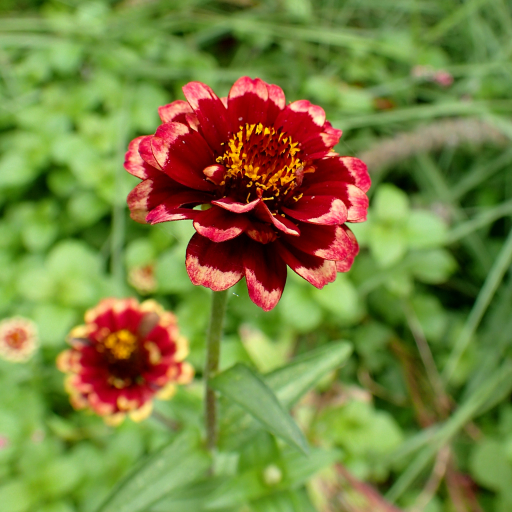
Plant Overview
Often called the "Persian Carpet" or "Mexican Zinnia," Zinnia haageana is the spunky, sun-loving cousin of the common garden zinnia. Hailing from the hot, dry hills of Mexico, these blooms are famous for their intricate bicolored patterns and rugged endurance. They are a favorite for gardeners who want a splash of "Aztec gold" and mahogany without the fuss of high-maintenance care.
🔍 How to Identify
- 🌸 Bicolored Petals: Most varieties feature stunning double or semi-double blooms with dark centers of mahogany or maroon that melt into tips of vibrant gold, orange, or cream.
- 🍃 Narrow Foliage: Unlike the broad, scratchy leaves of common zinnias, these leaves are narrow, pointed, and "lance-shaped," giving the plant a more delicate, wild appearance.
- 📏 Compact Growth: This species is naturally mounded and bushy, typically staying under 15 inches tall, making it look like a dense floral cushion.
🏡 In Your Garden
- ☀️ Heat Warrior: This plant thrives in "baking" heat where other flowers might wilt. It has evolved to handle intense UV rays and dry spells, making it perfect for rock gardens or south-facing borders.
- 🛡️ Mildew Resistance: One of its greatest strengths is a natural resistance to powdery mildew. While common zinnias often get "dusty" white leaves in humid weather, the Persian Carpet usually stays clean and green.
- 🦋 Pollinator Landing Pad: The open-faced flowers serve as perfect landing platforms for butterflies and bees. Because they bloom continuously from mid-summer to frost, they provide a reliable late-season food source.
⚠️ Safety & Toxicity
- 🐾 Pet Friendly: These plants are considered non-toxic to dogs, cats, and horses. They are a "worry-free" choice for landscapes shared with curious furry friends.
- 👶 Child Safe: They are generally safe for children’s gardens, though the stems can be slightly stiff and rough to the touch.
✨ Fun Fact
The most famous variety, the "Persian Carpet" strain, won the All-America Selections award way back in 1952. It earned its name because, when planted en masse, the dense, patterned flowers look like a hand-woven oriental rug spread across the soil.

Detailed Care Instructions
| Humidity | Normal |
| Lighting | Full Sun |
| Difficulty | Medium |
| Temperature | 23°C - 28°C |
| Hardiness Zones | 2 - 11 |
To grow Zinnia Haageana plants, follow these steps:
- Start seeds indoors: Zinnia Haageana can be started indoors 4-6 weeks before the last frost date. Fill a seed tray with seed starting mix and sow the seeds on the surface. Cover them lightly with additional soil and keep the tray in a warm location with indirect sunlight.
- Transplant outdoors: After the last frost date, when the seedlings are about 2-3 inches tall and have several sets of leaves, they can be transplanted outdoors. Choose a sunny location with well-drained soil.
- Prepare the soil: Before transplanting, prepare the soil by loosening it and adding compost or well-rotted manure to improve fertility and drainage. Zinnias prefer slightly acidic to neutral soil.
- Transplant seedlings: Dig a hole in the prepared soil and gently remove the seedling from the seed tray, being careful not to damage the roots. Place it in the hole and back-fill with soil, firming it gently around the base of the plant.
- Water regularly: Keep the soil evenly moist, especially during the initial weeks after transplanting. Watering deeply once or twice a week is generally sufficient, depending on rainfall and temperature.
- Provide support: Zinnia Haageana plants tend to grow tall, and the heavy blooms may require support. Installing stakes or using a trellis can help prevent the flowers from drooping or breaking.
- Deadhead spent blooms: Regularly removing faded or wilted flowers (deadheading) can encourage the plant to produce more blooms throughout the growing season. This will also help maintain a neat appearance.
- Fertilize: Zinnia Haageana plants benefit from regular fertilization. Use a balanced, water-soluble fertilizer every 4-6 weeks or apply a slow-release granular fertilizer at the beginning of the season according to the manufacturer's instructions.
- Control pests and diseases: Zinnia plants can be susceptible to aphids, caterpillars, and fungal diseases. Monitor your plants regularly and take appropriate measures if necessary, such as using organic insecticides or fungicides.
- Enjoy the blooms: Zinnia Haageana plants typically start blooming in early summer and continue until the first frost. Enjoy their vibrant and long-lasting flowers, and consider cutting some for indoor arrangements to further extend their beauty.

Place in a bright room that is sun drenched almost all day. Or directly in a south-facing window.

To properly water this plant, it is important to first assess the soil moisture level. Stick your finger into the soil up to the first knuckle to feel for moisture. If the soil is dry, water slowly and deeply until the water drains through the bottom of the container or reaches a depth of 6 inches in the ground. It is important not to over-water this plant as it is susceptible to root rot. Wait for the soil to dry out slightly before watering again. When watering, avoid getting water on the foliage as this can lead to fungal diseases. Water in the early morning or late afternoon to allow the plant to absorb the water before it evaporates.
For best results, fertilize the soil before planting the seeds or young plants. Use a balanced fertilizer with equal amounts of nitrogen, phosphorus, and potassium. Apply the fertilizer according to the manufacturer's instructions, mixing it into the soil to a depth of 6 inches.
Once the plants have matured and are actively growing, you can apply a water-soluble fertilizer every 2-3 weeks. Dilute the fertilizer according to the instructions and water the plants well after application. Be careful not to over-fertilize as this can lead to excessive vegetative growth at the expense of flowers.
In addition to regular feedings, it's important to maintain good soil moisture and drainage. Water the plants deeply but infrequently, allowing the soil to dry out slightly between waterings. Mulch around the plants to help retain moisture and suppress weeds.
Overall, a well-balanced fertilizer regimen and proper watering practices will help your Zinnia plants thrive and produce plenty of colorful blooms.
The ideal type of soil for growing Zinnia Haageana plants is a loose, well-draining soil that is enriched with organic matter. The soil should have a neutral to slightly alkaline pH level, with a range between 6.0 and 7.5 being ideal. The use of a high-quality potting mix or soil blend can ensure that the plant receives enough nutrients and water retention to grow properly. It is recommended to avoid soils with a heavy clay content and soils that are too dense, as this can cause poor drainage and lead to the development of root rot. Additionally, the plant should be placed in an area with plenty of sunlight and watered regularly to ensure optimal growth and blooming.
Propagation of this plant can be done in several ways. One method is to collect the seeds produced by the plant and sow them in a well-draining soil mix. It is important to keep the soil moist but not overly wet and provide adequate sunlight for the seeds to germinate.
Another method is to take stem cuttings from the plant. Select a healthy stem and cut it at a 45-degree angle just below a node. Remove any leaves from the bottom half of the stem and dip it in rooting hormone before placing it in a container with a well-draining soil mix. Keep the soil moist and provide bright but indirect sunlight until the cutting begins to root.
Finally, the plant can also be propagated by division. Carefully dig up the plant and separate the roots into individual clumps. Replant each clump in a new location or container with fresh soil and water regularly until it begins to establish itself.








