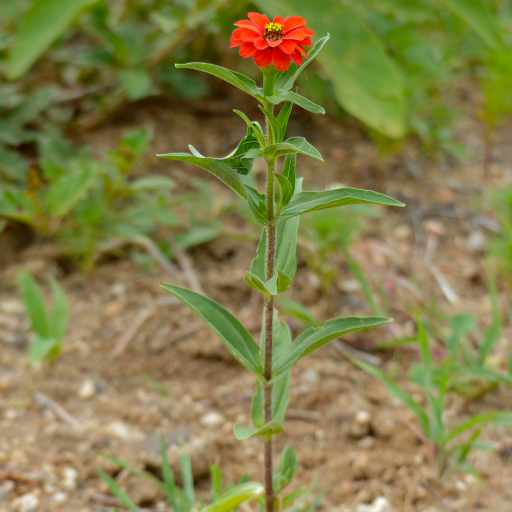
Plant Overview
Often called the "Peruvian Zinnia" or the "Wild Zinnia," this vibrant wildflower is a historic traveler that journeyed from the slopes of the Andes to the gardens of the world. Unlike the puffy, pom-pom-like hybrid zinnias you see in modern flower beds, this species retains a rustic, elegant simplicity. It’s a favorite for "old-world" garden aesthetics and serves as a vital pit stop for migrating butterflies.
🔍 How to Identify
- 🌸 The Bloom: Features a single row of flat, ray-like petals surrounding a central yellow or dark disc. Colors range from a deep, dusty red to a pale, buttery yellow.
- 🍃 The Foliage: The leaves are lance-shaped, rough to the touch, and grow directly opposite each other on the stem without a stalk (sessile).
- 🌵 The Stem: Stiff, wiry, and covered in fine, bristly hairs that give the plant a slightly "scratchy" texture when handled.
🏡 In Your Garden
- 🦋 The Pollinator Magnet: Because the flower is "single-layered," the nectar is much easier for butterflies and bees to reach compared to complex hybrid varieties. It is a top-tier choice for a pollinator sanctuary.
- ☀️ Tough as Nails: This plant thrives on neglect. It actually prefers lean, poor soil and can become "leggy" or floppy if you give it too much fertilizer or water. It’s an ideal candidate for rock gardens or xeriscaping.
⚠️ Safety & Toxicity
- ✅ Pet Safe: Zinnia peruviana is generally considered non-toxic to dogs, cats, and horses. It is a worry-free addition to a family backyard.
- 🧤 Skin Sensitivity: While not poisonous, the stiff hairs on the stems can cause mild mechanical irritation (itchiness) to sensitive skin if you are harvesting a large bouquet without gloves.
✨ Fun Fact
Early Spanish explorers in South America were reportedly unimpressed by these flowers at first, calling them "mal de ojos" (evil eye) because the bright, singular colors were so intense they were considered "eyesores" compared to the muted European flowers of the time!

Detailed Care Instructions
| Humidity | Normal |
| Lighting | Full Sun |
| Difficulty | Easy |
| Hibernation | Cold Period |
| Temperature | 23°C - 28°C |
| Hardiness Zones | 3 - 10 |
To successfully grow Zinnia peruviana, also known as Peruvian Zinnia, follow these steps:
- Choose the right location: Zinnias need full sun, so pick a spot in your garden that receives at least 6-8 hours of direct sunlight per day.
- Prepare the soil: Zinnias prefer well-draining soil, so amend the garden bed with compost or aged manure to improve drainage and fertility.
- Planting: Sow the Zinnia peruviana seeds directly into the garden bed after the last frost date in your region. The seeds are small, so plant them about 1/8 inch deep. Space the seeds around 6-12 inches apart.
- Watering: Keep the soil consistently moist during the germination period, which typically takes 7-10 days. Once the plants are established, water deeply but less frequently to encourage the development of deep roots.
- Mulching: Apply a layer of organic mulch around the base of the plants to conserve moisture, suppress weed growth, and insulate the roots.
- Fertilization: Zinnias are not heavy feeders, but you can apply a balanced fertilizer (10-10-10 or 14-14-14) every 4-6 weeks during the growing season to promote healthy growth and blooming.
- Pinch back: To encourage bushier growth and more flower production, pinch back the tips of the plants when they are about 6 inches tall.
- Deadheading: Regularly remove spent flowers to encourage continuous blooming. This process, known as deadheading, redirects energy into producing new blooms and prevents seed production.
- Pest and disease control: Zinnias are generally resistant to pests and diseases. However, keep an eye out for common garden pests like aphids, snails, and slugs. If necessary, use organic insecticides or handpick the pests.
- Harvesting: Zinnia Peruviana is known for its beautiful flowers, so enjoy harvesting the blossoms for floral arrangements or simply enjoy them in the garden.
By following these steps, you should be able to successfully grow Zinnia peruviana and enjoy the colorful blooms throughout the growing season.

Place in a window with dappled sun or a spot in the middle of a room. Or directly in a window facing west or east.

1. Determine the watering needs of the plant by considering the soil moisture and the surrounding environment.
2. Always use room temperature water, and avoid using chlorinated water as it may harm the plant.
3. Water the plant deeply and thoroughly, allowing the water to penetrate the root zone and drain away excess water.
4. Avoid overwatering the plant, as excessive watering can lead to root rot and other diseases.
5. Water the plant early in the morning or late in the afternoon to avoid evaporative losses.
6. Check the soil moisture level regularly to ensure that the plant is not drying out or being overwatered.
7. Use a drip irrigation system or a watering can to avoid splashing water on the leaves and flowers of the plant, which can lead to fungal diseases.
8. Mulch around the base of the plant to retain moisture, suppress weeds, and regulate soil temperature.
9. Adjust the watering frequency and volume as necessary based on changes in weather, season, and growth stage of the plant.
10. Observe the plant closely for any signs of stress or disease related to watering and take appropriate measures to rectify the issue.
- Start by preparing the soil where you will be planting the seeds. You can do this by removing any weeds or debris, and then loosening the soil.
- Choose a slow-release fertilizer that is balanced in NPK (nitrogen, phosphorus, and potassium). Follow the instructions on the label to determine how much fertilizer to use based on the size of the area you’re planting.
- Mix the fertilizer into the soil before planting the seeds, making sure to distribute it evenly.
- After the plants have sprouted and begun to grow, apply a liquid fertilizer once every two weeks. You can also use a water-soluble fertilizer, following the package instructions for application rates.
- As the plants mature and begin to flower, use a high-phosphorus fertilizer to promote larger blooms. Apply this fertilizer every two weeks until the end of the growing season.
- Water the plants regularly, taking care not to overwater, which can lead to root rot. Fertilizing is most effective when the soil is moist.
The ideal soil for Zinnia Peruviana plant would be loamy soil that is well-drained and rich in nutrients. The soil should be slightly acidic to neutral with a pH range between 6.0 and 7.0. The soil should be able to retain moisture well but should not be waterlogged. It should also be free from any pests, diseases or weeds that can harm the plant. Adding organic matter such as compost, leaf mould or well-rotted manure can help improve the soil structure and fertility. Additionally, it is recommended to fertilize the soil with a balanced fertilizer that contains nitrogen, phosphorus, and potassium to encourage healthy growth and flowering.
To propagate this plant, you can collect seeds from the flowers once they have dried on the plant. The seeds can then be sown directly into the soil or started indoors and transplanted later. It is important to keep the soil moist until the seedlings are established. Alternatively, you can take stem cuttings from the plant and root them in water or a well-draining soil mix. To do this, cut a healthy stem from the plant, remove the lower leaves, and place the stem in water or soil. Keep the cutting in a warm, well-lit area and mist it regularly. Once roots have formed and the plant is established, it can be planted in soil.








