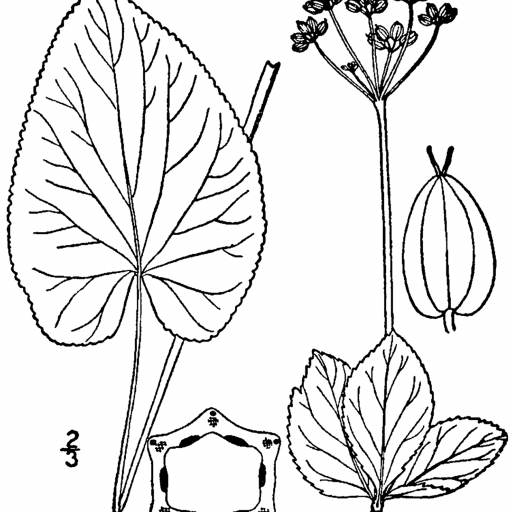
Plant Overview
Known widely as Heart-leaved Alexanders, this cheerful perennial is a sun-drenched staple of North American prairies. While it might look like a wild version of dill or parsley at first glance, its bright yellow "umbels" act as a landing pad for some of the garden's most beautiful visitors. It is often celebrated by native plant enthusiasts for its ability to thrive in tough, clay-heavy soils where other flowers might struggle.
🔍 How to Identify
- 💛 The Flowers: Dozens of tiny, star-shaped yellow flowers bunched into flat-topped clusters (umbels). Unlike many other yellow flowers, the central flower of each small cluster is "sessile," meaning it has no stem of its own.
- 💚 The Foliage: This is the plant's signature. The leaves at the very base of the plant are simple and distinctly heart-shaped with jagged edges. As you move up the stem, the leaves change into three-parted (trifoliate) leaflets.
- 🌿 The Stem: The stems are typically smooth, light green, and sometimes show a reddish-purple tint near the base or joints.
🏡 In Your Garden
- 🦋 A Butterfly Buffet: This plant is a critical "host plant" for the Black Swallowtail butterfly. If you see striped caterpillars munching on the leaves, don't reach for the pesticide—they are simply preparing for their metamorphosis!
- 💧 Adaptable Roots: Unlike its cousin Zizia aurea, which prefers wet feet, Zizia aptera is much more drought-tolerant. It has a thick, fibrous root system that allows it to handle dry spells and heavy clay soil with ease.
- ☀️ Sun Seeker: While it can handle light dappled shade, it produces the most vibrant yellow blooms when given plenty of direct sunlight.
⚠️ Safety & Toxicity
- 🟢 General Safety: Heart-leaved Alexanders is generally considered non-toxic to humans and pets. However, it is not typically grown for consumption.
- 🚫 The "Look-Alike" Warning: Because it belongs to the Carrot (Apiaceae) family, it shares a similar structure with some of the most poisonous plants in the world, such as Water Hemlock. Always be 100% certain of the ID before handling wild plants, as skin contact with toxic relatives can cause severe reactions.
- 🐶 Pet Note: While not high-risk, ingestion of any garden plant can cause mild stomach upset in curious dogs or cats.
✨ Fun Fact
Unlike many flowers that rely on specialized bees, Zizia aptera has a "short-tongue" flower design. This makes its nectar easily accessible to a massive variety of beneficial insects, including tiny parasitic wasps that help naturally control garden pests!

Detailed Care Instructions
To grow Zizia aptera, also known as Heart-leaved Alexanders, you can follow these steps:
- Obtain seeds: You can purchase Zizia aptera seeds from a reputable nursery or online store.
- Choose the planting location: Select a site with well-drained soil and partial shade to full sun exposure. Zizia aptera prefers moist soil but can tolerate dry periods.
- Prepare the soil: Clear the planting area of weeds and other vegetation. Loosen the soil using a garden fork or tiller to provide good aeration and drainage.
- Sow the seeds: Scatter the Zizia aptera seeds over the prepared soil surface. Lightly press them into the soil, ensuring good seed-to-soil contact. Alternatively, you can start the seeds indoors 6-8 weeks before the last frost and transplant them outdoors when they are ready.
- Watering: Water the seeds gently immediately after sowing, and keep the soil moist until germination occurs. After that, water regularly, especially during prolonged dry spells, to maintain soil moisture.
- Weed and mulch: Keep the area around the Zizia aptera plants free from weeds. Apply a layer of organic mulch around the plants to conserve moisture and suppress weed growth.
- Fertilizing: Zizia aptera generally does not require additional fertilizers. However, if your soil lacks nutrients, you can apply a balanced organic fertilizer once or twice during the growing season.
- Pruning: Deadhead the flowers after blooming to encourage new growth and prevent self-seeding if desired.
- Pest and disease control: Zizia aptera is generally resistant to pests and diseases. However, keep an eye out for common garden pests like aphids or slugs, and take appropriate measures if necessary.
- Enjoy and propagate: Once established, Zizia aptera will reward you with its clusters of yellow flowers and attractive foliage. It can self-seed, allowing it to spread naturally. If desired, you can collect the seeds for propagation in other areas of your garden.
Remember to check your local gardening guidelines and plant hardiness zone to ensure Zizia aptera will thrive in your specific region.

Place in a bright room that is sun drenched almost all day. Or directly in a south-facing window.

To properly water Zizia Aptera plants, it is important to use a watering can or hose with a spray nozzle in order to target the soil directly at the base of the plant. It is recommended to water deeply, allowing the soil to become saturated but not waterlogged. The frequency of watering will depend on the soil type and the weather conditions, but it is important to avoid allowing the soil to dry out completely between waterings. It may be helpful to check the soil moisture level by sticking a finger several inches into the soil to see if it feels dry or moist. Additionally, it is important to avoid getting water on the leaves of the plant as this can promote fungal diseases.
To fertilize this plant, you can use a balanced all-purpose fertilizer during the growing season. Apply the fertilizer according to the manufacturer's instructions. Always avoid over-fertilizing, as it can cause harm to the plant. It's best to fertilize after watering the plant to prevent the roots from burning due to the fertilizer.
Zizia Aptera plant prefers a well-draining soil that is rich in organic matter. The ideal soil for this plant is slightly acidic with a pH between 6.0 and 7.0. A sandy loam or sandy clay loam soil texture is suitable for this plant. The soil should not be too heavy or too compacted as it can restrict root growth and drainage. It is best to avoid using heavy soils like clay or soils that have a high percentage of silt. The addition of organic matter can improve soil structure and provide essential nutrients for the plant. Regular watering is also necessary to maintain the soil moisture level required by Zizia Aptera plant.
Zizia Aptera plant can be propagated through seeds or cuttings.
To propagate through seeds, collect mature seeds from the plant when the seed pods have turned brown and dry. Sow the seeds in a seed-starting tray with well-draining soil and cover them with a thin layer of soil. Keep the soil moist and place the tray in a warm, bright location. The seeds should sprout within two weeks.
To propagate through cuttings, take stem cuttings from a healthy plant. Choose a stem that is at least six inches long and has several healthy leaves. Remove the leaves from the lower half of the stem and dip the cut end in rooting hormone. Plant the stem in well-draining soil and keep it moist. Place the pot in a warm, bright location and keep the soil moist. The stem should develop roots within a few weeks.








