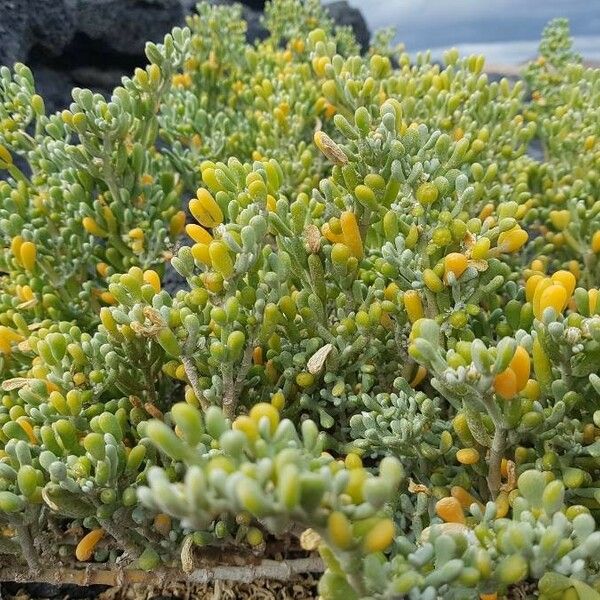
Plant Overview
Often called the "Uva de Mar" or Mediterranean Sea Grape, Zygophyllum fontanesii is a master of survival in the harshest coastal environments. This succulent shrub is native to the Canary Islands and the shores of North Africa, where it thrives in volcanic sands and salty spray. Its alien-like, bead-filled branches make it a striking sight for hikers exploring the windswept dunes of the Atlantic coast.
🔍 How to Identify
- 🍃 The Leaves: Look for thick, cylindrical, "bead-like" leaves that resemble tiny green sausages or grapes. These fleshy structures are designed to store water for long periods of drought.
- 🌸 The Blooms: Small, delicate flowers with five petals, usually appearing white or faintly tinged with pink, emerging between the succulent leaves.
- 🎨 The Color Palette: While typically bright green, the plant often turns a vibrant yellow, orange, or even deep red when exposed to intense sun or high salt levels.
🏡 In Your Garden
- 🏖️ Coastal Specialist: This plant is a "halophyte," meaning it doesn't just tolerate salt—it thrives in it. If you live near the ocean, it is one of the few species that can sit in the "splash zone" without suffering leaf burn.
- 🏜️ The Drainage Rule: It hates "wet feet." In a garden setting, it requires extremely gritty, sandy soil. It has evolved to live in volcanic ash and sand, so standard potting soil will be far too rich and damp for its roots.
⚠️ Safety & Toxicity
- ✅ Generally Safe: There are no widespread reports of high toxicity for this species. It is not considered a dangerous plant for casual contact.
- 🐾 Pet Watch: While not listed as a major toxin, the succulent leaves can cause mild digestive upset if chewed on by curious cats or dogs. It’s always best to keep decorative succulents out of reach of pets.
✨ Fun Fact
The plant acts as a living "stress meter" for its environment. The more intense the sun or the saltier the soil, the more "warm" pigments (carotenoids) it produces, turning the entire shrub from a cool green to a fiery orange to protect its internal cells from UV damage.

Detailed Care Instructions
To grow Zygophyllum fontanesii, also known as wild desert melon, follow these steps:
- Choose a well-draining pot or grow it in the ground in an area with sandy or loamy soil.
- Plant the seeds in the spring after the last frost. Sow the seeds directly into the soil or in pots. Press the seeds lightly into the soil and cover with a thin layer of soil.
- Water the seeds lightly and keep the soil moist but not waterlogged. Water whenever the top inch of soil feels dry.
- Place the plant in a sunny location where it will receive at least 6-8 hours of direct sunlight per day.
- Fertilize the plant with a balanced fertilizer every 4-6 weeks during the growing season.
- Protect the plant from pests such as aphids and spider mites by keeping the plant healthy and inspecting regularly.
- Zygophyllum fontanesii is a drought-tolerant plant, so be careful not to overwater. Allow the soil to dry out slightly between waterings.
- Harvest the fruits when they are mature and have turned yellow. The fruits can be eaten raw or cooked.
By following these steps, you should be able to successfully grow Zygophyllum fontanesii in your garden.
To water the Zygophyllum Fontanesii plant, it is important to ensure that the soil is evenly moist but not waterlogged. This can be achieved by watering the plant thoroughly, allowing the water to seep into the soil and reach the roots. It is important to water the plant at the base, avoiding getting the foliage wet as this can lead to fungal diseases. Additionally, it is advisable to water the plant in the morning or evening to prevent water evaporation during the heat of the day. Regular monitoring of the soil moisture levels and adjusting the watering schedule as needed will help to keep the Zygophyllum Fontanesii plant healthy and thriving.
To fertilize the Zygophyllum Fontanesii plant, apply a balanced fertilizer with equal parts nitrogen, phosphorus, and potassium in the early spring before new growth begins. Use a slow-release fertilizer to prevent burning the roots. Follow the manufacturer's instructions for application rates, typically spreading the fertilizer evenly around the base of the plant and watering thoroughly after applying. Avoid over-fertilizing, as this can lead to excessive growth and potentially harm the plant. Repeat fertilization once every 4-6 weeks during the growing season, stopping in late summer to allow the plant to prepare for winter dormancy.
Zygophyllum Fontanesii plant requires well-draining soil with a slightly alkaline pH level between 7.0 and 8.0. A sandy or loamy soil mixture is ideal for optimal growth and development of the plant. Additionally, incorporating organic matter, such as compost or peat moss, into the soil can help improve soil structure and fertility, aiding in the plant's overall health and vigor. It is important to avoid using heavy clay soils or soil mixes that retain excessive moisture, as this can lead to root rot and other potential issues for the plant. Regularly monitoring the soil moisture levels and ensuring proper drainage will help maintain a healthy growing environment for Zygophyllum Fontanesii plant.
To propagate Zygophyllum Fontanesii plant, one can start by collecting seeds from mature plants. The seeds should be cleaned and dried before planting. They can be sown directly into well-draining soil and lightly covered with a thin layer of soil.
Alternatively, one can propagate the plant through stem cuttings. Take a cutting from a healthy, mature plant, making sure it is at least 4-6 inches long. Remove the lower leaves and dip the cut end in rooting hormone before planting in a container filled with a well-draining potting mix. Keep the soil moist and place the cutting in a warm, bright location to encourage root growth.
One can also propagate Zygophyllum Fontanesii plant through division. Carefully dig up the plant and separate the roots into smaller sections, making sure each section has a good portion of roots attached. Replant the sections in pots filled with well-draining soil and water thoroughly. Keep the newly divided plants in a warm, bright location and continue to water as needed until they become established.
Propagation of Zygophyllum Fontanesii plant can be done successfully with the right techniques and care.








