Info
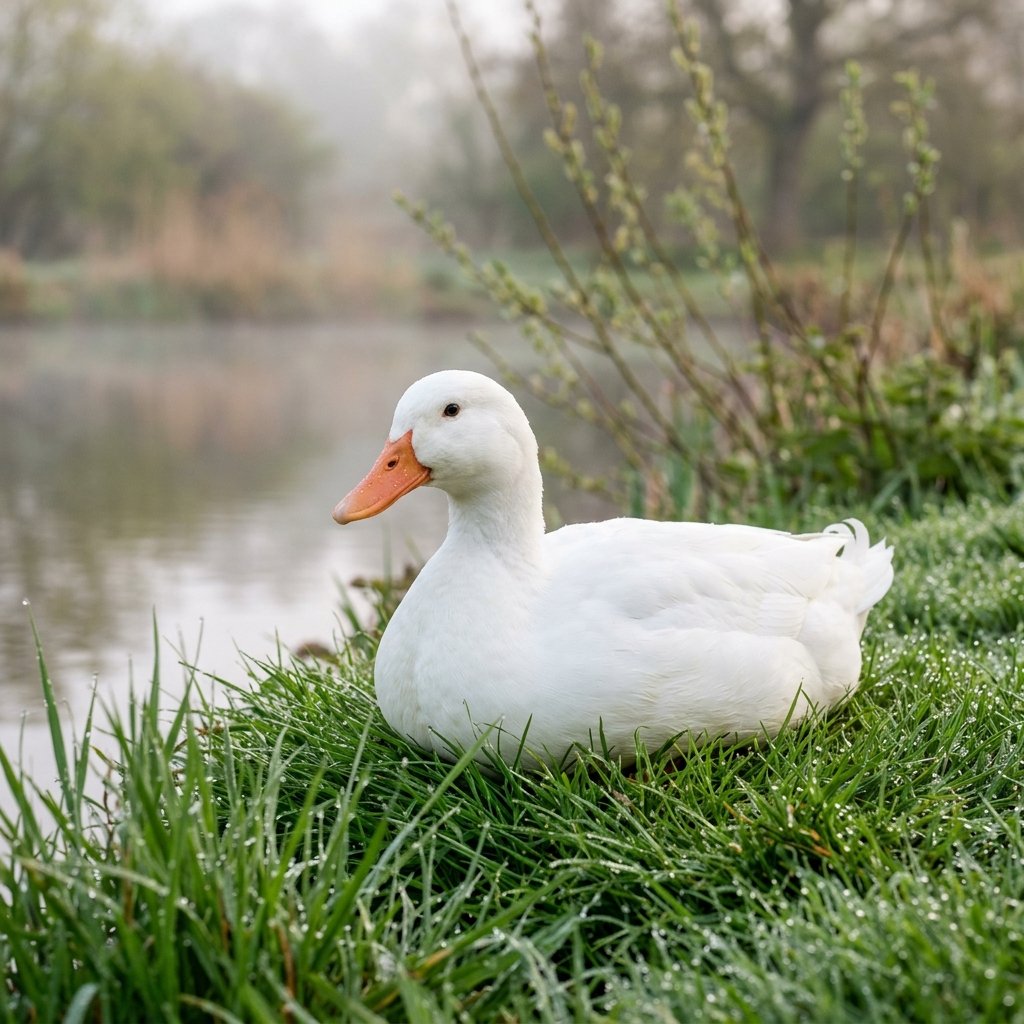
Meet the Domestic Duck, the cheerful, waddling icon of farmyards and local ponds. Often called "Puddlers," these birds are the domesticated descendants of the wild Mallard and have been human companions for thousands of years. Whether they are the iconic snow-white Pekin or the quirky, upright Indian Runner, their characteristic "quack" and bobbing tails make them the undisputed comedians of the bird world.
🔍 How to Identify
- 🦆 The Bill: A wide, flat, and sturdy "spatulate" bill, typically in shades of bright orange or yellow, featuring tiny serrated edges (lamellae) for filtering food from mud.
- 🦢 Body Shape: Noticeably heavier and more "bottom-heavy" than their wild mallard ancestors, with a broad chest and a characteristic waddle caused by their wide-set legs.
- 🌊 Webbed Feet: Large, sturdy orange feet positioned toward the back of the body, which act as powerful paddles in the water but make for clumsy movement on land.
🪶 Behavior & Diet
- 🥗 Dabbling Diners: These ducks are omnivorous "dabblers," meaning they tip their tails up in the air to reach aquatic plants and insects underwater rather than diving. In a garden, they are famous for being "slug-slayers," hunting down snails and pests with high efficiency.
- 👥 Social Flockers: Highly social and communicative, they live in groups called "paddlings." They use a variety of sounds to stay in touch, though interestingly, only the females produce the loud, classic "quack" sound; the males (drakes) have a much softer, rasping voice.
🤝 Interaction & Safety
- 🏠 Docile Companions: Domestic ducks are generally friendly and can even learn to recognize their human caregivers. However, they can be messy, and their waste can accumulate quickly, so they require consistent habitat cleaning to stay healthy.
- 🐕 Pet Protection: Because many domestic breeds are too heavy to fly, they are "sitting ducks" for predators. It is vital to protect them from roaming dogs, foxes, or hawks with secure fencing and nighttime enclosures.
✨ Fun Fact
Domestic ducks have a "preen gland" near the base of their tail that produces a special waterproof oil. They spend hours using their bills to spread this oil over every feather, creating a "dry suit" that allows them to float perfectly and stay warm even in freezing water!
More Details



