Info
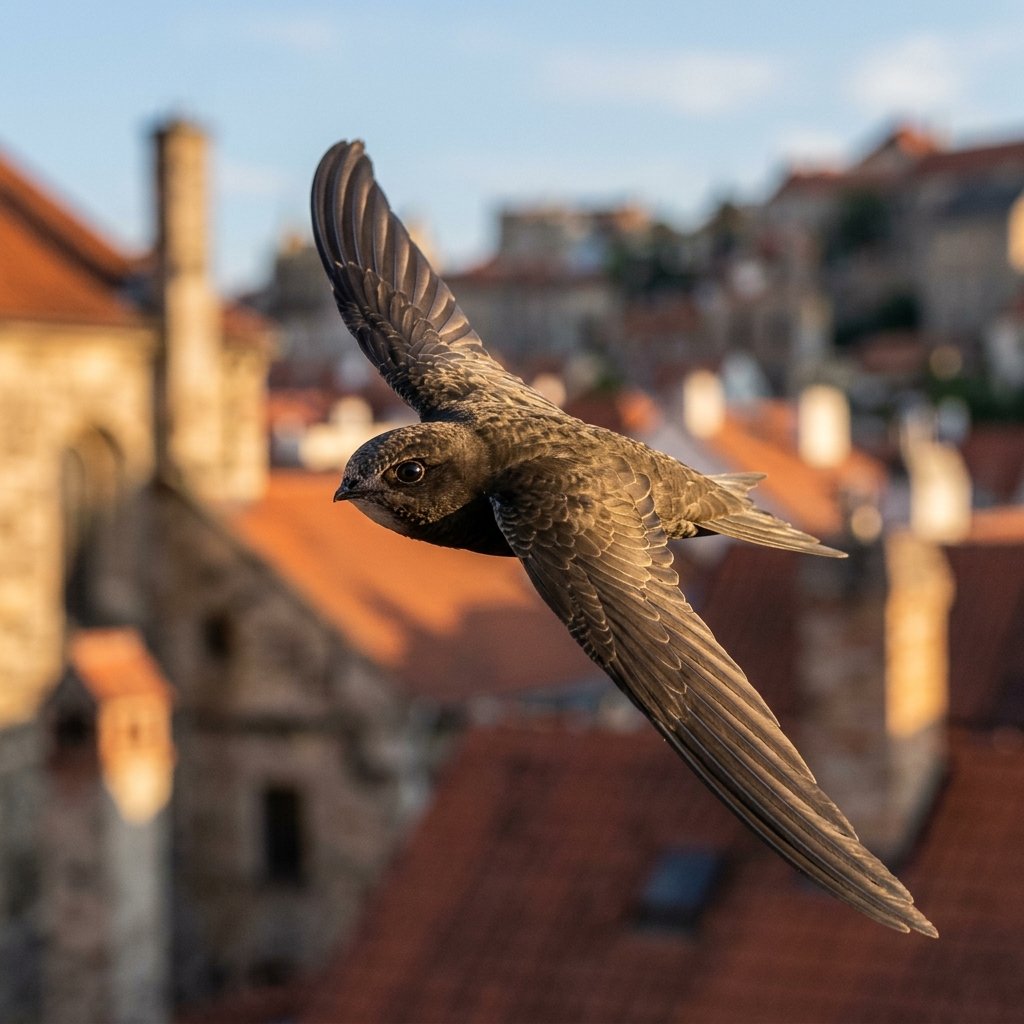
Often called the "Screamer" of the summer, the Common Swift is an aerial marvel that treats the sky as its only true home. These birds are so perfectly adapted to life on the wing that they can eat, mate, and even sleep while soaring thousands of feet above the earth. Their high-pitched, piercing swee-ree calls are the definitive soundtrack to a warm evening in many parts of the world.
🔍 How to Identify
- 🏹 The Silhouette: Look for striking, scythe-shaped wings that are long, narrow, and curved, making the bird look like a dark crescent moon or an anchor in flight.
- 🌚 The Plumage: They sport deep sooty-brown feathers that usually appear pitch-black against a bright sky, often accented by a small, pale-grey patch tucked under the chin.
- 🦶 The Feet: Unlike most birds, they have tiny, weak legs and feet where all four toes point forward, designed exclusively for clinging to vertical walls rather than perching on branches.
🪶 Behavior & Diet
- 🍽️ Aerial Plankton: Swifts are strictly insectivores, "vacuuming" up thousands of tiny flying insects and spiders (often called aerial plankton) every day to sustain their high-energy lifestyle.
- 🏠 Urban Nesters: While they once favored hollow trees or cliffs, they now prefer the "man-made cliffs" of our cities, tucking their nests into small crevices under roof tiles or inside specialized swift bricks.
- 🌍 Marathon Migrants: They are incredible travelers, spending the northern winter in Africa and returning to Europe and Asia to breed, often covering over 12,000 miles in a single year.
🤝 Interaction & Safety
- 🕊️ Gentle Neighbors: Swifts are entirely harmless to humans and pets. They do not carry significant diseases for humans and are generally welcomed for their massive consumption of mosquitoes and gnats.
- 🆘 Ground Rescue: If you find a swift on the ground, it is almost certainly in distress. Because of their exceptionally long wings and short legs, they cannot easily take off from flat ground. If found, they should be placed in a box and given to a wildlife rehabilitator—never "toss" them into the air to help them fly.
- 🐈 Pet Safety: While they pose no threat to pets, domestic cats are a major predator of fledglings. Keeping cats indoors during the mid-summer "fledging" period can save many young swifts.
✨ Fun Fact
Common Swifts are the ultimate record-holders for endurance; some individuals stay airborne for up to 10 months without ever touching the ground. To sleep, they spiral up to altitudes of 10,000 feet and shut down half of their brain at a time!
More Details