Info
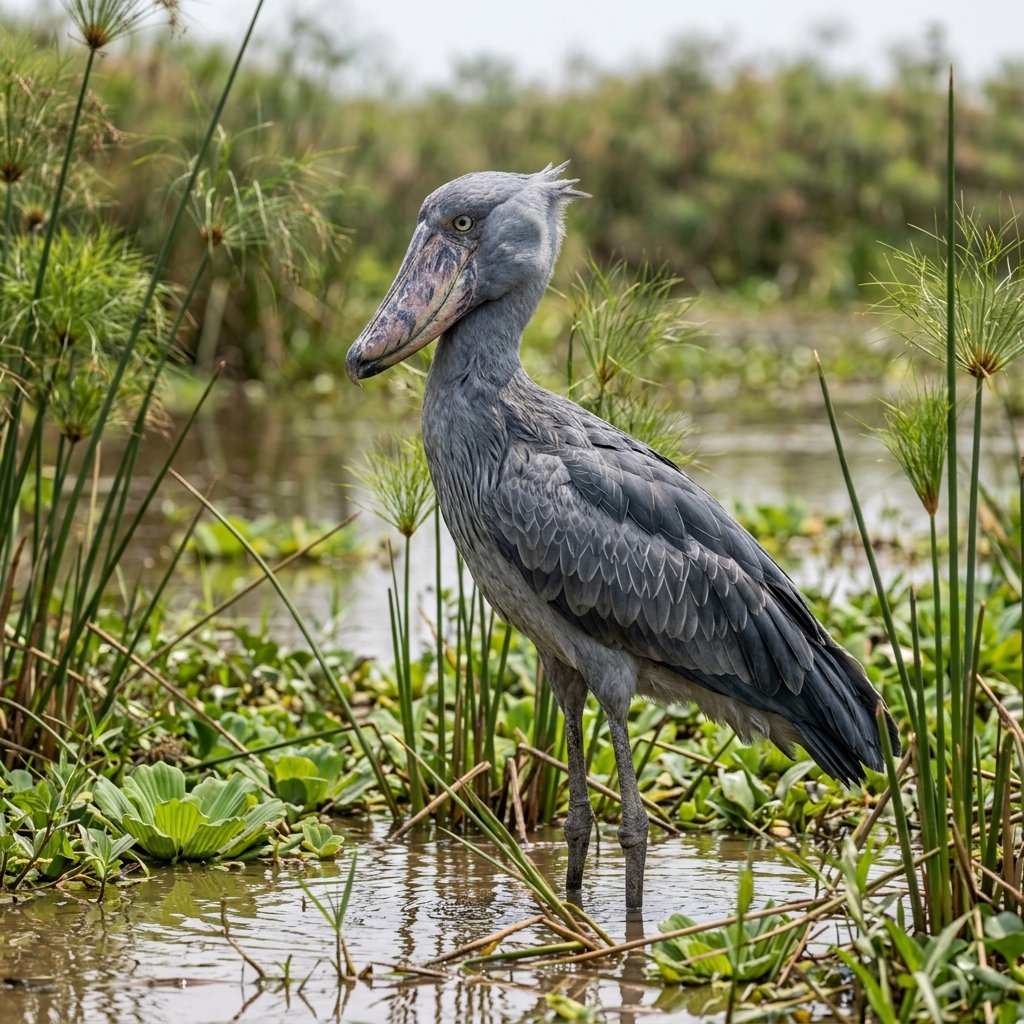
Often described as a "living dinosaur," the Shoebill Stork looks like it stepped straight out of the Cretaceous period and into the marshes of East Africa. Known for its massive, clog-shaped beak and intense, unblinking yellow eyes, this bird is a master of patience and a symbol of prehistoric mystery. Despite its name and stork-like appearance, genetic testing has revealed it is actually more closely related to pelicans and herons.
🔍 How to Identify
- 👞 The "Shoe" Bill: Its most iconic feature is a huge, bulbous beak shaped like a Dutch wooden clog, ending in a sharp, hooked nail used for gripping slippery or armored prey.
- 🩶 Slate Plumage: The bird is covered in uniform bluish-grey feathers, often featuring a small, messy tuft or crest at the back of its head that it can raise when excited.
- 👁️ Piercing Gaze: It possesses large, forward-facing yellow or pale-grey eyes that provide excellent binocular vision, essential for judging distances while hunting.
🪶 Behavior & Diet
- 🐊 The Patient Predator: Famous for "statue-hunting," the Shoebill can stand completely motionless for hours in papyrus swamps. It waits for lungfish, eels, or even baby crocodiles to surface before "collapsing" forward with its full weight to snatch them.
- 🥁 Bill Clattering: To communicate, especially during nesting or greeting, they snap their mandibles together rapidly. This creates a loud, hollow, rhythmic sound that remarkably resembles the fire of a machine gun.
🤝 Interaction & Safety
- 🕊️ Solitary & Shy: In the wild, Shoebills are extremely solitary and avoid human contact. They are generally Docile toward researchers but will fly off if their personal space is invaded.
- 🛡️ Territorial Instincts: While they aren't aggressive "attackers," they are fiercely protective of their nests. Their massive beaks are powerful enough to decapitate large fish, so they should always be observed from a respectful distance to avoid causing them stress.
✨ Fun Fact
To stay cool in the sweltering African heat, Shoebills perform a behavior called "urohidrosis"—they intentionally defecate on their own legs. The evaporation of the liquid helps lower their body temperature, similar to how humans use sweat!
More Details



