Info
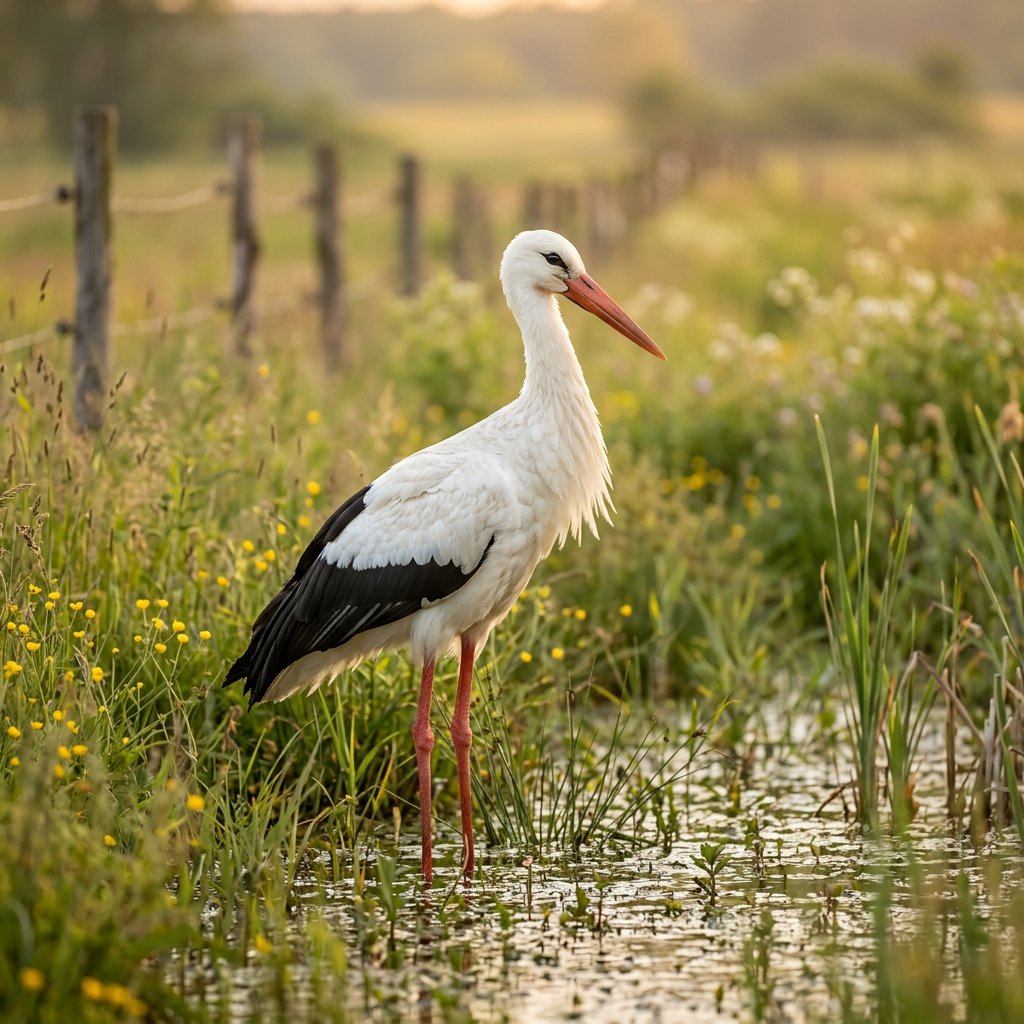
The White Stork is perhaps the most celebrated symbol of rebirth and family in European folklore. Known for its rhythmic "bill-clattering" instead of a song, this large, graceful wader is a common sight atop chimneys and church steeples, where it builds massive stick nests. Its presence is traditionally seen as a sign of good luck and prosperity for any household it chooses to visit.
🔍 How to Identify
- 🧣 Plumage: Features pure white feathers covering the body and head, contrasted sharply by jet-black flight feathers on the wings.
- 🦵 Beak & Legs: Both the long, dagger-like bill and the stilt-like legs are a vibrant, waxy red in adults (though duller or darker in juveniles).
- 📏 Size & Stature: A massive bird standing over 3 feet tall with a wingspan that can reach nearly 7 feet, often seen soaring on thermal currents with its neck fully extended.
🪶 Behavior & Diet
- 🐸 Opportunistic Hunter: They are carnivores that patrol marshes and meadows for a wide variety of prey, including frogs, large insects, fish, and even small rodents or snakes.
- 🏠 Urban Neighbors: Unlike many shy wild birds, White Storks frequently nest in close proximity to humans, favoring high-vantage points like roofs, electricity pylons, and specially built nesting platforms.
- 🌍 The Great Migration: These birds are legendary long-distance travelers, flying thousands of miles between Europe and Sub-Saharan Africa each year, famously navigating around the Mediterranean Sea to utilize rising warm air over land.
🤝 Interaction & Safety
- 🕊️ General Vibe: Generally docile and accustomed to human presence, they are "good neighbors" who rarely cause trouble, though they can become defensive of their nest if they feel threatened.
- 🐈 Pet Safety: While they are not a threat to healthy dogs or cats, their large size and sharp beak mean they should be given space; conversely, domestic pets should be kept away from grounded fledglings that have fallen from the nest.
- 🏗️ Structure Safety: Because their nests are used year after year and added to continually, they can eventually weigh hundreds of kilograms, sometimes requiring human intervention to ensure roofs or chimneys don't collapse.
✨ Fun Fact
The "clattering" sound they make isn't a vocalization; White Storks actually lack a functional syrinx (voice box). To communicate, they throw their heads back and rapidly snap their mandibles together, creating a mechanical sound that echoes through the countryside!
More Details



