Info
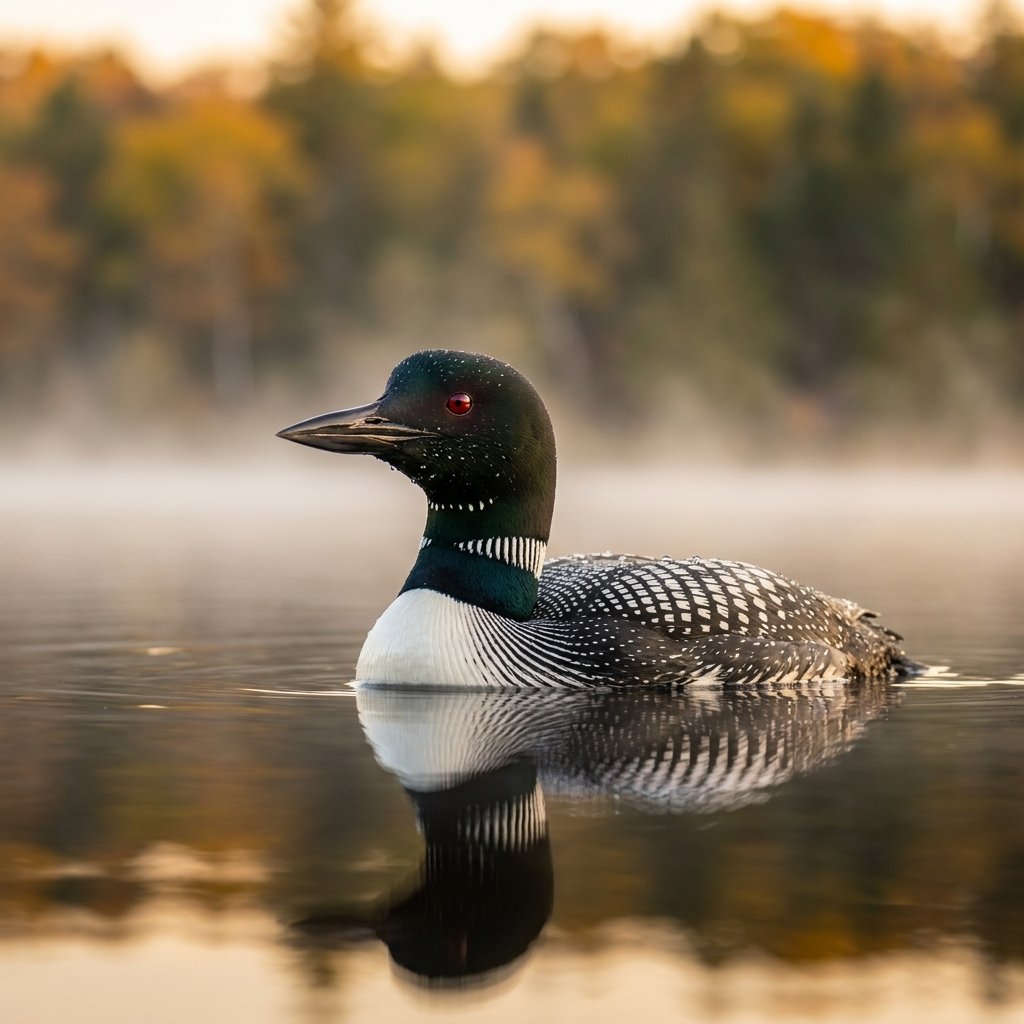
The Common Loon, often called the "Voice of the North," is the quintessential symbol of the pristine wilderness. Known for its haunting, tremolo-like yodels that echo across moonlit lakes, this bird is as much a musician as it is a master of the water. While they appear elegant and serene, they are powerful predators with a prehistoric lineage dating back over 20 million years.
🔍 How to Identify
- 👁️ Crimson Eyes: In the breeding season, adults sport striking, deep-red eyes which are thought to help them see clearly while hunting underwater.
- 🏁 Checkered Mantle: Their summer plumage features a sophisticated black-and-white "checkerboard" pattern on the back and a distinct black "necklace" around the throat.
- 🗡️ Spear-Like Bill: They possess a heavy, straight, black bill that is perfectly designed for stabbing and grasping slippery fish.
- 🚢 Low Profile: Unlike ducks, loons sit very low in the water, sometimes with only their neck and head visible, similar to a submarine’s periscope.
🪶 Behavior & Diet
- 🐟 Master Divers: Loons are elite underwater hunters. Unlike most birds, they have solid bones (rather than hollow ones), which act like a diver’s weight belt, allowing them to plunge up to 200 feet deep in search of fish, crayfish, and shrimp.
- 🚣 Awkward on Land: Because their legs are positioned very far back on their bodies for powerful swimming, they are incredibly clumsy on land and can only walk with great difficulty. They even choose to nest right at the water’s edge to avoid "walking" altogether.
- 🌊 Seasonal Commuters: While they prefer quiet, freshwater lakes for breeding, they spend their winters in the salty coastal waters of the Atlantic and Pacific, where their plumage fades to a subtle, camouflaged greyish-brown.
🤝 Interaction & Safety
- 🛶 Give Them Space: Loons are extremely sensitive to human presence, especially during nesting season (late spring). If a loon starts "dancing" on the water or vocalizing loudly at you, you are too close.
- 🎣 Lead Warnings: One of the biggest threats to loons is lead poisoning from swallowing lost lead fishing sinkers. If you are an angler, switching to non-lead tackle is the best way to ensure these birds thrive.
- 🚤 Watch the Wake: Boat wakes can easily flood a loon's low-lying nest, destroying the eggs. Slow down when traveling near shorelines where loons are present.
✨ Fun Fact
Loons are not capable of taking off from land. Because of their heavy weight and rear-mounted legs, they need a "runway" of water—sometimes up to a quarter-mile long—to flap their wings and build enough speed to finally lift into the air.
More Details



