Info
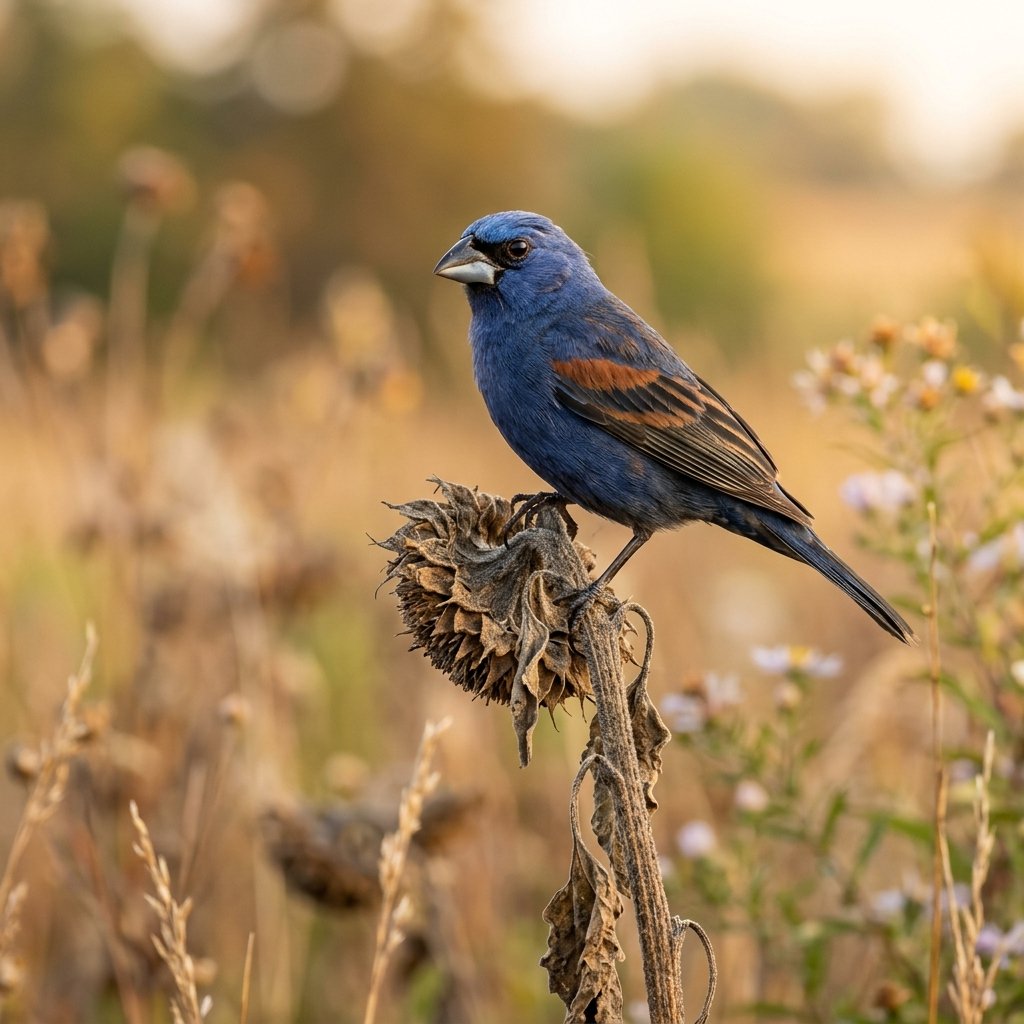
The Blue Grosbeak is often mistaken for its smaller cousin, the Indigo Bunting, but its massive "grosbeak" bill and rich cinnamon wing bars reveal its true identity. Primarily a summer resident of the southern United States and Mexico, this bird fills the air with a sweet, warbling melody that sounds like a rambling, musical poem. Known as a "bird of the edges," it thrives in the sunny transition zones where the forest meets the field.
🔍 How to Identify
- 🥈 The Bill: Features a heavy, oversized, conical beak in a striking silver-gray hue, perfectly evolved for cracking tough seeds.
- 🎨 Male Plumage: Dressed in deep indigo-blue feathers that are beautifully contrasted by two thick, brownish-cinnamon wing bars.
- 🍂 Female Plumage: Largely a warm, cinnamon-brown color with darker wings; her massive bill is the best way to distinguish her from similar-looking sparrows.
- ↕️ Tail Motion: A key behavioral giveaway is their habit of frequently twitching or flicking their tails downward and sideways while perched.
🪶 Behavior & Diet
- 🦗 The Cricket Hunter: While they enjoy seeds and grains, they are a gardener’s best friend during the breeding season, as they feast heavily on large insects like grasshoppers and cicadas.
- 🌳 Edge Dwellers: You won’t find these birds in deep, dark forests; they prefer overgrown fields, hedgerows, and roadside thickets where they can find dense cover for their nests.
- ✈️ Night Travelers: These birds are nocturnal migrants, navigating by the stars to travel thousands of miles between their North American breeding grounds and their winter homes in Central America.
🤝 Interaction & Safety
- 🌿 Shy Neighbors: Blue Grosbeaks are generally non-aggressive and quite shy, often preferring to sing from the hidden safety of a tall shrub rather than interacting with humans.
- 🐈 Pet Safety: Because they often forage on or near the ground, they are highly vulnerable to domestic cats; keeping pets indoors is the most effective way to protect these visiting songbirds.
- 🌻 Observation Tips: To attract them to your yard, provide a ground-level birdbath and plant native, seed-bearing grasses or shrubs like elderberry.
✨ Fun Fact
Blue Grosbeaks have a very strange "interior design" preference: they almost always weave shed snake skins into the walls of their nests, a tactic thought to scare off climbing predators like squirrels!
More Details



