Info
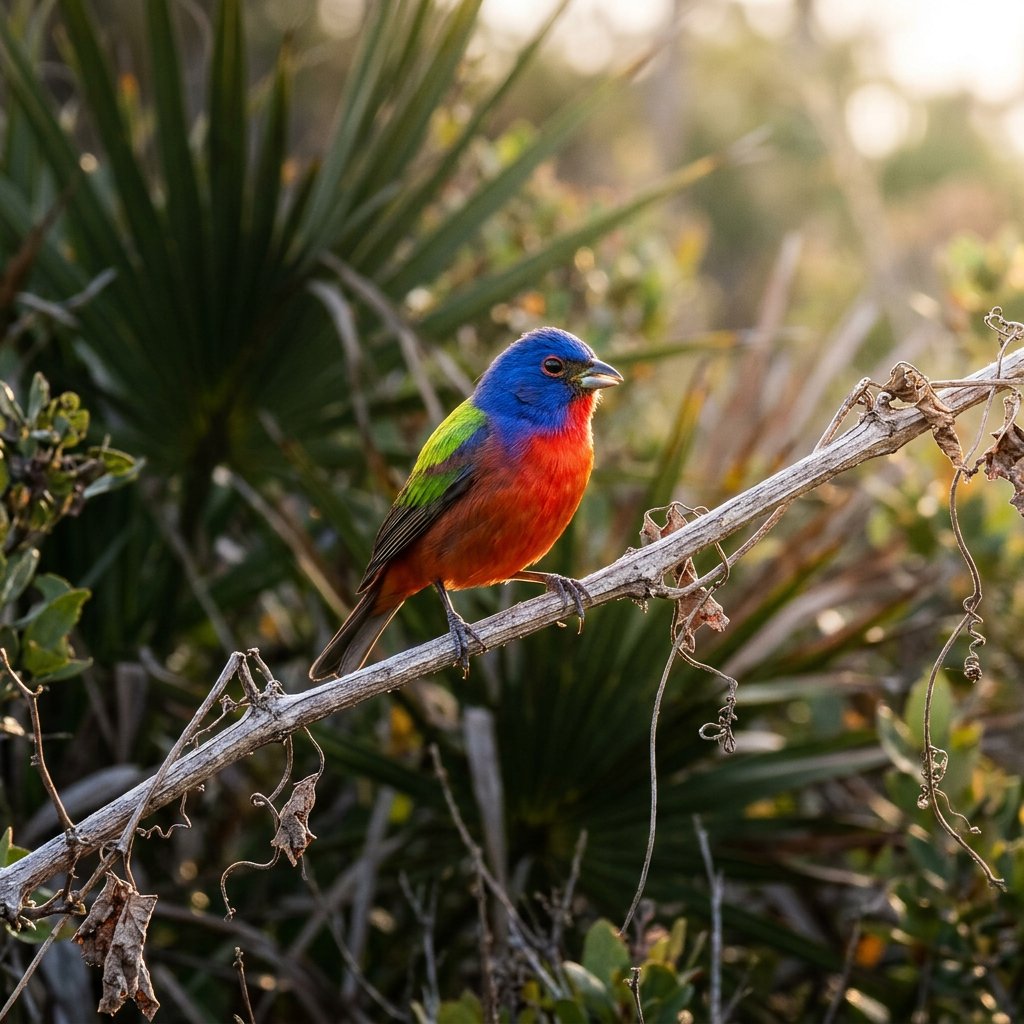
The Painted Bunting (Passerina ciris) is often hailed as a "living rainbow" and is widely considered the most strikingly beautiful songbird in North America. Known in French as the Nonpareil, meaning "without equal," these shy birds add a splash of impossible color to the thickets of the southern United States and Mexico. Despite their neon plumage, they are surprisingly secretive, preferring to sing their sweet, warbling songs from the safety of dense cover.
🔍 How to Identify
- 🎨 Technicolor Males: Adult males are unmistakable with a royal blue head, a bright lime-green patch on the back, and a vivid red chest and rump.
- 🌿 Lime-Green Females: Females and immature males are a uniform, bright lime-green all over—a color rare among North American birds—which allows them to vanish into leafy foliage.
- 🐦 Seed-Cracker Beak: They possess a short, stout, conical beak that is dark in color, perfectly adapted for husking small seeds and grains.
🪶 Behavior & Diet
- 🌾 Foraging Habits: They are primarily granivores (seed-eaters) that specialize in grass seeds. During the breeding season, they transition to a high-protein diet of insects like caterpillars, spiders, and beetles to provide energy for their growing chicks.
- 🏡 Brush Dwellers: Unlike robins or bluebirds that sit in the open, Painted Buntings are "edge" specialists. They prefer overgrown fields, hedgerows, and coastal scrub, rarely venturing far from the protection of thick, thorny bushes.
🤝 Interaction & Safety
- 🕊️ Gentle Nature: These birds are non-aggressive and peaceful. They are a delight for birdwatchers but are easily spooked by sudden movements or loud noises near bird feeders.
- 🐾 Vulnerability: Because they forage and nest close to the ground, they are at high risk from domestic cats. To protect them, keep cats indoors and place bird feeders in the open but within a few feet of a "safety" bush to allow for a quick escape from hawks.
✨ Fun Fact
In the 18th and 19th centuries, the Painted Bunting was so prized for its beauty that it was a popular cage bird; thousands were captured and shipped to Europe to be kept as pets, a practice that is now strictly illegal under the Migratory Bird Treaty Act.
More Details




