Info
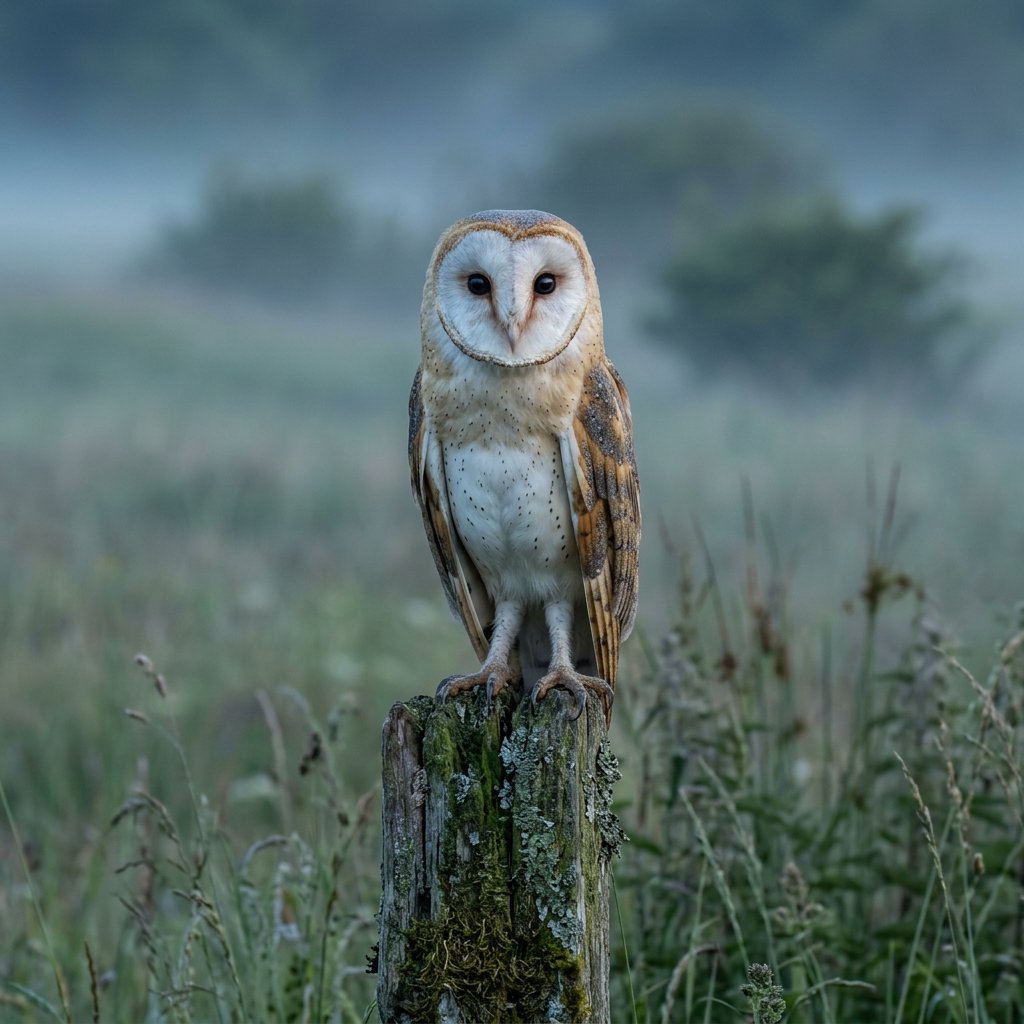
Known as the "Ghost Owl" for its pale, silent appearance in the night, the Barn Owl (Tyto alba) is perhaps the world’s most iconic nocturnal hunter. Instead of the classic "hoot" associated with other owls, this bird communicates with a haunting, rasping shriek that has inspired centuries of folklore and ghost stories. Its distinctive heart-shaped face isn't just for looks—it acts like a biological satellite dish, funneling the tiniest sounds directly to its ears.
🔍 How to Identify
- 🤍 The Facial Disc: A stark, white, heart-shaped face bordered by a thin, brownish rim, featuring dark, forward-facing eyes and no "ear tufts."
- 🎨 Plumage: A beautiful contrast of golden-buff or cinnamon upperparts with delicate grey mottling, paired with snowy-white underparts that are often dusted with tiny dark spots.
- 🦉 Silhouette: They possess relatively long, feathered legs and broad, rounded wings that create a moth-like, buoyant flight pattern when seen against a twilight sky.
🪶 Behavior & Diet
- 🐁 The Ultimate Mouser: Barn Owls are a farmer’s best friend, capable of consuming over 1,000 rodents in a single year. They are so efficient that they can catch prey in total darkness by sound alone.
- 🏚️ Nesting Habits: True to their name, they frequently nest in abandoned barns, silos, and church belfries, though they also thrive in hollow trees or cliff crevices near open fields and grasslands.
- 🤫 Silent Flight: Their wing feathers have specialized "fringed" edges that break up air turbulence, allowing them to glide in near-total silence to ambush unsuspecting prey.
🤝 Interaction & Safety
- 🚫 Rodenticide Warning: The greatest threat to these birds is secondary poisoning. If an owl eats a mouse that has consumed rat poison, the owl can become fatally ill. It is best to avoid chemical pest control if you have owls in your area.
- 🐕 Pet Dynamics: While Barn Owls are medium-sized predators, they focus strictly on small rodents. They generally pose no threat to dogs or adult cats, but very small outdoor pets like kittens or rabbits should be kept secure at night.
- 🔭 Observation: They are shy and sensitive to light. If you are lucky enough to spot one, avoid using bright flashlights or "light painting" for photography, as this can temporarily blind them and interfere with their ability to hunt.
✨ Fun Fact
Barn Owls have asymmetrical ear openings! One ear is positioned higher on the skull than the other, which allows them to pinpoint the exact vertical and horizontal location of a scurrying mouse—even if it's hidden under a deep layer of snow or leaves.
More Details



