Info
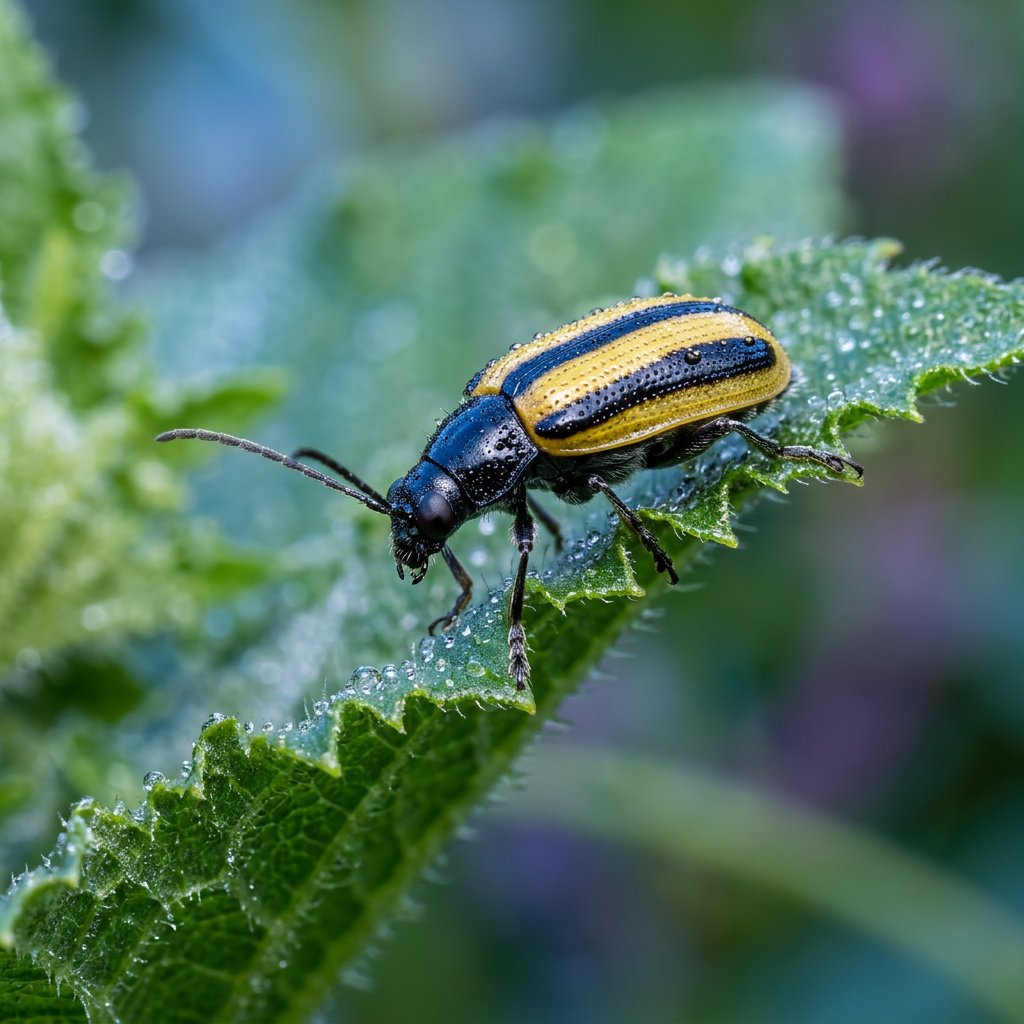
Often referred to as the "Striped Cucumber Beetle," this small, vibrant insect is a classic garden villain dressed in a racer’s stripes. While its bright yellow and black pattern makes it easy to spot, its presence is rarely a welcome sight for home gardeners. This beetle is a specialist, focusing its destructive energy almost exclusively on cucumbers, squashes, and melons.
🔍 How to Identify
- 🪲 The Stripes: The most distinct feature is the three bold, black longitudinal stripes running down its bright yellow wing covers (elytra).
- 👤 The Dark Head: It sports a solid black head and dark antennae, which distinguishes it from the similar-looking Western Corn Rootworm.
- 📏 Size & Shape: It has a sleek, oblong body, typically measuring about 5 to 6 millimeters—roughly the size of a grain of rice.
🌲 Behavior & Ecology
- 🍽️ The Cucurbit Specialist: These beetles are obsessed with "cucurbit" plants. They emerge in early spring to feast on tender seedlings, often devouring leaves, pollen, and even the delicate yellow petals of squash blossoms.
- 🦠 A Deadly Messenger: The beetle's most dangerous trait isn't its appetite, but its role as a "vector." It carries a pathogen called Bacterial Wilt. When the beetle nibbles on a leaf, it leaves behind bacteria that clog the plant's vascular system, causing the entire vine to collapse and die.
- 🪵 Winter Survivors: They are surprisingly hardy, spending the winter hiding under fallen leaves or in the soil of nearby wooded areas, waiting for the first signs of garden planting to return.
⚠️ Safety & Toxicity
- 🛡️ Human & Pet Safety: The Striped Cucumber Beetle is completely harmless to humans and pets. They do not bite, sting, or possess any venomous qualities.
- 🌿 Garden Risk: While safe for you, they are a "High Alert" pest for your vegetables. Their larvae, known as rootworms, live underground and feed on plant roots, while the adults attack everything above ground.
- 🧤 Handling: You can pick them off plants by hand without worry, though they are quite fast and will often drop to the ground or fly away when they feel the vibration of an approaching gardener.
✨ Fun Fact
✨ The Chemical Invitation: Male beetles produce a specific "aggregation pheromone." When a male finds a particularly delicious cucumber plant, he releases this chemical signal into the air, effectively "texting" every other beetle in the neighborhood to join him for a massive group feast!
More Details








