Info
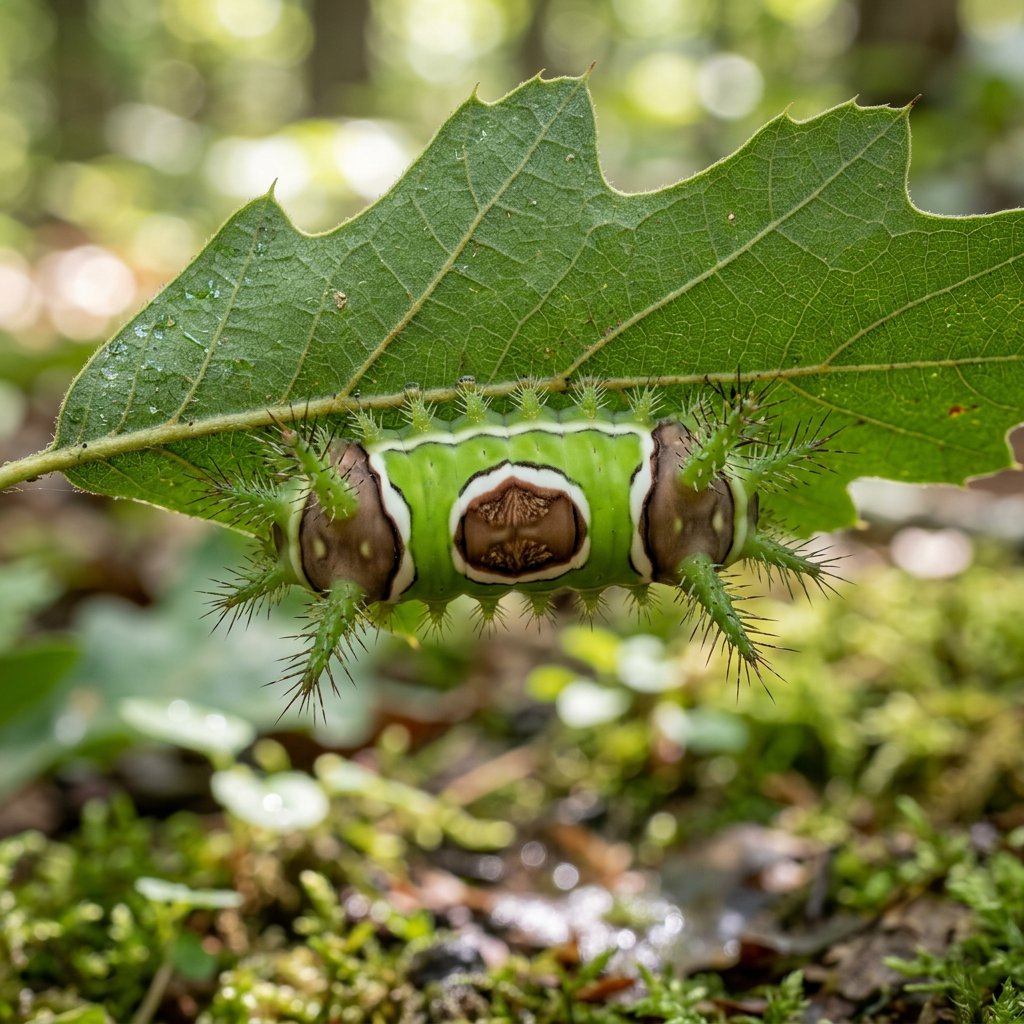
Known commonly as the Saddleback Caterpillar, this larva looks like a tiny, colorful character straight out of a fantasy novel. While it may look like it’s dressed up for a parade with its vibrant "saddle," those flashy colors are nature's way of saying "stay away." It is the larval stage of a small, chocolate-brown moth, but it is the caterpillar that most gardeners encounter—usually by accident.
🔍 How to Identify
- 🟢 The "Saddle": A bright green patch covers its midsection, featuring a distinct brown or purple oval in the center, resembling a miniature saddle and blanket.
- 🛡️ Spiny Horns: Large, prominent protuberances at both the front and rear are covered in bristly, hollow spines that look like tiny cacti.
- 👁️ False Eyes: On its rear end, two white spots often mimic eyes, tricking predators into thinking the caterpillar is facing them when it’s actually looking the other way.
🌳 Habitat & Behavior
- 🍃 A Generalist Eater: Unlike some caterpillars that only eat one type of leaf, the Saddleback is not picky. You’ll find them munching on everything from roses and hibiscus to corn, citrus, and even oak trees.
- 🐌 Slug-Like Movement: Belonging to the "slug moth" family (Limacodidae), this caterpillar doesn't have the typical "prolegs" you see on most larvae. It moves with a slow, rhythmic, gliding motion that looks more like a snail than an insect.
⚠️ Safety & Sting Warning
- 🚫 Hazardous to Touch: This is a "look but don't touch" insect. The hollow spines are connected to venom glands. If brushed against, the spines break off into the skin, releasing a potent irritant.
- 🩹 Painful Reaction: A sting from a Saddleback can be intensely painful, often described as worse than a bee sting. It can cause swelling, redness, and in some cases, a nasty rash or even nausea for sensitive individuals. Keep children and curious pets well away from them.
✨ Fun Fact
🦋 Despite having one of the most flamboyant larval forms in the insect world, the adult Acharia stimulea moth is surprisingly plain. It is a fuzzy, dark brown moth that is almost entirely nocturnal, spending its short life hiding on tree bark where it is nearly invisible.
More Details








