Info
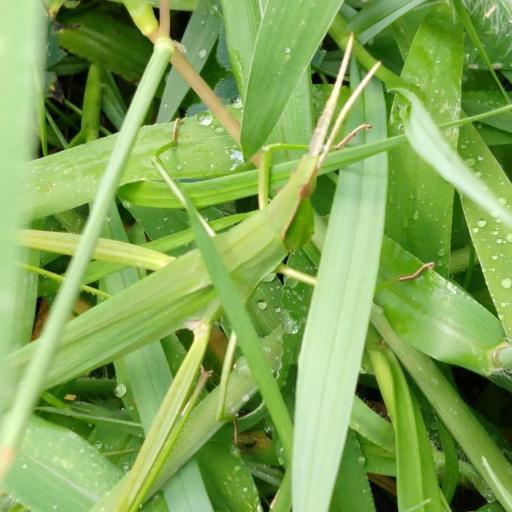
Often called the Oriental Long-headed Grasshopper, this insect looks more like a wandering blade of grass than a bug. With its incredibly elongated face and slender frame, it is a master of disguise throughout East Asia. While its "alien" appearance might seem intimidating, it is a gentle giant of the meadow that prefers hiding to fighting.
🔍 How to Identify
- 👽 The "Cone" Head: Its most striking feature is a long, pointed head that extends far past its eyes, making it look aerodynamic and sharp.
- 🌿 Natural Camouflage: They come in two primary color phases—vibrant leaf green or earthy straw brown—allowing them to disappear perfectly into tall grasses.
- 📏 Slender Silhouette: Unlike the "chunky" grasshoppers you might see in a backyard, Acrida cinerea is exceptionally thin with long, spindly hind legs designed for high-velocity leaps.
🌲 Habitat & Ecology
- 🌾 The Grassland Ghost: You will most likely find them in rice paddies, riverbeds, and overgrown gardens. They are specialized herbivores that feed primarily on various types of grasses (Poaceae).
- 🎭 Master of Stillness: Instead of flying away immediately, this grasshopper’s first line of defense is to remain perfectly still. It aligns its body with the veins of a leaf or a stem of grass, becoming virtually invisible to birds and predators.
- 🦗 A Summer Singer: During the warmer months, they are active during the day. While they don't "chirp" as loudly as some crickets, they move with a characteristic clicking sound when they take flight.
⚠️ Safety & Toxicity
- 🛡️ Harmless Friend: These insects are completely non-toxic and possess no stinger. They are safe to observe and are generally considered "neutral" in the garden.
- 🤏 Gentle Handling: While they can technically nibble with small mandibles if squeezed, they rarely bite humans. Their main "weapon" is their powerful kick; the tiny spines on their back legs can feel like a scratch if they try to jump out of your hand.
✨ Fun Fact
In some East Asian cultures, the Acrida cinerea has been a symbol of late summer and autumn. Because of their graceful appearance, they were historically kept in small, ornate bamboo cages to be admired, much like singing crickets or decorative birds!
More Details








