Info
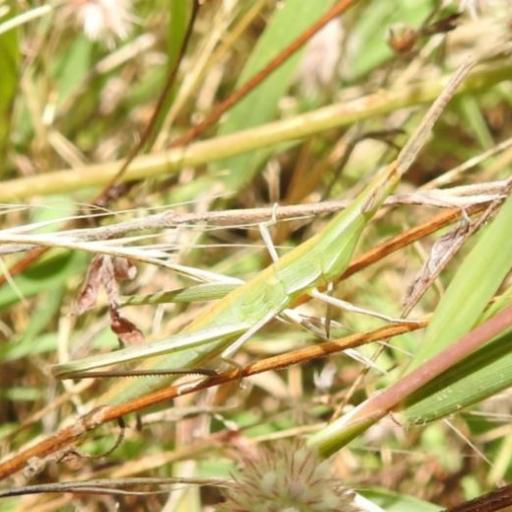
Imagine a blade of grass suddenly sprouting legs and hopping away! The Acrida conica, commonly known as the Giant Green Slant-faced Grasshopper, is one of nature’s most impressive camouflage artists. With its elongated, "alien-like" head and slender body, it looks less like a typical bug and more like a piece of living origami designed to blend perfectly into the tall weeds of Australian gardens.
🔍 How to Identify
- 🦗 The Pointed Crown: Its most striking feature is a long, cone-shaped head with eyes positioned near the very tip, giving it a permanent "slant-faced" look.
- 🍃 Blade-Like Body: The body is exceptionally long and thin, mimicking the shape and texture of a blade of grass or a reed.
- 📏 Leg Alignment: When resting, it tucks its long hind legs tightly against its body to maintain its disguise as a stray stem.
- 🎨 Color Morphs: While most are a vibrant "leaf green," some individuals are born in shades of sandy brown or straw yellow to match dry, summer grass.
🌲 Habitat & Ecology
- 🌿 The Master of Stillness: You will usually find them clinging vertically to tall grass or shrubs. They rely on "crypsis" (camouflage), staying perfectly still even if you walk right past them.
- 🍴 A Targeted Diet: They are specialized herbivores that feed almost exclusively on various types of grasses. Unlike some locusts, they rarely congregate in "plagues" and aren't considered major agricultural pests.
- 🕊️ Flight vs. Leap: While they are powerful jumpers, they can also fly. When they take off, you might see a flash of pale wings before they disappear back into the greenery and instantly "vanish" by standing still.
⚠️ Safety & Toxicity
- ✅ Harmless Neighbor: These insects are completely non-aggressive. They do not sting, and their mandibles are designed for grass, not skin, making them safe to observe up close.
- 🐾 Pet & Child Safe: They are non-toxic. If a curious dog or cat happens to catch one, the biggest risk is usually just a startled pet and a very fast-moving grasshopper.
- 🛡️ Defense Mechanism: Their only real defense is their camouflage and their ability to "kick" away with their powerful back legs if grabbed.
✨ Fun Fact
The Acrida conica is a master of the "quick change." Research suggests that these grasshoppers can actually change their color from green to brown (or vice versa) after a molt to better match the moisture levels and color of the grass in their environment!
More Details








