Info
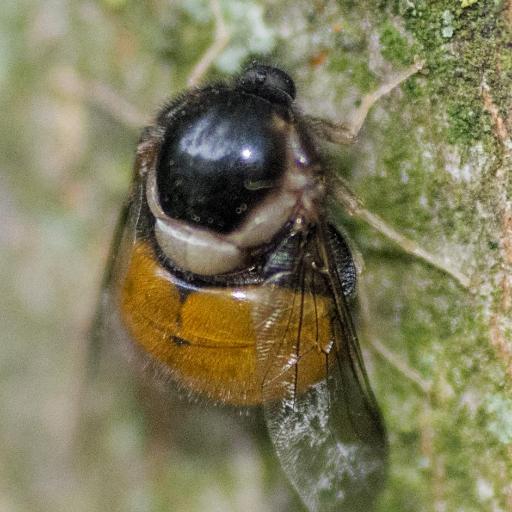
Often called Small-headed Flies or Hunchback Flies, members of the Acroceridae family look like nature’s most awkward aerodynamic experiment. With their impossibly tiny heads and oversized, spherical bodies, they resemble colorful "flying marbles." While they might look like alien invaders, they are actually fascinating specialists with a very specific—and slightly spooky—mission in the ecosystem.
🔍 How to Identify
- 👀 The "Pinhead" Look: Their most striking feature is a head so small it is almost entirely covered by their large, compound eyes, making it look like a tiny dot on a massive body.
- 🎒 The Hunchback: The thorax (middle section) is remarkably swollen and rounded, giving the fly a distinct "humpbacked" appearance.
- 🪽 Venation & Color: Many species sport brilliant metallic blues, greens, or "bee-mimic" yellow and black stripes. Their wings are often translucent but strong, allowing for high-speed hovering.
🌲 Habitat & Ecology
- 🕷️ The Spider Specialists: Don't let their clumsy appearance fool you; their larvae are highly specialized "parasitoids" of spiders. They effectively act as a natural population control for various arachnids.
- 🌸 Nectar Lovers: Adult Small-headed flies are often found in meadows and gardens. Some species possess a proboscis (mouthpart) that is longer than their entire body, allowing them to sip nectar from deep, tubular flowers that other insects can't reach.
- 💨 Acrobatic Flyers: Despite their heavy-looking bodies, they are incredibly fast and agile in the air, often seen hovering perfectly still before darting away in a blur.
⚠️ Safety & Toxicity
- ✅ Harmless to Humans: Despite their strange, "stinger-like" mouthparts (in some species) or intimidating colors, they are completely incapable of biting or stinging people or pets.
- 🛡️ Garden Friends: They are considered beneficial insects. Not only do they help pollinate flowers, but their role in balancing spider populations makes them an interesting part of a healthy backyard food web.
✨ Fun Fact
The Acroceridae larvae are the ultimate "hitchhikers." After hatching on the ground or on bark, the tiny larvae wait for a spider to pass by. When one does, they leap onto the spider’s leg and burrow inside to begin their development!
More Details








