Info
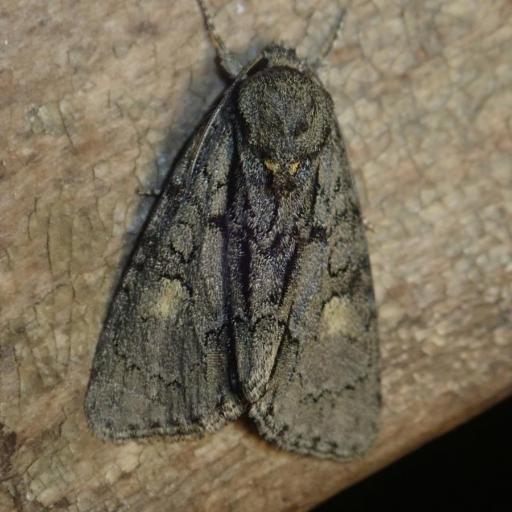
Known scientifically as Acronicta strigosa, the Marsh Dagger is a ghost of the wetlands. It earns its name from the subtle, dark "dagger" markings on its wings, which act as a masterclass in camouflage. This moth is a rare treasure for nature watchers, often disappearing from entire regions only to be rediscovered years later in secluded, damp thickets.
🔍 How to Identify
- 🗡️ The "Dagger" Mark: Look for a fine, dark horizontal streak near the base of the forewing and another near the outer edge, resembling a tiny obsidian blade.
- 🪨 Lichen Mimicry: The wings are a delicate mix of pale grey, silver, and olive-brown, designed to make the moth invisible when resting on lichen-covered bark.
- 🐛 The Vibrant Larva: While the adult is subtle, the caterpillar is striking—bright lime green with a distinct yellow stripe down its back and reddish-brown "saddles" on its segments.
🌲 Habitat & Ecology
- 🌊 Wetland Specialist: This moth is rarely found far from its favorite damp haunts, specifically fens, marshes, and the edges of boggy woodlands.
- 🌿 The Hawthorn Connection: The larvae are specialized feeders, primarily munching on the leaves of Hawthorn (Crataegus) and occasionally Blackthorn, preferring bushes that grow in moist soil.
- 🌙 Night Owl: As a nocturnal species, it spends its days perfectly still. It emerges at dusk to seek out nectar and mates, often appearing near light traps set by researchers.
⚠️ Safety & Toxicity
- 🛡️ Completely Harmless: The Marsh Dagger is a "friend" of the garden and forest. It does not bite, sting, or possess any chemical defenses that are dangerous to humans.
- 🐾 Pet Friendly: Unlike some moth species whose caterpillars have irritating hairs (like the Oak Processionary), the Marsh Dagger larva is safe to be around curious dogs or cats.
✨ Fun Fact
✨ The Great Disappearing Act: In the United Kingdom, the Marsh Dagger was once feared to be extinct for nearly 60 years until a small, surviving population was miraculously rediscovered in the fens of Cambridgeshire in the 1990s!
More Details








