Info
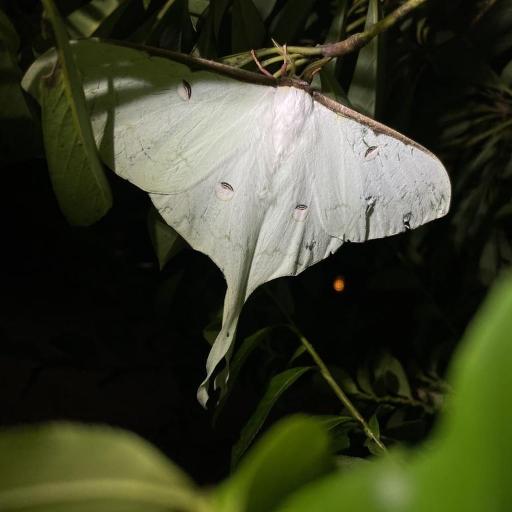
Often referred to as the Golden Emperor Moth, this breathtaking insect is a close relative of the famous Luna Moth. Resembling a piece of fluttering silk, it is celebrated for its shimmering golden-yellow wings and elegant, ribbon-like tails. In its native Southeast Asia, it is often viewed as a symbol of ethereal beauty and the fleeting nature of life.
🔍 How to Identify
- 🪽 The Long Tails: The most striking feature is the pair of elongated hindwing "streamers" that can be longer than the moth's actual body, trailing gracefully during flight.
- 👁️ The Eyespots: Each wing features a distinct, circular "eyemark" or ocellus, usually colored in shades of pink, brown, and white to mimic the eyes of a larger predator.
- 🟡 Golden Hue: While its cousins are often mint-green, Actias sinensis is famous for its warm, buttery yellow to deep ochre coloration, often dusted with reddish-brown speckles.
🌲 Habitat & Ecology
- 🌙 A Life Without Food: Like other giant silkmoths, the Golden Emperor does not have a functional mouth or digestive system. It lives for only 7 to 10 days, fueled entirely by energy stored from its time as a caterpillar, with the sole mission of finding a mate.
- 🍃 Tree Preferences: You will typically find them in forested regions or gardens near their host plants, which include Sweetgum (Liquidambar) and various species of Hibiscus and Citrus.
- 🦇 Sonar Defense: Those long, spinning tails aren't just for looks; they are evolutionary decoys designed to disrupt the echolocation of bats, causing predators to strike at the "tail" rather than the moth's vulnerable body.
⚠️ Safety & Toxicity
- ✅ Completely Harmless: The adult moth is a "gentle giant." It cannot bite, sting, or spray toxins, making it perfectly safe for curious observers and children.
- 🐛 Caterpillar Touch: The larvae are bright lime-green with small, colorful bumps. While not "stinging" like some other species, the tiny bristles can cause very mild skin irritation for people with highly sensitive skin if handled roughly.
✨ Fun Fact
The Golden Emperor Moth is a master of the "shiver." Because they fly at night when temperatures can drop, they must rapidly vibrate their wing muscles to "warm up" their engines before they can take off into the moonlight!
More Details








