Info
Often called the "Two-spotted Ladybird," this little beetle is the ultimate garden companion. While many insects might look intimidating, this tiny powerhouse is a celebrated guardian of the green, often found patrolling rose bushes or vegetable patches for its next meal. They are widely regarded as a symbol of good luck and are one of the most beloved biological pest controllers in the world.
🔍 How to Identify
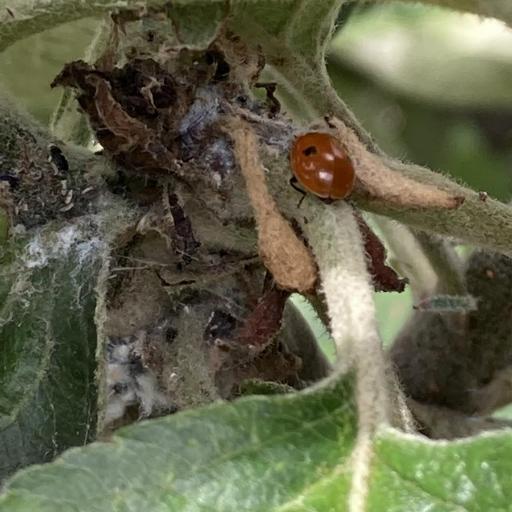
- 🐞 The Spots: Its most defining feature is its bright red elytra (wing covers) decorated with exactly two large, black spots—one on each side.
- 🛡️ The Shield: The area behind the head, known as the pronotum, is black with distinct white or creamy markings along the outer edges, looking almost like a tiny mask.
- 🐜 Body Shape: It has a classic dome-shaped, oval body, though it is notably smaller and more delicate than the larger, more aggressive Harlequin Ladybird.
🌲 Habitat & Ecology
- 🍽️ Aphid Hunter: These are fierce predators in the insect world. Both the adults and their spiky, "alligator-like" larvae consume massive amounts of aphids, scale insects, and mites, making them a gardener's best friend.
- 🏘️ Winter Shelter: As the weather cools, they are known to seek shelter in crevices, tree bark, or even inside unheated garden sheds. They often huddle together in small groups to conserve heat and moisture during their winter dormancy.
⚠️ Safety & Toxicity
- ✅ Status: Completely harmless to humans and pets. They do not sting and are not known to transmit any diseases to people.
- 🧪 Reflex Bleeding: If they feel threatened, they may "bleed" a bitter, yellow fluid from their leg joints. While it’s not toxic to humans, it smells unpleasant and is designed to tell birds and spiders that this ladybird is not a tasty snack.
✨ Fun Fact
The Two-spotted Ladybird is a master of disguise! While the red-with-black-spots version is most common, some individuals are "melanic," meaning they are entirely black with four red spots, looking so different that they are often mistaken for a completely different species.
More Details








