Info
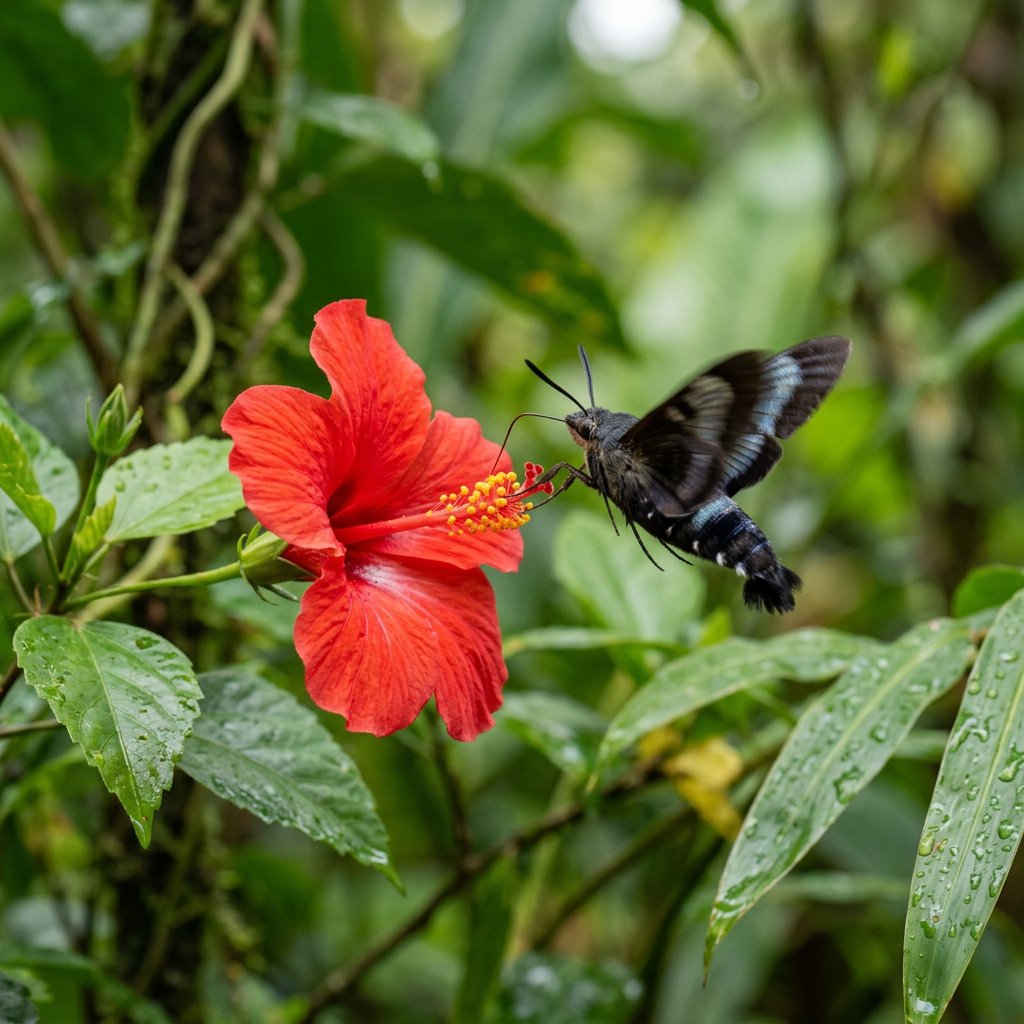
Often mistaken for a tiny bird, the Titan Sphinx (Aellopos titan) is a master of aerial disguise. This diurnal moth zips through gardens across the Americas, mimicking the flight patterns and hovering habits of a hummingbird so perfectly that even experienced birdwatchers are often fooled. It is a welcome guest for any gardener, acting as a high-speed pollinator that works the "day shift" while its cousins are still sleeping.
🔍 How to Identify
- 🦋 The Abdominal Band: Its most striking feature is a broad, snowy-white band that wraps around the middle of its dark, chunky abdomen, which serves as a clear "ID badge" during flight.
- 🔳 Wing Patterns: The forewings are a deep, velvety chocolate brown decorated with two rows of small white spots, while the hindwings feature a subtle, semi-transparent patch.
- 📐 The "Fan" Tail: At the tip of its body, it possesses a tuft of long scales that it spreads out like a fan, using it as a rudder to navigate precisely from flower to flower.
🌲 Habitat & Ecology
- 🌸 Daytime Diner: Unlike most moths that wait for the moon, the Titan Sphinx is active in the bright sun. It hovers in front of flowers like Lantana or Honeysuckle, using its long, straw-like proboscis to drink nectar without ever touching the petals.
- 🌿 The Coffee Connection: In its larval (caterpillar) stage, it is a specialist feeder. It seeks out plants in the Madder family (Rubiaceae), particularly Wild Coffee and Seven-year Apple, where it stays camouflaged among the leaves.
⚠️ Safety & Toxicity
- 🛡️ Completely Harmless: Despite its rapid, buzzing flight and "scary" speed, this moth is a gentle nectar-drinker. It possesses no stinger, no biting mouthparts, and no chemical defenses.
- 🐾 Safe for Pets: The Titan Sphinx is non-toxic. If a curious cat or dog manages to catch one, there is no risk of poisoning, though the moth’s speed usually makes it an impossible target.
✨ Fun Fact
The Titan Sphinx belongs to the Sphingidae family, named because the caterpillars have a unique defensive posture. When threatened, they pull their heads back and tuck their legs, making them look remarkably like the Great Sphinx of Giza!
More Details








