Info
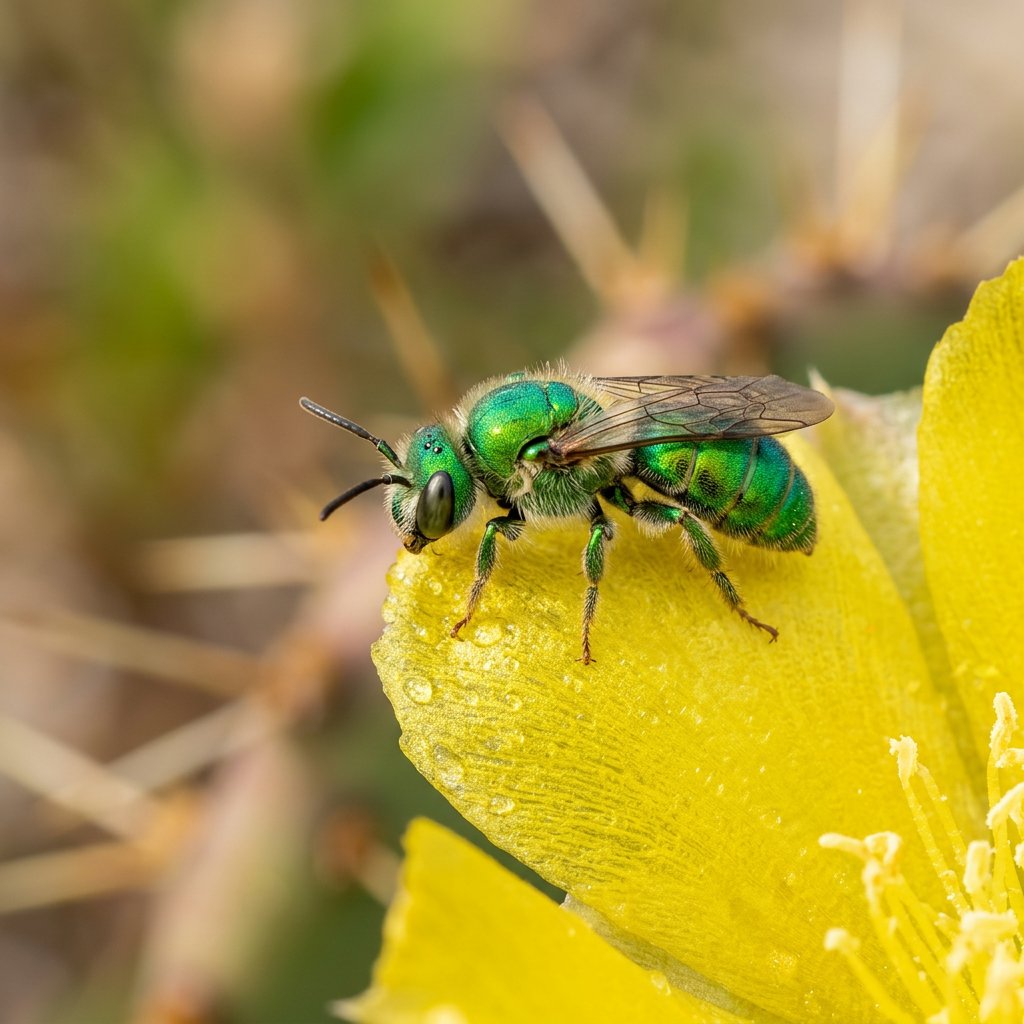
Known as the Brown-winged Striped Sweat Bee, this insect is a flying jewel of the garden. Often mistaken for a beetle at first glance due to its shimmering, metallic exoskeleton, it is a vital native pollinator that adds a splash of emerald to the air. While its "sweat bee" nickname comes from its habit of landing on skin to sip salts, it is far more interested in your flowers than in you.
🔍 How to Identify
- ✨ Metallic Sheen: The head and thorax are a brilliant, shimmering metallic green or blue-green, reflecting light like a polished gemstone.
- 🐝 Striped Abdomen: Males feature bold yellow and black bands on their abdomen, while females of this species often have a solid, metallic green abdomen that matches their upper body.
- 🪽 Smoky Wings: As the name suggests, their wings have a distinct brownish or "smoky" tint, which helps distinguish them from other bright green bee species.
🌲 Habitat & Ecology
- 🌸 Generalist Pollinator: These bees are not picky eaters; they visit a massive variety of wildflowers and garden plants, making them a "best friend" to home gardeners.
- 🕳️ Subterranean Homes: They are ground-nesters. They tunnel into bare patches of soil or sunny slopes to create nurseries, often preferring well-drained earth where they can stay dry.
- 🍹 Mineral Seekers: They are famously attracted to human perspiration to harvest salt and moisture. If one lands on you, it’s likely just looking for a "sports drink" rather than a fight.
⚠️ Safety & Toxicity
- 🛡️ Non-Aggressive: Unlike social wasps or honeybees, these are solitary or communal bees with no hive to defend. They are incredibly docile and will not chase or attack humans.
- 🩹 The "Sneezing" Sting: Only the females have stings, and they only use them if they are accidentally squashed against your skin. The sting is exceptionally mild—often described as a tiny prick or a minor "sneeze"—and is generally not dangerous unless you have a specific bee venom allergy.
✨ Fun Fact
Unlike honeybees that have a "Queen," Agapostemon splendens displays communal behavior where several females might share a single front door to their underground nest, but each mother remains an independent "landlady" who only feeds her own children!
More Details








