Info
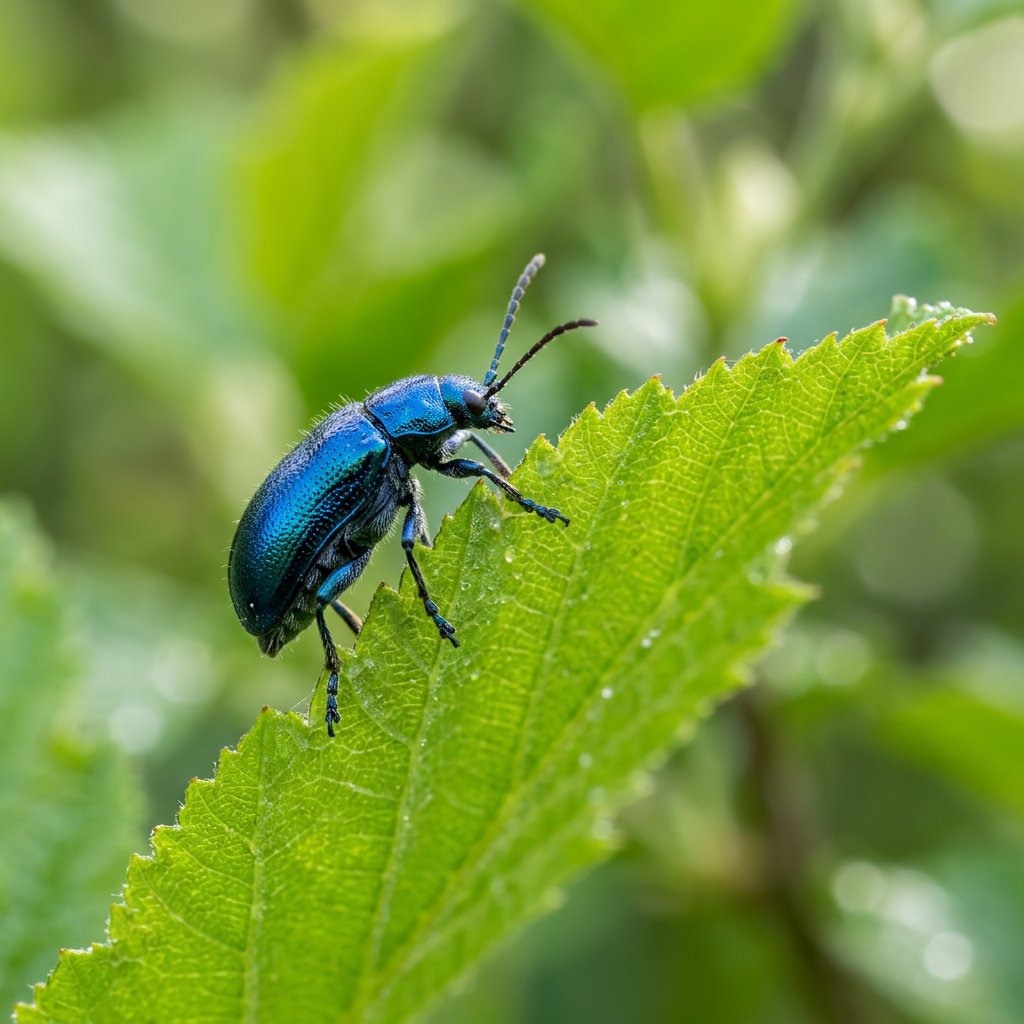
Often resembling a tiny, polished sapphire crawling through the canopy, the Alder Leaf Beetle (Agelastica alni) is a striking member of the leaf beetle family. While it was once considered rare or even extinct in parts of Europe, it has made a dramatic comeback, delighting nature observers with its metallic shimmer. Its entire life cycle is inextricably linked to the Alder tree, where it plays its role as a specialized, albeit hungry, herbivore.
🔍 How to Identify
- 🔵 Metallic Sheen: The most striking feature is its deep, iridescent indigo or violet-blue coloration that looks like metallic automotive paint.
- 🪲 Compact Body: It has a classic beetle silhouette—oval, somewhat domed, and relatively small, usually measuring between 6 to 7mm in length.
- 📏 Textured Wing Cases: Under a magnifying glass, you can see that its wing covers (elytra) are covered in tiny, fine punctures, giving them a unique texture beneath the shine.
🌲 Habitat & Ecology
- 🌳 The Alder Specialist: As the name suggests, this beetle is almost exclusively found on Alder trees (Alnus species). You will typically find them clustered on the underside of leaves during the late spring and summer.
- 🍂 Expert Skeletonizers: While the adults chew holes in leaves, the larvae are the real artists; they graze on the leaf tissue but leave the veins intact, creating a delicate, "skeletonized" look across the foliage.
- 💤 Soil Sleepers: After a busy summer of feeding, the adults head down to the ground to spend the winter tucked safely away in the leaf litter or loose soil at the base of their host tree.
⚠️ Safety & Toxicity
- ✅ Status: Completely harmless to humans and pets.
- 🌿 Garden Impact: They do not bite, sting, or carry diseases. While they can make an Alder tree look a bit "tattered" due to their feeding habits, they are considered a natural part of the ecosystem and rarely cause long-term harm to healthy, established trees.
✨ Fun Fact
The Alder Leaf Beetle is the ultimate "comeback kid" of the insect world. In the United Kingdom, it was officially feared extinct for nearly 60 years until a surprise colony was rediscovered in Manchester in 2004. Since then, it has been rapidly expanding its territory once again!
More Details








