Info
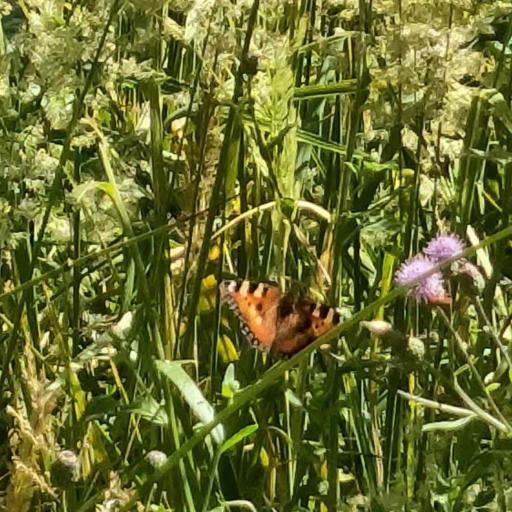
Often called the Small Tortoiseshell, this vibrant visitor is one of the most beloved butterflies across Europe and Asia. Known for its bold "Halloween" colors, it is frequently the very first butterfly seen in early spring, as it emerges from a long winter nap in sheds, attics, or hollow trees. In many cultures, its sudden appearance indoors during a warm spell is considered a lucky omen that winter is finally losing its grip.
🔍 How to Identify
- 🦋 The Wings: The upper wings are a brilliant fiery orange, decorated with a series of black and yellow rectangular blotches along the leading edge.
- 🔵 Blue Borders: Look closely at the wing edges; they are lined with a striking row of small, iridescent blue crescent shapes that shimmer in the sunlight.
- 🍂 Underwing Camouflage: When the wings are closed, the butterfly looks like a piece of charred wood or a dead leaf, allowing it to vanish against tree bark while it sleeps.
🌲 Habitat & Ecology
- 🌿 Nettle Nurseries: The "Urticae" in its name refers to Urtica, the stinging nettle. This is the primary food source for their caterpillars, which live in large, communal "tents" of silk to protect themselves from predators.
- 🏡 Garden Guest: Adults are highly mobile and love garden flowers. They are particularly fond of purple blooms like Buddleia (the Butterfly Bush), lavender, and thistles, where they fuel up on nectar for their long flights.
- ❄️ The Overwinterer: Unlike many insects that perish in the frost, the Small Tortoiseshell hibernates as an adult. It can survive freezing temperatures by producing a natural "antifreeze" in its blood.
⚠️ Safety & Toxicity
- 🛡️ Status: Completely harmless and non-aggressive. They have no sting or bite and are safe to observe closely.
- 🌱 Nettle Warning: While the butterfly and its caterpillars are safe to touch, they live almost exclusively on stinging nettles. If you are searching for caterpillars, watch out for the plant's stinging hairs, which can cause skin irritation!
✨ Fun Fact
[☀️] Solar Powered: Small Tortoiseshells are expert "baskers." They can raise their body temperature to 30°C (86°F) even when the air is much cooler by angling their wings to capture every possible ray of sunlight like a miniature solar panel.
More Details








