Info
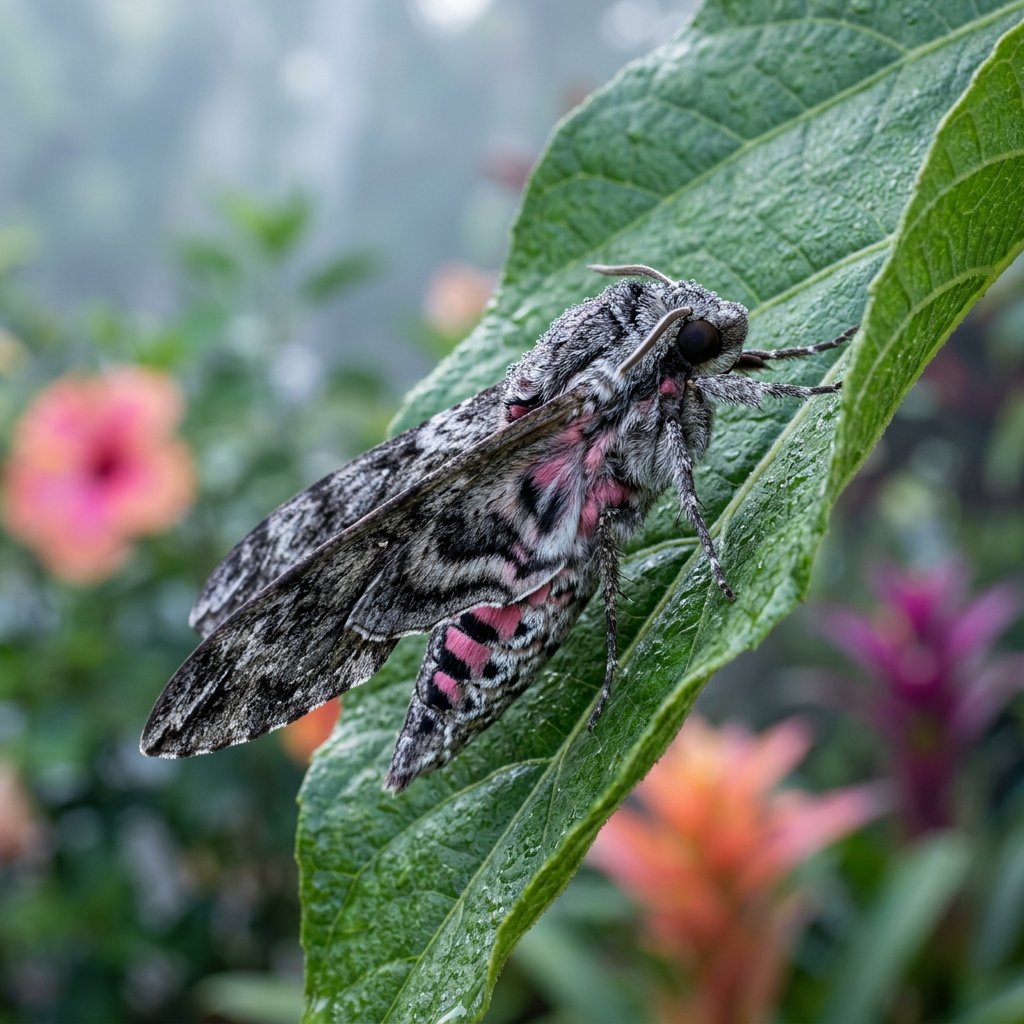
Often mistaken for a tiny, nocturnal bird at dusk, the Pink-spotted Hawkmoth is a master of high-speed maneuvers. While its camouflage is perfect for hiding against tree bark, it hides a splash of tropical color that reveals itself only in flight. Gardeners often know its "teenage" form as the Sweet Potato Hornworm, a hungry caterpillar with a distinctive "tail."
🔍 How to Identify
- 🦋 The Wings: It features a large, streamlined wingspan mottled with shades of grey, brown, and black, looking almost like a piece of weathered wood.
- 🌸 Abdominal Bands: The most striking feature is the series of five to six pairs of bright pinkish-rose spots separated by black bands along the sides of its abdomen.
- 👅 The Proboscis: Look for its remarkably long feeding tube (tongue), which can be several inches long—often exceeding the length of the moth's entire body.
🌲 Habitat & Ecology
- 🍹 The Night Shift: As a crepuscular and nocturnal species, it emerges at twilight to hover like a hummingbird over deep-throated flowers, sipping nectar with its specialized tongue.
- 🥔 Host Plant Specialist: You will most likely find these in gardens where Sweet Potatoes, Morning Glories, or Moonflowers grow, as these plants provide the primary food source for their large, horned caterpillars.
⚠️ Safety & Toxicity
- 🛡️ Harmless Friend: Despite its large size and "scary" fluttering speed, the Pink-spotted Hawkmoth is completely harmless to humans and pets. It does not have a stinger or mouthparts capable of biting.
- 🌿 Garden Impact: While the adult is a beneficial pollinator, the larvae (Hornworms) can be quite destructive to potato and morning glory crops, quickly defoliating stems if left unchecked.
✨ Fun Fact
The Pink-spotted Hawkmoth is an incredible marathon flyer! It has been known to migrate long distances, occasionally traveling from the tropical reaches of South America all the way to the northern United States and even parts of Canada.
More Details








