Info
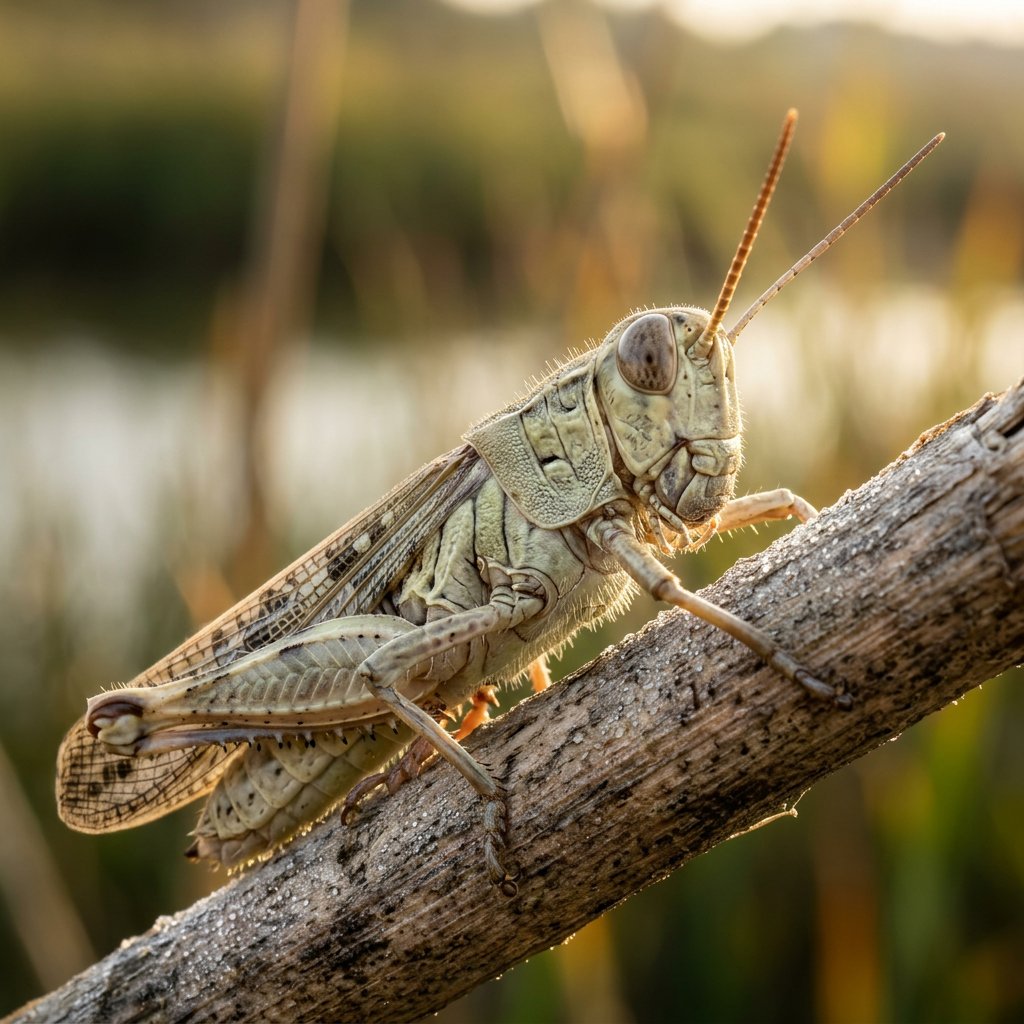
Often called the Slender Green-winged Grasshopper, this elegant insect is a master of camouflage in wet meadows and lush gardens. Unlike its bulkier cousins, it possesses a streamlined grace that allows it to vanish into blades of grass at the slightest disturbance. It is a "neutral" garden visitor—a vital link in the food chain that prefers damp soil over dry, dusty fields.
🔍 How to Identify
- 🎨 The "Sea-Green" Tint: Its most striking feature is the translucent, sea-green or watery-blue hue at the base of the hind wings, which is usually only visible when the insect is in flight.
- 📏 Slender Profile: The body is remarkably thin and elongated, typically measuring between 20mm and 30mm, with wings that extend significantly past the end of the abdomen.
- 🦓 Banded Hind Legs: The powerful jumping legs often feature distinct dark and light bands on the inner surface, used as "flash colors" to startle and confuse predators during a jump.
🌲 Habitat & Ecology
- 💧 Moisture Seekers: This species is highly dependent on humidity. You will most likely spot them in riparian zones, marshes, or well-irrigated suburban lawns where the grass remains green and succulent.
- 🦗 Dietary Habits: They are strictly herbivores, feeding almost exclusively on various types of grasses. While they are related to locusts, they are solitary by nature and do not form the massive, crop-destroying swarms that their relatives are famous for.
⚠️ Safety & Toxicity
- ✅ Safe to Handle: These grasshoppers are completely harmless to humans. They do not possess a stinger, and their mandibles are far too weak to pierce human skin.
- 🐾 Pet & Child Friendly: They are non-toxic. If a curious cat or dog manages to catch one, the only risk is a bit of "crunch" and potential minor indigestion from the exoskeleton; they carry no venom or chemical defenses.
✨ Fun Fact
The specific name thalassinus comes from the Greek word thalassa, meaning "sea." This refers to the beautiful oceanic blue-green color of its wings, a rare shade to find in the world of terrestrial insects!
More Details








