Info
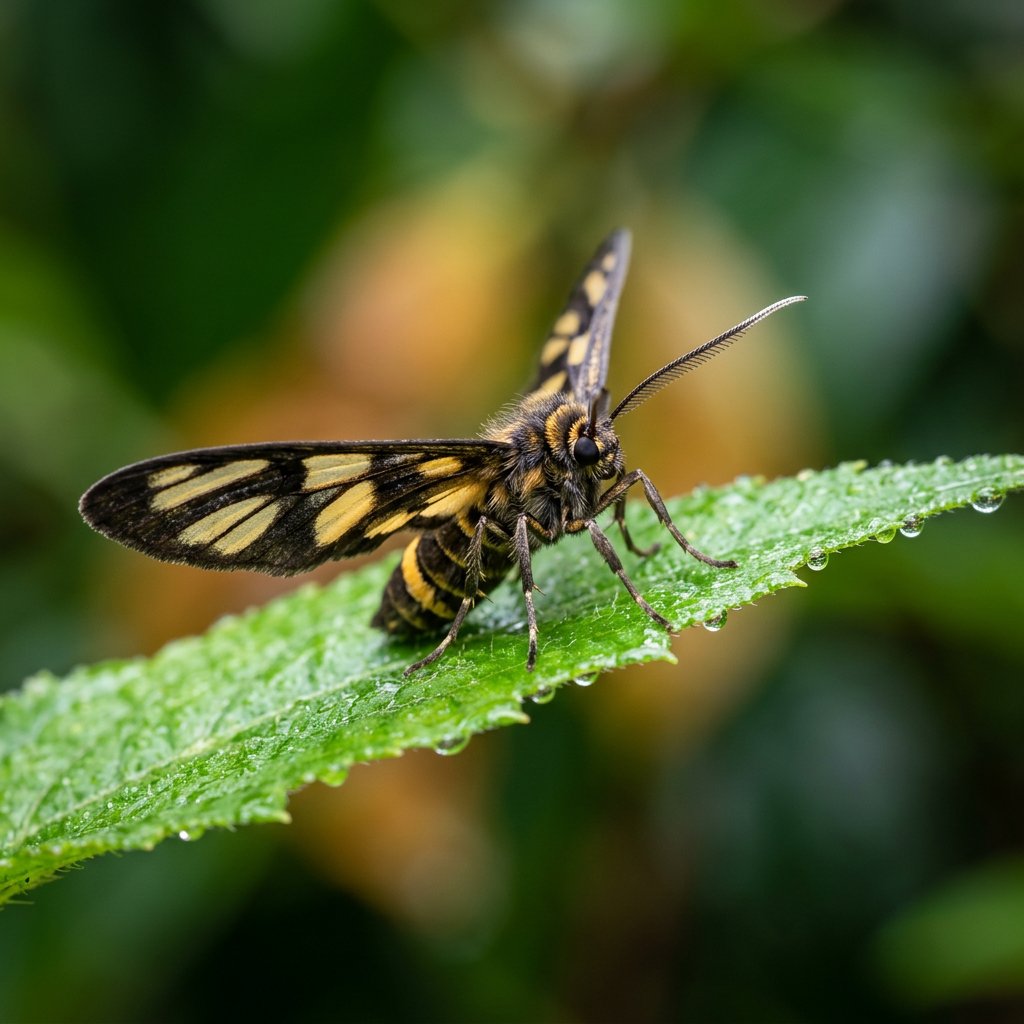
Often called the Handmaiden Moth, Amata huebneri is a master of deception. This little flyer is a "wolf in sheep's clothing" in reverse—it’s a completely harmless moth disguised as a stinging wasp to scare off hungry birds. Unlike most moths that hide in the shadows of the night, this one loves the sunshine and is a common guest in gardens across Southeast Asia and Australia.
🔍 How to Identify
- 🪟 Window-pane Wings: Its narrow black wings are punctuated by clear, translucent "hyaline" spots that look like tiny glass windows.
- 🐝 Wasp-like Bands: The abdomen is wrapped in bold, alternating bands of black and vibrant yellow or orange, mimicking the "danger" signal of a hornet.
- 📡 Slender Antennae: Look for long, thin antennae that are often tipped with a tiny touch of white, which they flick around while resting.
🌲 Habitat & Ecology
- 🌻 Sunlight Seekers: Unlike their cousins, these are diurnal moths. You will find them fluttering slowly through gardens, parks, and open grasslands during the brightest parts of the day.
- 🌿 Low-Profile Larvae: As caterpillars, they are fuzzy and dark, typically feeding on low-growing plants, grasses, and occasionally agricultural crops like rice or peanuts, though they rarely cause significant damage.
- 🦋 Pollinator Role: The adults spend their time visiting small flowers to sip nectar, playing a minor but helpful role in local pollination.
⚠️ Safety & Toxicity
- 🛡️ Harmless Bluff: This insect is entirely safe. Despite its fierce appearance, it has no stinger, no venom, and does not bite.
- 🐾 Pet & Human Friendly: It poses no threat to curious cats, dogs, or children. Its only "weapon" is its bitter taste, which evolved to make sure a predator never tries to eat one twice.
✨ Fun Fact
✨ Batesian Mimicry: Amata huebneri is a classic example of Batesian mimicry—a survival strategy where a harmless species evolves to look like a dangerous one. It is so convincing that even experienced gardeners often mistake it for a wasp at first glance!
More Details








