Info
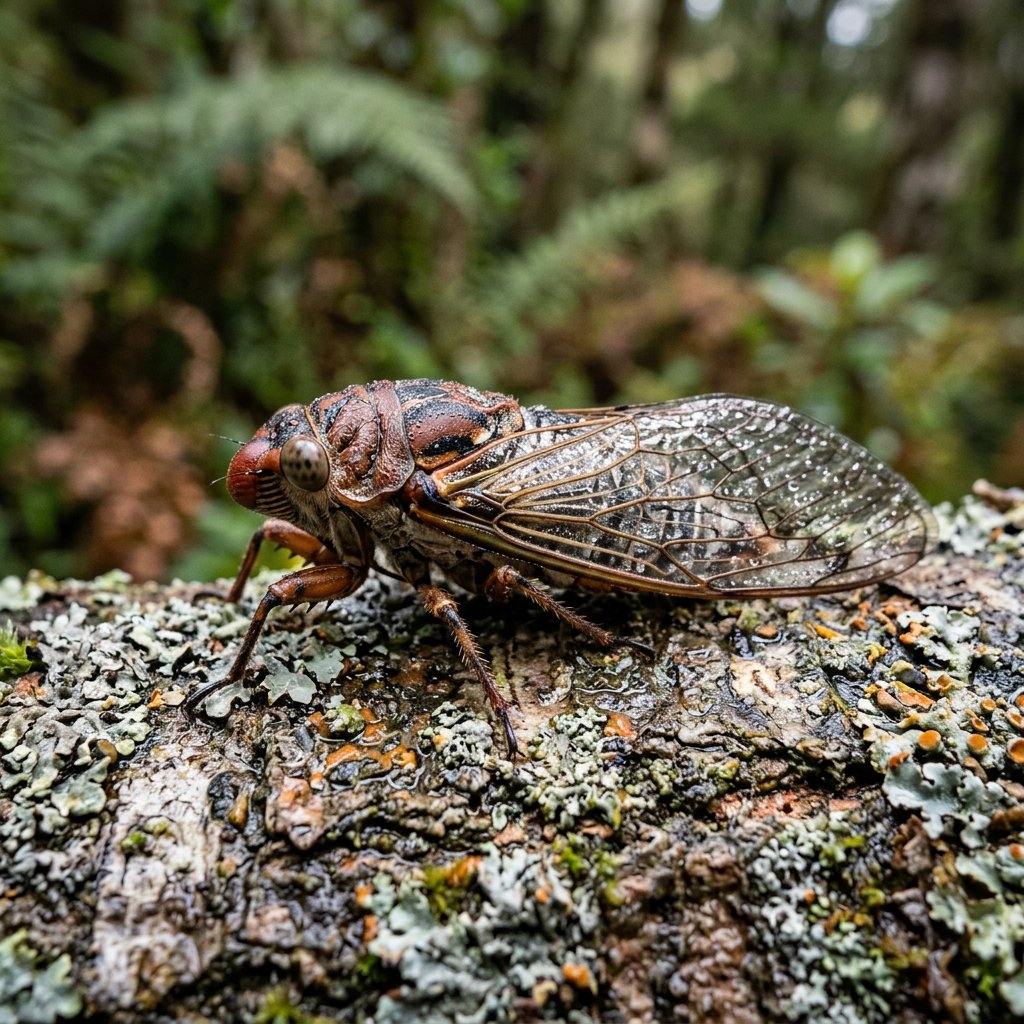
The Chorus Cicada, known scientifically as Amphipsalta zelandica, is the iconic voice of the New Zealand summer. To the Māori, it is known as kihikihi wawa, a name that perfectly captures the "roaring" wall of sound they produce in unison. While their sheer volume can be overwhelming, these large, winged insects are a fascinating symbol of the warmer months and a vital part of the local ecosystem.
🔍 How to Identify
- 🌿 Camouflaged Body: They feature a mix of vibrant green and earthy brown patterns on their bodies, designed to blend perfectly with the bark of native trees.
- 💎 Transparent Wings: Their four wings are clear and membrane-like, with prominent dark veins, and are held in a tent-like shape over their backs when resting.
- 🥁 Sound Organs: Males possess specialized drum-like organs called "tymbals" on the sides of their abdomen, which they vibrate rapidly to create their signature song.
- 👁️ Wide-Set Eyes: They have large, compound eyes situated on the corners of their broad heads, giving them excellent peripheral vision to spot approaching birds.
🌲 Habitat & Ecology
- 🌳 Forest & Garden Dwellers: You will find them in a variety of environments, from deep native forests to suburban gardens, usually perched high in the canopy of trees like Manuka or Totara.
- 🧃 Sap Seekers: Both the underground nymphs and the airborne adults feed exclusively on plant sap. They use a straw-like proboscis to pierce the bark and drink the nutrient-rich fluid.
- 🦅 The Summer Feast: They are a primary food source for many native birds, including the Tui and Fantail, who rely on the "cicada season" to feed their young.
⚠️ Safety & Toxicity
- ✅ Harmless Neighbor: Despite their intimidating size and loud noise, the Chorus Cicada is completely harmless to humans. They do not bite, sting, or carry diseases.
- 🐕 Pet Safety: They are non-toxic to cats and dogs. However, the crunchy exoskeleton can sometimes cause mild stomach upset if a pet decides to "snack" on too many of them.
- 👂 Ear Protection: While they don't bite, their collective "chorus" can reach over 100 decibels—similar to a lawnmower—which can be a bit much for sensitive ears!
✨ Fun Fact
The Chorus Cicada is famous for its unique "clapping" sound. Unlike many other cicada species, Amphipsalta zelandica syncs its song with a rapid flick of its wings against the branch, creating a rhythmic clicking noise that accompanies its high-pitched buzz!
More Details








