Info
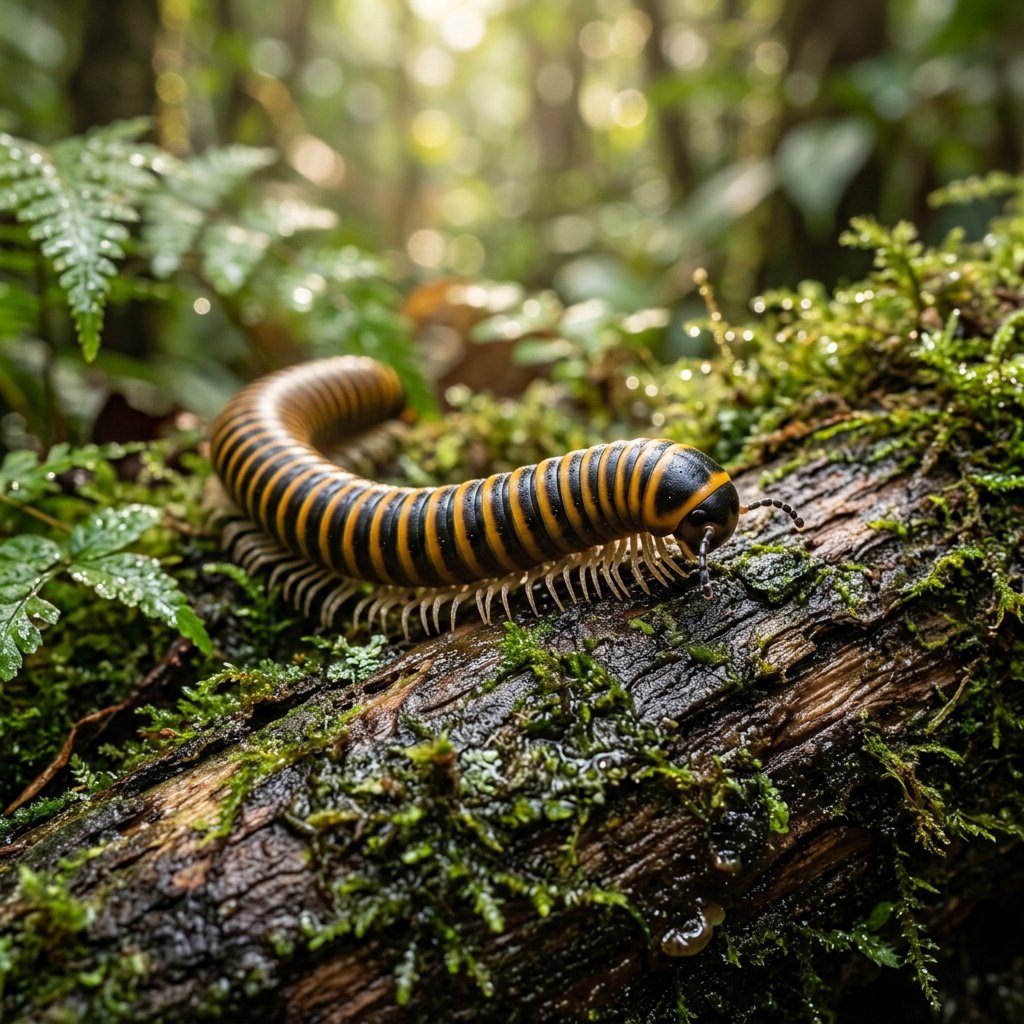
Meet the Bumblebee Millipede, a tiny, segmented "tank" of the leaf litter. Despite its striking black and yellow stripes that mimic a bee’s warning colors, this little creature is one of nature’s gentlest decomposers. Often found in the Caribbean and the southeastern United States, it spends its days as a quiet recycler, turning old leaves into rich soil for the forest floor.
🔍 How to Identify
- 🐝 The "Bumblebee" Pattern: A glossy, cylindrical body featuring bold, alternating bands of dark brown/black and vibrant yellow.
- 🦵 Synchronized Legs: Dozens of pairs of pale, delicate legs that move in a rhythmic, wave-like motion as it walks.
- 🌀 The Coil: When it feels threatened, it doesn't run; instead, it rolls itself into a tight, flat spiral to protect its soft legs and underside.
🌲 Habitat & Ecology
- 🍂 Nature’s Cleanup Crew: These millipedes are detritivores. Their primary job is to eat decaying organic matter, such as damp leaf litter and rotting wood, which helps cycle nutrients back into the earth.
- 💧 Moisture Seekers: Because they breathe through tiny pores in their sides, they are very sensitive to drying out. You will typically find them hidden under mulch, rocks, or fallen logs where the air remains humid.
⚠️ Safety & Toxicity
- 🛡️ Non-Aggressive: The Bumblebee Millipede is completely harmless in terms of physical contact; it cannot bite, sting, or pierce the skin.
- 🧪 Chemical Defense: If handled roughly or squeezed, it may release a pungent, brownish liquid from its sides. While not "poisonous" in the traditional sense, this liquid can cause mild skin irritation or temporary staining and should be kept away from your eyes and mouth.
- 🧼 Hygiene Tip: Always wash your hands after handling one, as the defensive secretions are designed to taste terrible to predators and can linger on your skin.
✨ Fun Fact
Millipedes are among the oldest land animals on Earth! Fossil records show that ancient ancestors of the Bumblebee Millipede were crawling through forests over 400 million years ago, long before the first dinosaurs appeared.
More Details








