Info
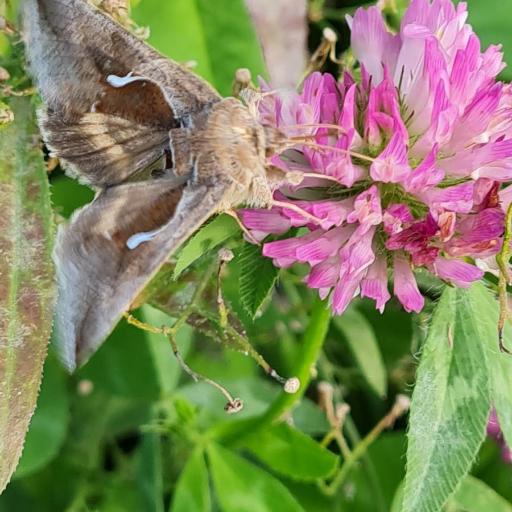
Often mistaken for a piece of dried bark or a withered leaf, the Celery Looper Moth (Anagrapha falcifera) is a master of camouflage. This subtle beauty is famous for the shimmering silver "sickle" mark on its wings and its peculiar "looping" walk during its caterpillar stage. While it may look rugged and sharp, it is a gentle visitor to evening gardens across North America.
🔍 How to Identify
- 🌙 The Silver Sickle: Its most defining feature is a bright, silvery-white mark in the center of each forewing, often shaped like a hook or a sickle.
- 🦉 Furry Shoulders: The moth has a very prominent, tufted "hump" of scales on its thorax (the middle section), giving it a fuzzy, almost regal silhouette.
- 🍂 Mottled Earth Tones: The wings are a complex tapestry of chocolate brown, gray, and tan, designed to make the moth disappear against tree bark when it rests.
🌲 Habitat & Ecology
- 🥬 The Generalist Eater: As a caterpillar, this insect is a "foe" to the vegetable patch. It loves celery, lettuce, and beets, but will also snack on ornamental flowers like carnations.
- 🐛 The Inchworm Impression: Because the caterpillars lack several pairs of middle legs, they must arch their bodies into a high "loop" to move forward, which is how they earned the name "Looper."
- 🌸 Twilight Pollinator: While many moths wait for total darkness, the Celery Looper is often active during the "golden hour" of dusk, hovering near nectar-rich flowers to refuel.
⚠️ Safety & Toxicity
- ✅ Harmless Guest: The Celery Looper does not bite, sting, or carry any toxins. It is completely safe to handle or move if it accidentally flies into your home.
- 🐕 Pet Neutral: They are non-toxic to curious cats or dogs. However, their erratic fluttering may trigger a pet’s hunting instinct!
✨ Fun Fact
🗡️ The Sickle-Bearer: The species name falcifera is derived from the Latin words falx (sickle) and ferre (to bear). This literally translates to "the one who carries a sickle," referring to the sharp, metallic-looking embroidery on its wings.
More Details








