Info
The Banded Peacock (Anartia fatima) is one of the most common and charismatic butterflies you’ll encounter in Central America and the southern tip of Texas. Often found flitting through sunny gardens and along tropical forest edges, it is a friendly pollinator that isn't easily spooked by human presence. Its striking geometric patterns make it a favorite for amateur photographers and nature walkers alike.
🔍 How to Identify
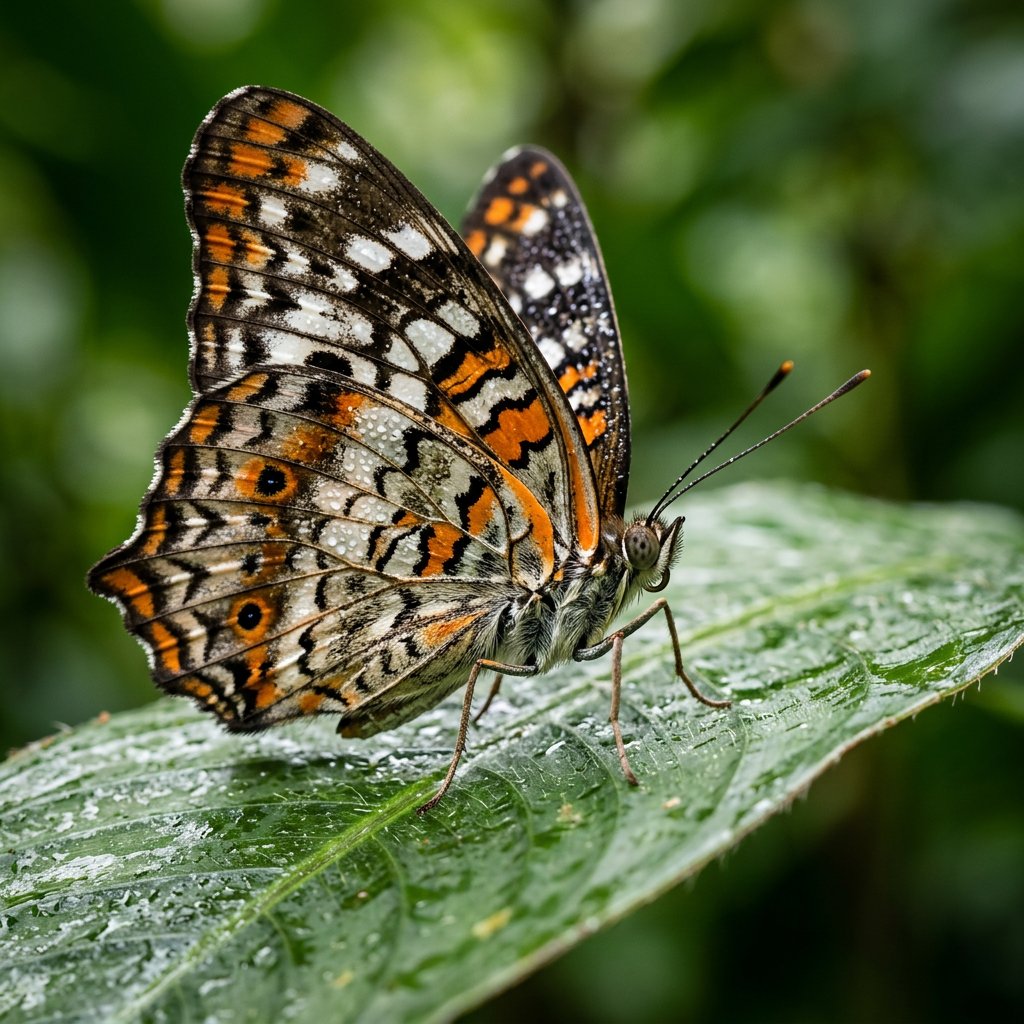
- 🦋 Wing Pattern: The upper wings are a deep chocolate brown or black, bisected by a prominent, creamy-white or pale yellow vertical band.
- 🔴 Ruby Spots: Look closely at the hindwings to find a row of small, bright red spots that look like tiny jewels against the dark background.
- 📐 Wing Shape: The edges of the hindwings are slightly scalloped or "toothed," giving the butterfly a jagged, elegant silhouette when resting.
🌲 Habitat & Ecology
- 🌼 Frequent Forager: This butterfly is a generalist feeder but has a legendary love for the "Mexican Petunia" (Ruellia) and other nectar-rich wildflowers. It plays a vital role in pollinating these local species.
- ☀️ Sun Bathing: You will rarely find the Banded Peacock in deep, dark woods. They are "disturbed area" specialists, meaning they thrive in sunny garden clearings, roadsides, and riverbanks where they can bask to regulate their body temperature.
- 🍃 Host Plant Strategy: The females carefully glue their eggs to the underside of leaves in the Acanthaceae family, ensuring that the dark, spiny caterpillars have a feast waiting for them the moment they hatch.
⚠️ Safety & Toxicity
- ✅ Status: Completely harmless and safe for humans and pets.
- 👐 Details: The Banded Peacock does not bite, sting, or carry any toxins. While the caterpillars look a bit prickly or "spiny," they are not known to cause skin irritation. However, like all butterflies, their wings are extremely delicate; touching them can rub off the microscopic scales they need for flight.
✨ Fun Fact
The Banded Peacock is remarkably hardy and long-lived compared to other butterflies. While many species live for only two weeks as adults, some Anartia fatima individuals have been recorded living for several months, surviving the tropical dry season by retreating to moist, shaded pockets of forest.
More Details








