Info
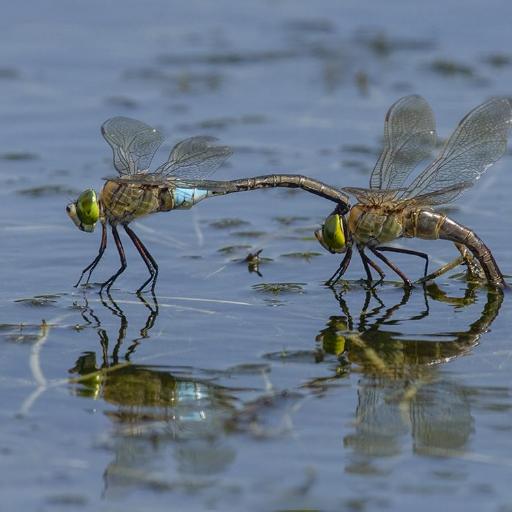
The Lesser Emperor (Anax parthenope) is a high-speed aerial acrobat often seen patrolling the perimeters of ponds and lakes. While its name suggests a smaller stature, this dragonfly is a formidable presence in the insect world, known for its incredible stamina and migratory journeys. In many cultures, these shimmering aviators are seen as symbols of change and the fleeting beauty of summer.
🔍 How to Identify
- 💎 The Blue Saddle: The most striking feature is a bright blue "saddle" on the second segment of the abdomen, which contrasts sharply with its brownish-green body.
- 👀 Compound Vision: It possesses massive, multi-faceted eyes that meet at the top of the head, usually appearing olive-green or brownish in color.
- ✈️ Sturdy Wings: Like all hawker dragonflies, it has two pairs of large, transparent wings with a complex vein structure that allow it to hover and fly backward.
🌲 Habitat & Ecology
- 🦟 The Mosquito Hawk: As a fierce predator, it spends its day hunting mid-air, catching mosquitoes, flies, and even smaller dragonflies. It acts as a natural pest controller for your garden and local waterways.
- 💧 Water Requirements: You will most likely find them near still or slow-moving water, such as large ponds or marshes, where the females lay eggs by "tandem-clutching" with the males—a rare sight among other Emperor species.
⚠️ Safety & Toxicity
- 🛡️ Harmless Ally: The Lesser Emperor is completely non-venomous and possesses no stinger. It is a "friend" to humans because it focuses its appetite on biting flies and gnats.
- 🤏 Handle with Care: While they are not aggressive, a large dragonfly can deliver a tiny "nip" with its mandibles if caught and handled roughly. It is best to admire their metallic beauty from a short distance.
✨ Fun Fact
The Lesser Emperor is a world traveler! Unlike many insects that stay close to their birth pond, this species is known to migrate long distances, sometimes crossing the Mediterranean Sea or moving from Africa deep into Europe.
More Details








