Info
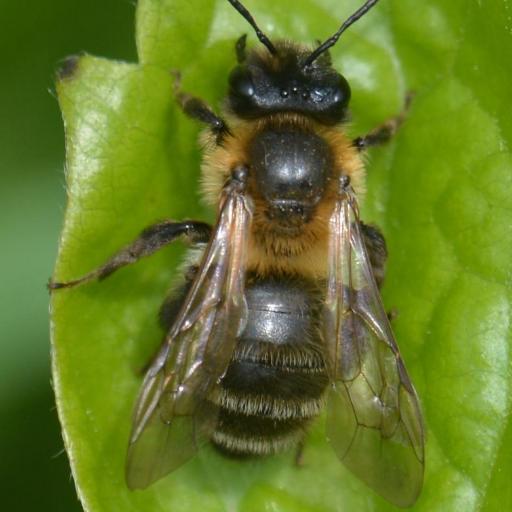
Known affectionately as the Hawthorn Mining Bee, this industrious little worker is one of the most common solitary bees you will spot during the first warm days of spring. While it might look like a standard honeybee at a distance, it lives a very different, independent life, tunneling into the earth to raise its young rather than living in a crowded hive.
🔍 How to Identify
- 🐝 Honeybee Mimic: It is roughly the size of a honeybee but appears stockier and fluffier, often giving it a "cuddly" appearance.
- 🦊 Ginger Coat: The thorax (middle section) is covered in a dense, velvety layer of rich brownish-orange or ginger hairs that fade slightly as the bee ages.
- 🦵 Pollen Brushes: Females have thick, specialized brushes of hair on their hind legs, which they use to carry massive amounts of pollen back to their underground burrows.
🌲 Habitat & Ecology
- 🌸 Orchard Essential: These bees are vital pollinators for spring-flowering trees. While they love Hawthorn, they are frequently seen buzzing around apple, pear, and cherry blossoms in suburban gardens.
- 🏗️ Subterranean Suites: They are "mining" bees, meaning they dig vertical shafts into the soil. You might notice tiny mounds of earth, resembling miniature volcanoes, in your lawn or along garden paths—these are the entrances to their private nurseries.
⚠️ Safety & Toxicity
- 🛡️ Docile Disposition: These bees are exceptionally gentle. Because they do not have a hive or a queen to protect, they have no reason to be aggressive toward humans or pets.
- 🤏 Minimal Sting Risk: While the females possess a stinger, it is very small and weak. They will only use it as an absolute last resort if they are being squeezed in a hand or stepped on with bare feet. They are considered very safe guests for family gardens.
✨ Fun Fact
Every female Hawthorn Mining Bee is a "single mother." Unlike honeybees that have thousands of workers, the Andrena carantonica female must dig her own nest, gather all the food, and defend her eggs entirely on her own!
More Details








